The fastest way to repair a damaged skin barrier isn’t by adding new “miracle” products, but by strategically removing aggressors and supporting the skin’s own healing process.
- Harsh cleansers and over-exfoliation strip the skin’s protective acid mantle, leading to moisture loss and inflammation.
- A simplified “skinimalist” routine of 3-4 core products (gentle cleanse, hydrating serum, barrier-repair moisturizer, sunscreen) is more effective than a complex 10-step regimen.
Recommendation: Immediately pause all exfoliation (acids and scrubs) for at least four weeks and switch to a pH-balanced cleanser to begin the stabilization phase.
If your skin feels constantly tight, red, and prone to breakouts no matter what you try, you’re not alone. You might be experiencing the frustrating signs of a damaged skin barrier. Many people react to this by adding more products—stronger exfoliants, new serums, or thicker creams—hoping to find a quick fix. This often exacerbates the problem, creating a cycle of irritation and sensitivity. The truth is, your skin, a complex and resilient organ, is sending a clear signal: it’s overwhelmed.
The solution is not to escalate the assault, but to change the strategy entirely. True, lasting repair comes from understanding the biomechanics of your skin’s protective layer, the stratum corneum, and its delicate acid mantle. This guide is built on a core dermatological principle: systematic subtraction. We will move beyond the superficial advice and focus on removing the hidden aggressors in your routine, supporting your skin’s natural desquamation and healing functions, and then rebuilding its defenses with precisely chosen ingredients. This approach doesn’t just calm symptoms; it restores the fundamental health and equilibrium of your skin.
This article will walk you through a clinical, step-by-step process to rebuild your skin’s resilience. From identifying the primary culprits in your bathroom cabinet to implementing a recovery protocol, you will learn how to restore calm, hydration, and balance to your complexion. Below is a summary of the key areas we will cover.
Summary: A Clinical Approach to Skin Barrier Restoration
- Why Alkaline Cleansers Are Destroying Your Acid Mantle?
- How to Layer Humectants and Occlusives to Lock in Moisture?
- Chemical Acids or Physical Scrubs: Which Is Safer for Sensitive Skin?
- The “10-Step Routine” Mistake That Causes Dermatitis
- When to Apply Retinol to Maximize Absorption and Minimize Irritation?
- How to Use Color Theory to Choose Makeup Shades That Enhance Your Features?
- How to Replace Toxic Cleaning Products With Effective Homemade Solutions?
- How to Reset Your Gut Microbiome to Boost Immunity and Energy?
Why Alkaline Cleansers Are Destroying Your Acid Mantle?
The single most common mistake we see in patients with compromised barriers is the use of harsh, alkaline cleansers. Healthy skin is naturally acidic, with a pH between 4.5 and 5.5. This delicate acidic film, known as the acid mantle, is a crucial first line of defense. It inhibits the growth of harmful bacteria, maintains a healthy skin microbiome, and preserves the lipid matrix that keeps your skin soft and hydrated. When you use an alkaline cleanser (with a pH above 7), you are forcefully disrupting this essential barrier.
This “squeaky clean” feeling is actually a sign of damage. The cleanser has stripped away not just dirt and makeup, but also the protective oils and ceramides that hold your skin cells together. The consequences are immediate and cumulative. In fact, research shows that alkaline soaps can dramatically raise skin pH for up to 90 minutes, leaving it vulnerable to dehydration and irritation. Over time, this daily assault leads to chronic dryness, sensitivity, and inflammatory conditions like acne and rosacea.
To begin the repair process, you must replace your cleanser with a gentle, pH-balanced formula. Look for products labeled “gentle,” “hydrating,” or specifically formulated for sensitive skin, and always check the ingredient list to avoid sulfates (like Sodium Lauryl Sulfate), which are common culprits. The goal is to cleanse your skin while respecting its natural biomechanical structure.
The visual metaphor below captures the hidden damage of harsh cleansing. What appears clean on the surface is, at a microscopic level, a fractured and compromised system, unable to properly retain moisture.
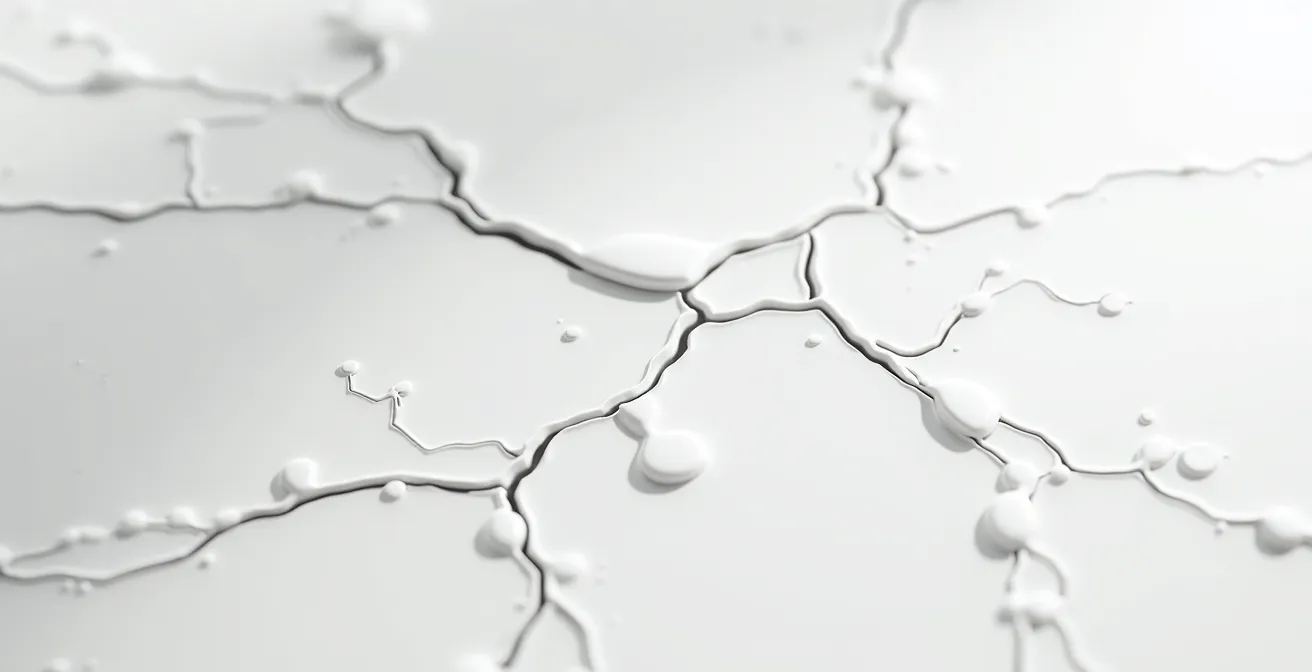
As you can see, the integrity of the surface is broken, creating pathways for irritants to enter and for moisture to escape. Repairing your barrier starts with choosing cleansers that protect, rather than strip, this vital structure. The first step in your recovery is to audit the pH of your current products.
Action Plan: Audit Your Cleanser’s pH
- Acquire pH testing strips with a range of 0-14 from a pharmacy or online. This is an essential tool for your skin health audit.
- Create a testable solution by mixing a small amount of your cleanser with distilled water on a clean surface.
- Dip the pH strip into the mixture, wait for the recommended time (usually 30-60 seconds), and then compare the color to the provided chart.
- Identify the culprits: An ideal cleanser should have a pH between 4.5 and 6.0. Any product with a pH of 7.0 or higher is alkaline and should be immediately discontinued.
- Expand your audit to other leave-on products like toners and essences to ensure your entire routine supports a healthy acid mantle.
How to Layer Humectants and Occlusives to Lock in Moisture?
Once you’ve stopped stripping your skin with harsh cleansers, the next step is to actively restore its hydration levels and prevent water loss. A damaged barrier is like a leaky bucket; it cannot effectively hold onto moisture, leading to a condition known as Transepidermal Water Loss (TEWL). This is why your skin may feel dry and tight, even after applying moisturizer. The key to fixing this is a two-pronged approach using two distinct types of ingredients: humectants and occlusives.
Humectants are “water magnets.” Ingredients like hyaluronic acid, glycerin, panthenol, and aloe vera pull moisture from the deeper layers of your skin and the environment into the stratum corneum. Occlusives are “sealants.” Ingredients like petrolatum, shea butter, squalane, and dimethicone form a physical barrier on the skin’s surface, preventing the water drawn by humectants from evaporating. Using one without the other is inefficient. A humectant alone on a damaged barrier can actually pull water out of the skin if the air is dry, while an occlusive alone on dry skin simply seals in the dryness.
Case Study: The Three-Minute Window for Optimal Hydration
Dermatological research on TEWL provides a critical insight for effective moisturizing. A clinical observation found that patients who applied moisturizer within three minutes of patting their skin dry after cleansing showed significantly faster barrier repair—within 7 to 14 days. This is because the skin is most permeable when damp, allowing humectants like hyaluronic acid to penetrate more effectively and pull that residual surface water into the skin *before* an occlusive layer locks it all in. Applying products to bone-dry skin misses this crucial window of opportunity, often delaying repair for weeks.
The correct method is to layer. After cleansing, while your skin is still slightly damp, apply your humectant serum. Immediately follow with your occlusive moisturizer to seal everything in. The specific ingredients and ratio you choose should be adapted to your environment, as different climates require different strategies for optimal barrier support.
This table provides a guide for selecting the right combination of moisturizers based on the humidity and temperature of your climate, helping you customize your routine for maximum efficacy.
| Climate Type | Humidity Level | Recommended Humectant | Recommended Occlusive | Application Ratio |
|---|---|---|---|---|
| Cold & Dry | <30% | Glycerin, Hyaluronic Acid | Petrolatum, Shea Butter | 1:2 (More occlusive) |
| Hot & Humid | >60% | Sodium Hyaluronate, Aloe | Light Silicones, Squalane | 2:1 (More humectant) |
| Temperate | 30-60% | Hyaluronic Acid, Glycerin | Dimethicone, Jojoba Oil | 1:1 (Balanced) |
| Transitional | Variable | Panthenol, Beta-Glucan | Ceramides, Caprylic Triglyceride | Adjust weekly |
Chemical Acids or Physical Scrubs: Which Is Safer for Sensitive Skin?
For a truly damaged barrier, the answer is ‘neither’. We recommend a strategic 4-6 week break from all forms of exfoliation to allow the skin’s natural desquamation process to reset and the barrier to fully heal.
– Dr. Julie Fridlington, Alamo Heights Dermatology
This clinical advice is the cornerstone of barrier repair. While the beauty industry often promotes daily exfoliation for a “glowing” complexion, for compromised skin, this is like scrubbing a wound with a brush. Both physical scrubs (with beads, grains, or brushes) and chemical exfoliants (like AHAs and BHAs) work by removing the top layer of dead skin cells. However, when your barrier is already damaged, this process removes cells that are not ready to be shed, further thinning your defenses and triggering an inflammatory response.
Your skin has a natural, intelligent exfoliation process called desquamation, where it sheds dead cells on its own in a roughly 28-day cycle. A damaged barrier disrupts this process. The first and most critical step is to get out of the way and let your skin heal. A complete pause from all exfoliants for at least four weeks allows your skin to rebuild its lipid layers and normalize its own shedding cycle. Pushing through with more exfoliation in the hope of sloughing off flakes will only prolong the damage.
After the initial 4-6 week healing period, and only if your skin shows no signs of sensitivity (stinging, redness, or tightness), you can consider reintroducing exfoliation. This must be done gradually and gently, starting with the mildest options available.
- Weeks 1-4 Post-Repair: No exfoliation. Focus exclusively on your gentle cleansing and moisturizing protocol.
- Weeks 5-6: Introduce a very mild enzyme exfoliant (containing papain or bromelain) or a low-concentration PHA (like gluconolactone) just once a week.
- Weeks 7-8: If your skin remains calm, you may increase to twice a week or try a low-strength lactic acid (an AHA) once a week.
- Monitor Continuously: At the first sign of irritation, step back to the previous level and give your skin more time to adjust.
The “10-Step Routine” Mistake That Causes Dermatitis
In recent years, the idea that “more is more” has dominated skincare, leading to complex, multi-step routines. While this can be beneficial for some, for those with a compromised barrier, it is a direct path to irritation and contact dermatitis. Each product you layer on your skin introduces a new set of ingredients, including preservatives, fragrances, and active compounds. The more products you use, the higher the risk of a negative reaction or an unfortunate interaction between ingredients. In fact, some dermatologists warn that excessive product layering, particularly using more than five leave-on products, can significantly increase the risk of irritation.
The philosophy of “skinimalism” is the antidote. This is not about neglecting your skin, but about curating a minimal, effective routine that provides everything your skin needs and nothing it doesn’t. During the barrier repair phase, your routine should be stripped back to its essential pillars. This reduces the “ingredient load” on your skin, allowing it to stabilize and heal without the burden of processing unnecessary chemicals.
This minimalist approach is the core of the recovery protocol. It is simple, effective, and focuses on supporting the skin’s fundamental needs for gentle cleansing, hydration, and protection.
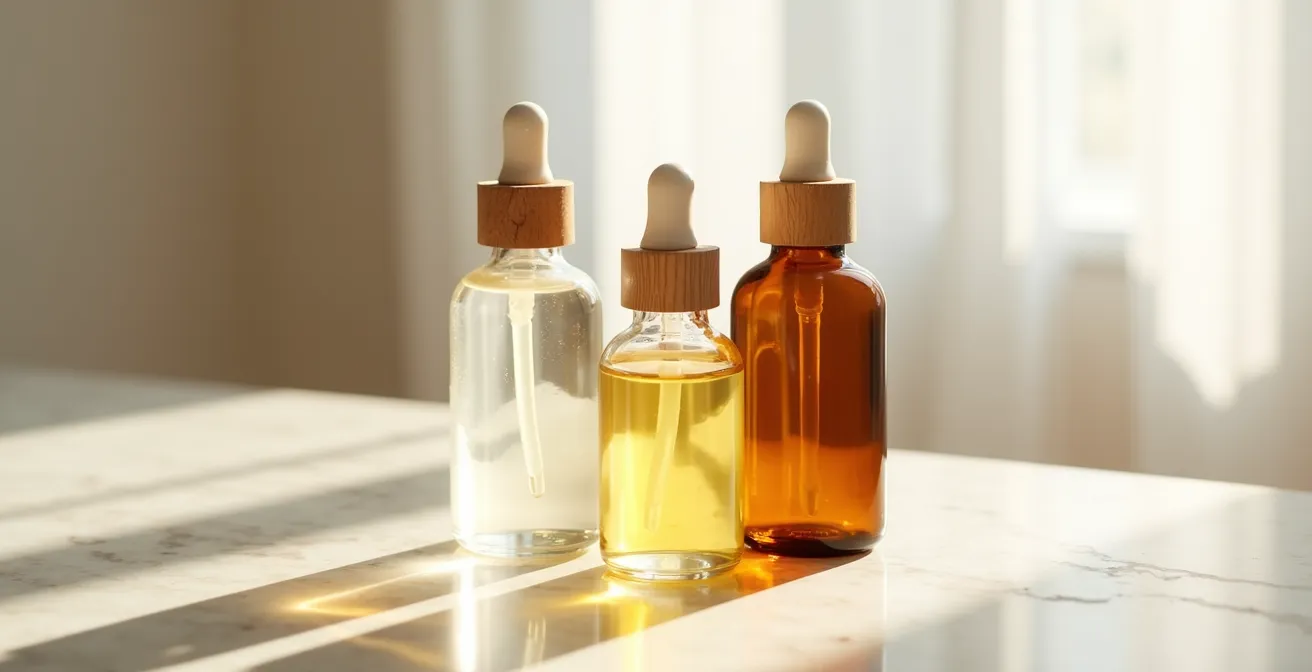
Your ‘skinimalist’ recovery routine should consist of these core steps, focusing on barrier-supportive ingredients:
- Morning:
- Rinse with lukewarm water (no cleanser needed unless oily).
- Apply a hydrating serum (e.g., hyaluronic acid) to damp skin.
- Apply a barrier-repair moisturizer (with ceramides, niacinamide).
- Finish with a mineral-based sunscreen (zinc oxide or titanium dioxide).
- Evening:
- Cleanse with a gentle, pH-balanced cleanser.
- Apply a hydrating or calming serum (e.g., niacinamide).
- Apply a thicker occlusive moisturizer to seal in hydration overnight.
When to Apply Retinol to Maximize Absorption and Minimize Irritation?
Retinoids are a gold standard in dermatology for everything from acne to anti-aging, but they are potent and can be highly irritating, especially to a compromised barrier. Attempting to use retinol on damaged skin is a recipe for severe redness, peeling, and inflammation. Retinol should only be considered *after* your skin barrier is fully repaired and shows no signs of active irritation. Think of it as advanced training for your skin; it must be healthy and strong before it can handle the intensity.
Before even thinking about retinol, your skin must pass a barrier health checklist. It should feel calm, hydrated, and comfortable for at least two consecutive weeks.
- ✅ No stinging or burning when applying gentle products.
- ✅ No visible redness, flaking, or peeling.
- ✅ Skin feels hydrated throughout the day, not tight.
- ❌ Any persistent redness or irritation is a red flag. Do not proceed.
Once your barrier is robust, you can introduce retinol using techniques designed to minimize irritation. The “retinol sandwich” method—applying a layer of moisturizer, then retinol, then another layer of moisturizer—is a popular way to buffer the ingredient. An even gentler approach is Short Contact Therapy. Clinical experience shows this method is highly effective for sensitive skin. It involves applying the retinoid for a short period (starting with 30 minutes) before washing it off. This allows the ingredient to begin its cellular signaling process but removes it before prolonged contact can cause significant irritation. You can then gradually increase the contact time over several weeks or months as your skin builds tolerance.
How to Use Color Theory to Choose Makeup Shades That Enhance Your Features?
When your skin barrier is compromised, the resulting redness and inflammation can make makeup application feel challenging. Foundation can look patchy on dry flakes, and choosing the right shade becomes difficult when your face is a different color from your neck. The key is to shift your strategy from concealing to calming, using makeup as a supportive tool rather than a mask.
First, it’s essential to follow the advice of makeup artists and dermatologists: match your foundation to your neck or chest, not your inflamed face. Your face’s overtone is temporarily altered by redness, but your undertone (cool, warm, or neutral) remains the same. Matching to your body ensures a seamless, natural look. To counteract redness, you can use a green-tinted color corrector very sparingly *before* foundation, as green is opposite red on the color wheel and neutralizes it. However, during active repair, less is more.
Choosing the right formula is even more critical than the shade. Your makeup should be an extension of your skincare, not something that works against it. Look for products specifically designed for sensitive skin, and always check the ingredient list to avoid common irritants.
- Look for: Fragrance-free, non-comedogenic formulas with added skincare ingredients like ceramides, hyaluronic acid, and niacinamide. Mineral-based makeup with zinc oxide is often an excellent choice as it’s inherently anti-inflammatory.
- Avoid: Products containing denatured alcohol, essential oils, heavy fragrances, or chemical sunscreens (oxybenzone, avobenzone), which can further irritate a compromised barrier.
Always patch-test a new makeup product on your jawline for 24 hours before applying it to your entire face.
How to Replace Toxic Cleaning Products With Effective Homemade Solutions?
Your skin barrier is not an isolated system; it’s constantly interacting with your environment. While you may be focusing intensely on your skincare products, hidden aggressors in your home could be sabotaging your progress. Household cleaning products are a major source of Volatile Organic Compounds (VOCs), airborne chemicals that can sensitize the skin and disrupt barrier function. In fact, Cleveland Clinic research indicates that volatile organic compounds from common cleaners can increase skin sensitivity and transepidermal water loss.
This is particularly true for products that come into direct or indirect contact with your skin, such as laundry detergents, fabric softeners, and dish soap. The fragrances and harsh surfactants in these products can leave a residue on clothes, bedding, and towels that causes low-grade, chronic irritation. This is why you might experience body rashes, itchiness, or find that your facial skin becomes irritated after sleeping on your pillowcase.
Making simple swaps to barrier-safe alternatives can have a significant impact on your skin’s health. You don’t need to compromise on cleanliness; you just need to choose gentler, less reactive ingredients.
- Laundry: Switch to a fragrance-free, hypoallergenic detergent. Replace fabric softener, which coats fibers with sensitizing chemicals, with 1/2 cup of white vinegar in the rinse cycle. It softens fabrics naturally and rinses completely clean.
- Dishes: Opt for a Sodium Lauryl Sulfate (SLS)-free dish soap, or better yet, wear gloves to protect your hands, as the skin on your hands can also reflect systemic sensitivity.
- Surfaces: Use microfiber cloths with just water for most cleaning. For disinfecting, use simple solutions of vinegar or isopropyl alcohol instead of fragranced chemical sprays.
- Air Fresheners: Replace aerosol sprays and plug-ins, which disperse VOCs, with an essential oil diffuser or simply by placing a small bowl of baking soda to absorb odors.
Key takeaways
- The foundation of barrier repair is stopping all aggressors: switch to a pH-balanced cleanser and pause all forms of exfoliation for at least four weeks.
- Adopt a “skinimalist” routine of 3-4 core products: a gentle cleanser, a hydrating serum, a barrier-repair moisturizer with ceramides, and a mineral sunscreen.
- Support healing from both the outside-in (layering humectants and occlusives on damp skin) and the inside-out (a diet rich in omega-3s, zinc, and probiotics).
How to Reset Your Gut Microbiome to Boost Immunity and Energy?
The final piece of the puzzle lies within. The “gut-skin axis” is a well-established concept in dermatology, recognizing the direct communication between your gut health and your skin’s appearance. An imbalanced gut microbiome, a condition known as dysbiosis, can trigger systemic inflammation that manifests on the skin as acne, rosacea, eczema, and a weakened barrier. Therefore, a truly comprehensive barrier repair plan must include nutritional support to foster a healthy internal ecosystem.
You can’t fix a damaged barrier with topicals alone if your diet is promoting inflammation. Focusing on a nutrient-dense diet rich in anti-inflammatory foods provides your body with the raw materials needed to rebuild healthy skin cells and calm irritation from the inside out. This involves incorporating foods that support collagen production, provide essential fatty acids for lipid barrier integrity, and nourish a diverse gut flora.
Creating a barrier-boosting diet is not about restriction, but about strategic inclusion. Focus on adding a variety of whole, unprocessed foods that are rich in the specific nutrients your skin needs to thrive.
- Omega-3 Fatty Acids: These are critical for building the skin’s lipid barrier. Find them in wild salmon, sardines, walnuts, and flaxseeds.
- Zinc: This mineral is essential for cell repair and controlling inflammation. Excellent sources include pumpkin seeds, chickpeas, and cashews.
- Probiotics: These live beneficial bacteria help balance your gut microbiome. Incorporate fermented foods like kimchi, sauerkraut, kefir, and miso.
- Prebiotics: These are the “food” for your good gut bacteria. Garlic, onions, asparagus, and bananas are rich in prebiotics.
- Antioxidants & Vitamins: Protect skin cells from damage with colorful fruits and vegetables like berries, spinach, and bell peppers. Vitamin E from almonds and avocados is particularly beneficial for skin health.
By nourishing your body from within, you create a foundation of health that will be reflected in a stronger, more resilient, and calmer complexion.
By adopting this comprehensive, inside-and-out approach, you empower yourself to move beyond the cycle of irritation. Begin today by auditing your routine and committing to the “skinimalist” protocol to give your skin the space it needs to heal and thrive.