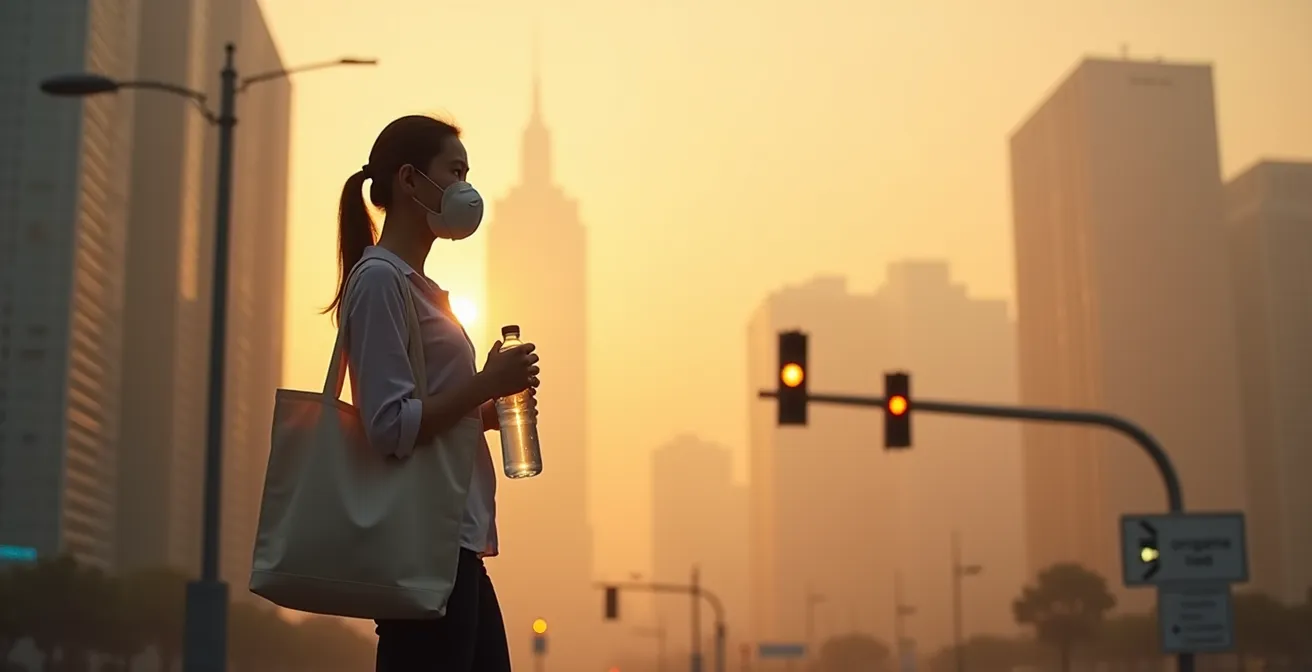
In summary:
- Your indoor environment is a critical control point, often more polluted than the air outside.
- A multi-layered filtration strategy for both air and water is more effective than a single device.
- The materials you bring into your home—from furniture to textiles—significantly impact your total pollutant load.
- Effective protection relies on scientific principles, like ensuring an N95 mask’s seal and understanding which plants target specific toxins.
- Empowerment extends from personal action to community-level accountability for air quality.
Living in a city offers incredible opportunities, but it also comes with a persistent, often invisible, anxiety: pollution. For the health-conscious urban dweller, the daily news about air quality alerts and environmental toxins can feel overwhelming. The common advice—check the AQI, maybe buy an air purifier—while helpful, often feels like a drop in the ocean. It’s a reactive approach to a problem that requires a proactive defense system.
What if the key wasn’t just a random collection of tips, but a systematic framework for reducing your total pollutant load? This guide moves beyond the basics to provide an evidence-based strategy for taking control of your personal micro-environments. It’s about understanding the primary exposure pathways—the air you breathe, the water you drink, the products you touch—and implementing targeted, scientific solutions to fortify your health against the constant pressures of urban living.
We will deconstruct the challenge, starting with the surprising risks lurking indoors and moving through a hierarchy of interventions. From choosing the right filters and textiles to detoxifying your cleaning routines and even holding polluters accountable, you will learn how to build a resilient, healthier space for yourself within the urban landscape.
Summary: A Scientist’s Guide to Minimizing Your Daily Exposure to Urban Pollutants
- Why Indoor Air Can Be 5 Times More Polluted Than Outdoor Air?
- How to Choose a Water Filter That Actually Removes Heavy Metals?
- N95 or Surgical Masks: Which Truly Protects Against Fine Particulate Matter?
- The Furniture Mistake That Releases Formaldehyde Into Your Bedroom
- How to Use Houseplants to Naturally Filter Specific Toxins From the Air?
- How to Replace Toxic Cleaning Products With Effective Homemade Solutions?
- How to Select Sustainable Home Textiles That Are Durable and Toxin-Free?
- How to Hold Local Industries Accountable for Air Quality Violations in Your Neighborhood?
Why Indoor Air Can Be 5 Times More Polluted Than Outdoor Air?
The belief that staying indoors protects you from city pollution is a dangerous misconception. In reality, our homes and offices can become reservoirs for contaminants. The U.S. Environmental Protection Agency (EPA) has conducted studies revealing a startling fact: concentrations of many volatile organic compounds (VOCs) are consistently higher indoors. Research shows that indoor VOC levels are 2 to 5 times higher than outdoor levels, regardless of whether the home is in a rural or highly industrial area. This phenomenon occurs because modern, energy-efficient buildings are often sealed tightly, trapping pollutants inside.
These pollutants don’t just seep in from outside; we actively bring them in. They are released from a vast array of common household items, including paints, cleaning supplies, new furniture, electronics, and even synthetic textiles. This process, known as off-gassing, creates a complex chemical soup that we breathe continuously. Understanding these hidden sources is the first step in controlling your primary exposure pathway: inhalation. The goal is to shift from passively accepting this reality to actively managing your indoor micro-environment.
Identifying these sources is crucial. It requires a systematic audit of your living space, from the electronics on your desk to the clothes in your closet. Each item contributes to the overall pollutant load you experience daily. By pinpointing the origins of these emissions, you can begin to take targeted actions to ventilate, isolate, or eliminate them, transforming your home from a container of pollutants into a sanctuary of cleaner air.
How to Choose a Water Filter That Actually Removes Heavy Metals?
After air, the next critical exposure pathway to control is water. Municipal water treatment is a modern marvel, but aging infrastructure and emerging contaminants like microplastics and heavy metals from pipes mean that what comes out of your tap may not be as pure as you think. Choosing a water filter isn’t about just improving taste; it’s about creating a filtration hierarchy that targets specific, harmful substances. Not all filtration technologies are created equal, and their effectiveness varies dramatically depending on the pollutant.
For instance, a simple activated carbon filter, common in pitcher-style filters, is excellent for removing chlorine and some pesticides but does little to address heavy metals or viruses. To effectively remove substances like lead, arsenic, and mercury, more advanced systems are necessary. Technologies like reverse osmosis and ion exchange are the gold standard for heavy metal removal. The key is to match the technology to the threat. This comparative table breaks down the strengths and weaknesses of common filtration methods.
| Technology | Heavy Metals | Chlorine | Pesticides | Microplastics | Viruses |
|---|---|---|---|---|---|
| Activated Carbon | Low | Excellent | Good | Poor | None |
| Reverse Osmosis | Excellent | Excellent | Excellent | Excellent | Good |
| Ion Exchange | Excellent | Poor | None | None | None |
| UV Treatment | None | None | None | None | Excellent |
| Ceramic Filters | Moderate | Poor | Poor | Good | Moderate |
A multi-stage approach often provides the most comprehensive protection. A 2024 study in New York City apartments demonstrated the power of this strategy. By combining a point-of-entry carbon filter to treat all incoming water with an under-sink reverse osmosis system for drinking water, residents achieved a 98% reduction in lead contamination and removed 95% of microplastics. This tiered system effectively addressed both building-wide pipe issues and localized tap concerns, proving particularly crucial in older buildings with legacy infrastructure. This exemplifies how a strategic, layered approach to filtration provides far greater security than a single, one-size-fits-all solution.
N95 or Surgical Masks: Which Truly Protects Against Fine Particulate Matter?
When stepping outside on a high-pollution day, a mask seems like a simple solution. However, the level of protection you receive depends entirely on two factors: the mask’s filtration capability and, just as importantly, its seal. The most dangerous urban pollutants are fine particulate matter, or PM2.5—particles so small they can penetrate deep into the lungs and enter the bloodstream. A standard surgical mask, while useful for blocking large droplets, is largely ineffective against these microscopic particles because it doesn’t form an airtight seal around the face.
An N95 respirator, by contrast, is specifically designed to filter out at least 95% of airborne particles, including PM2.5. Its effectiveness, however, is not guaranteed by simply wearing it. It hinges on achieving a perfect seal. Any gap around the nose, cheeks, or chin renders the high-tech filtration material useless, as polluted air will simply bypass it through the path of least resistance. The difference between true protection and a false sense of security lies in the integrity of this seal.

As this image illustrates, the tight contact between the mask’s edge and the skin is what creates the protective barrier. To ensure you are getting the full benefit of an N95 respirator, performing a user seal check every time you put one on is a non-negotiable step. It is a simple, quick procedure that confirms the mask is functioning as a true respirator rather than a loose-fitting face covering.
Action Plan: User Seal Check for Maximum PM2.5 Protection
- Positive pressure check: Cup your hands over the mask and exhale sharply. The mask should bulge slightly without any air leaking from the edges.
- Negative pressure check: Cover the filters with your hands and inhale gently. The mask should collapse slightly against your face, indicating a negative pressure seal.
- Visual inspection: Use a mirror to check for any visible gaps around the nose bridge and under the chin. Adjust the nose clip and straps as needed.
- Movement test: Turn your head from side to side and nod up and down. The mask should remain sealed and not shift significantly on your face.
- Replacement criteria: Replace the mask when breathing resistance increases, the elastic bands lose their tension, or it becomes visibly soiled (typically after 8-12 hours of use in polluted conditions).
The Furniture Mistake That Releases Formaldehyde Into Your Bedroom
One of the most significant sources of indoor air pollution comes from an item we associate with comfort and rest: our furniture. The common mistake is bringing new furniture, especially items made from pressed wood like particleboard or MDF, directly into a living space like a bedroom. These materials are bound together with urea-formaldehyde resins, which continuously release formaldehyde gas into the air. This off-gassing is most intense when the furniture is new and can persist for months or even years, turning your personal sanctuary into a source of chronic chemical exposure.
Formaldehyde is a known human carcinogen, and long-term exposure to even low levels has been linked to respiratory issues and other health problems. Because bedrooms are often smaller, less ventilated spaces where we spend a third of our lives, the concentration of these VOCs can become particularly high. The solution is not to avoid new furniture altogether, but to adopt a protocol of systematic off-gassing—a quarantine period that allows the most intense chemical release to happen in a controlled, well-ventilated area before the item enters your main living environment.
Implementing a quarantine protocol requires patience but is a powerful preventative health measure. It involves unboxing new furniture in a separate area, such as a garage, covered balcony, or a spare room with excellent ventilation, and allowing it to air out for several weeks. This simple process can dramatically reduce the initial, and most potent, wave of formaldehyde emissions, significantly lowering your long-term exposure and protecting the air quality in the most important room of your house.
For maximum effectiveness, this process can be accelerated. Placing the furniture in a ventilated area, using fans to increase air circulation, and even gently heating the room (a “bake-out”) can speed up the release of trapped VOCs. This proactive approach to “detoxing” your furniture is a cornerstone of effective micro-environment control.
How to Use Houseplants to Naturally Filter Specific Toxins From the Air?
The idea of using houseplants to purify indoor air is appealingly natural, but it’s often oversimplified. Placing one or two decorative plants in a room will have a negligible effect on air quality. Scientific research, including foundational work by NASA, shows that to achieve measurable air purification, a high density of plants is required. One study indicates that you need approximately 10 medium-sized plants per 100 square feet to make a significant dent in VOC levels. The strategy is to create a small, diverse indoor ecosystem, not just to add a touch of green.
The real power of this natural approach lies in specificity. Different plants are more effective at metabolizing different types of chemical pollutants. By understanding the primary toxins emitted by sources in your home—such as formaldehyde from a gas stove or benzene from new furniture—you can select a “prescription” of plant species to target them directly. This turns your plant collection from a passive decoration into an active, biological air filtration system. Both the leaves and the microorganisms in the soil work together to break down harmful compounds.
To implement this effectively, you must match the right plant to the right room based on the most likely pollutants present. The following table provides an evidence-based guide to pairing common indoor pollutant sources with the most effective plant species, transforming your home into a targeted, toxin-filtering environment.
| Pollutant Source | Primary Toxin | Best Plant Species | Placement Tips |
|---|---|---|---|
| Gas Stove | Formaldehyde, CO | Spider Plant | Kitchen windowsill or hanging basket |
| New Furniture | Benzene, Formaldehyde | Snake Plant, Peace Lily | Bedroom corners, 2-3 plants per room |
| Cleaning Products | Ammonia, Xylene | Flamingo Lily | Bathroom with indirect light |
| Electronics | Toluene, Xylene | Dracaena | Home office, near equipment |
| Paint/Adhesives | Trichloroethylene | Gerbera Daisy | Recently renovated rooms with bright light |
How to Replace Toxic Cleaning Products With Effective Homemade Solutions?
Another major contributor to indoor air pollution is the array of commercial cleaning products used to maintain our homes. Sprays, detergents, and polishes often contain harsh chemicals like ammonia, chlorine bleach, and phthalates, which release VOCs into the air during and after use. Swapping these toxic products for simple, effective homemade solutions is a direct way to reduce your chemical exposure and improve your home’s air quality. The foundation of a non-toxic cleaning toolkit relies on three inexpensive, powerful ingredients: distilled white vinegar, baking soda, and castile soap.
These ingredients can be combined to create solutions that rival the effectiveness of their commercial counterparts without the harmful side effects. Vinegar acts as a natural disinfectant and cuts through grease, baking soda serves as a gentle abrasive for scrubbing, and castile soap works as a powerful, all-purpose surfactant. Creating your own cleaners puts you in complete control of what chemicals you bring into your home.

Making the switch is straightforward. An all-purpose cleaner can be made by mixing equal parts vinegar and water. A scouring paste is as simple as adding water to baking soda. However, safety is paramount even with natural ingredients. It is a critical safety rule to never mix vinegar with bleach, as this creates toxic chlorine gas. Similarly, mixing vinegar with hydrogen peroxide can form corrosive peracetic acid. Proper handling and clear labeling are essential parts of a safe DIY cleaning regimen.
- All-Purpose Cleaner: Mix 1 part distilled white vinegar with 1 part water in a spray bottle. For extra cleaning power, add about 10 drops of liquid castile soap per 16 ounces of solution.
- Abrasive Scrub: Create a thick paste using 3 parts baking soda to 1 part water. This is excellent for scrubbing sinks, tubs, and tough stains on countertops.
- Degreaser: For greasy kitchen surfaces, combine 2 cups of warm water, 1/2 cup of distilled white vinegar, and 1/4 cup of liquid castile soap.
- Storage: Use glass spray bottles to prevent any potential reaction between acidic ingredients and plastic. Always label your bottles clearly with the ingredients and the date they were made.
How to Select Sustainable Home Textiles That Are Durable and Toxin-Free?
Our skin is the body’s largest organ, and the textiles we come into contact with every day—bedding, towels, clothing, upholstery—represent a significant, often overlooked, exposure pathway. Many conventional textiles are treated with a cocktail of chemicals to make them wrinkle-free, stain-resistant, or flame-retardant. These treatments can include formaldehyde, PFAS chemicals, and toxic dyes, which can be absorbed through the skin or off-gas into your home environment. Choosing toxin-free textiles is not an indulgence; it’s a fundamental part of a holistic strategy to reduce your body’s total pollutant load.
Navigating the world of “green” and “organic” textiles can be confusing, as many claims are unregulated marketing. The most reliable method for ensuring a product is genuinely safe is to look for independent, third-party certifications. These labels verify that the product has been tested for a range of harmful substances and, in some cases, that the entire production process meets strict environmental and social standards. Understanding the hierarchy of these certifications empowers you to make truly informed decisions.
The gold standard is a label that covers the entire supply chain, from fiber to finished product. However, even baseline certifications offer a significant improvement over unverified products. This hierarchy helps demystify the labels you’ll encounter while shopping, providing a clear framework for selecting textiles that are safer for you and your family.
This table outlines a trust hierarchy for common textile certifications, allowing you to prioritize your selections based on the level of assurance each one provides. According to a recent EPA air trends report, reducing sources of indoor pollution is a key factor in overall health, and textiles are a major source.
| Certification Tier | Label Name | What It Verifies | Limitations |
|---|---|---|---|
| Tier 1 (Best) | GOTS, Oeko-Tex Made in Green | Entire supply chain: organic fibers, safe dyes, fair labor, no toxic finishes | Higher cost, limited availability |
| Tier 2 (Good) | Oeko-Tex Standard 100 | Final product free from 100+ harmful substances | Doesn’t verify organic fibers or production methods |
| Tier 3 (Baseline) | ‘100% Organic Cotton’ (unverified) | Fiber content only | No information about dyes, finishes, or chemical treatments |
| Red Flag | No certification | Nothing verified | Likely contains formaldehyde finishes, PFAS coatings, or flame retardants |
Key takeaways
- Your personal pollutant load is cumulative; reducing it requires a multi-front strategy addressing air, water, and consumer products.
- Prioritize control over your micro-environments, especially the bedroom, where you have the most control and spend the most time.
- Evidence-based selection is crucial, whether choosing a filtration technology based on the target contaminant or a textile based on its certification.
How to Hold Local Industries Accountable for Air Quality Violations in Your Neighborhood?
While individual actions are powerful, they are only one part of the solution. Truly clean urban air requires systemic change and holding polluters accountable. For city dwellers living near industrial zones or high-traffic corridors, it can feel like a David-and-Goliath battle. However, the rise of affordable, citizen-led air quality monitoring is shifting the balance of power. By collecting and sharing hyperlocal data, communities can move from anecdotal complaints to providing undeniable evidence of pollution events, forcing regulators and companies to take action.
This “citizen science” approach empowers residents to become active participants in the governance of their environment. Low-cost sensors can be deployed across a neighborhood to create a dense monitoring network, capturing pollution spikes that official, sparsely located government monitors might miss. This data, when mapped and publicized, becomes a powerful tool for advocacy. It makes the invisible visible and provides the factual basis needed to demand stricter emissions controls, better enforcement, and more transparent reporting from local industries.
This strategy isn’t just theoretical; it has led to measurable improvements in air quality in cities around the world. The key is the transformation from passive victim to active data-gatherer and advocate, creating a groundswell of public pressure that is difficult for authorities to ignore.
Citizen Science Air Monitoring Success in Bogotá
In 2021, Bogotá, the capital of Colombia, launched the ‘United Pact for a New Air’ initiative. A key component was the empowerment of its citizens. Using a network of over 200 low-cost PurpleAir sensors, residents began documenting pollution spikes near industrial zones in real-time. This hyperlocal data was mapped and shared widely on social media, creating public pressure that complemented official efforts. As a result of this combined government and citizen action, the city was able to achieve a 15% reduction in PM2.5 levels within just 18 months, demonstrating that community-led monitoring can be a powerful catalyst for tangible change.
By systematically applying these evidence-based principles—from controlling your indoor micro-environment to engaging in community advocacy—you can profoundly reduce your daily pollutant load and build a healthier, more resilient life in the city. The next step is to begin auditing your own home and habits to create your personal clean air action plan.