
The pursuit of a sustainable lifestyle through ‘green’ products often leads to more anxiety, not less.
- True eco-minimalism prioritizes using what you already have over buying new solutions.
- It focuses on designing simple, intentional systems rather than collecting eco-gadgets.
Recommendation: Start not by buying, but by auditing one area of your life (e.g., your kitchen) and optimizing its flow with existing items.
You sort the recycling meticulously. You buy the bamboo toothbrush, the reusable coffee cup, the tote bags. You are trying to do the right thing for the planet, yet a sense of anxiety lingers. Your home feels cluttered not just with things, but with the *pressure* of sustainable choices. This is a common paradox for the conscious consumer: the effort to reduce your impact inadvertently increases your mental load and, sometimes, your physical clutter. You are caught between a desire to live lightly and a consumer culture that tells you the solution is always to buy something new—even if it’s “green.”
Many guides on sustainability focus on product swaps, creating an endless checklist of items to acquire. But what if this approach is fundamentally flawed? What if the constant research, purchasing, and maintenance of these eco-products is just another form of consumerism, feeding the very cycle of stress and waste we hope to escape? This is where the philosophy of eco-minimalism offers a more profound path. It suggests that the solution isn’t about acquiring the *right* objects, but about designing intentional systems that eliminate the need for them in the first place.
This shift in perspective—from products to systems, from acquiring to being resourceful—is the key to unlocking both a lower environmental footprint and a calmer, more focused mind. It’s about questioning the underlying need before seeking a product to fill it. This guide will walk you through the practical steps and mental shifts required to embrace eco-minimalism, helping you navigate the common traps and build a lifestyle that is truly, and peacefully, sustainable.
To help you navigate this transformative journey, we’ve structured this guide to address the core challenges and solutions of eco-minimalism, from the psychological traps of consumerism to the practical design of a simpler, more sustainable life.
Summary: How to Adopt Eco-Minimalism: Reduce Stress and Waste, Not Just Your Belongings
- Why Buying “Green” Products Often Increases Anxiety Instead of Solving It?
- How to Get Rid of Unwanted Items Without Sending Them to the Landfill?
- Ethical New or Fast Fashion Used: Which Is Truly Better for the Planet?
- The “I Might Need It” Trap That Turns Recyclers Into Hoarders
- How to Stack Eco-Habits to Make Sustainable Living Automatic?
- How to Achieve a Zero-Waste Kitchen Without Spending a Fortune on fancy Jars?
- How to Use Technology to Simplify Your Daily Routine Instead of Complicating It?
- How to Integrate Smart Storage Solutions That Hide Clutter Permanently?
Why Buying “Green” Products Often Increases Anxiety Instead of Solving It?
The intention is pure: you want to make better choices. But the market for “green” products has exploded, creating a new landscape of consumer pressure. Instead of simply buying soap, you now face a wall of options, each with competing claims about being plastic-free, palm-oil-free, organic, or locally sourced. This phenomenon, known as decision fatigue, is a significant source of stress. The mental energy spent researching, comparing, and worrying about making the “perfect” ethical choice can be exhausting, undermining the very sense of peace you seek.
This cycle turns sustainability into a performance of consumption rather than a practice of conservation. You end up with a collection of reusable bags you forget to bring, a drawer of silicone lids that don’t fit, and a lingering guilt that you’re still not doing enough. The focus shifts from reducing overall consumption to curating a perfect collection of eco-accessories. This is the fundamental flaw: believing that a product can solve a systemic problem. Eco-minimalism challenges this by asking a more powerful question: “How can I design my life to not need this item at all?”

As the image above powerfully illustrates, being surrounded by endless choices, even good ones, creates a sense of overwhelm. The true path forward is not to find the best product in the pile, but to step out of the pile altogether. It involves a shift from a product-based mindset to a system-based mindset. Instead of buying a vegetable-preserving bag, you learn to store produce correctly or plan meals to use it faster. Instead of buying a fancy compost bin, you start a simple pile in your garden. This approach prioritizes resourcefulness over purchasing, leading to less waste, less expense, and significantly less mental clutter.
How to Get Rid of Unwanted Items Without Sending Them to the Landfill?
Once you begin to simplify, the next challenge is what to do with the items you no longer need. The default solution for many is a trip to the local charity shop, but this isn’t always the most effective or eco-friendly option. Donation centers are often overwhelmed, and a significant portion of donated goods can end up in landfills or exported, creating a waste problem elsewhere. An eco-minimalist approach prioritizes more direct and impactful routes for decluttered items.
The most sustainable method is to extend an item’s life as directly as possible within your own community. This is where options like “Buy Nothing” groups, local swapping platforms, and direct gifting to neighbors come into play. These methods eliminate the transportation emissions and logistical overhead of large-scale donation systems. A fascinating UK study of self-identified minimalists found that prioritizing these direct community methods resulted in 100% diversion from landfills while simultaneously strengthening local social bonds. An item moves from a home where it is unused to one where it is immediately needed, creating a win-win for people and the planet.
To make an informed choice, it’s helpful to understand the hierarchy of decluttering options. The goal is to keep items at their highest value for as long as possible, with the landfill being the absolute last resort.
| Method | Environmental Impact | Community Benefit | Time Investment |
|---|---|---|---|
| Direct Gifting | Highest – Zero transport | Builds relationships | 15-30 minutes |
| Buy Nothing Groups | High – Local only | Strong community ties | 1-3 days wait |
| Repair & Upcycle | High – Extends life | Skills sharing | 2-4 hours |
| Charity Shops | Medium – Some items exported | Moderate | 30 minutes |
| Landfill | Lowest – Permanent waste | None | 5 minutes |
This table clarifies that while dropping items at a charity shop is quick, its environmental and community benefits are moderate compared to more direct methods. Embracing direct gifting and local exchange requires a small shift in effort but yields far greater rewards, transforming the act of letting go into an act of community building and genuine waste reduction.
Ethical New or Fast Fashion Used: Which Is Truly Better for the Planet?
The most eco-minimalist choice is always the clothes you already own, and the second-best is to radically extend their life.
– Michael Ofei, The Minimalist Vegan
The fashion industry presents a major dilemma for the conscious consumer. Is it better to buy a new, ethically made garment from a sustainable brand, or a secondhand item from a fast-fashion label? The debate is complex, but eco-minimalism offers a clear guiding principle that cuts through the noise. As Michael Ofei states, the ultimate sustainable choice is not a purchase at all, but the appreciation and care of what is already in your closet. Before even considering the “new vs. used” debate, the focus should be on active wardrobe curation—transforming your relationship with your existing clothes from passive ownership to active partnership.
This means shifting your mindset from “I have nothing to wear” to “How can I creatively use what I have?” It involves learning basic mending skills, not to just fix holes, but to add character and extend the life of a garment. It’s about documenting outfit combinations to unlock the hidden potential in your wardrobe and tracking your cost-per-wear to truly understand the value of each piece. Hosting clothing swaps with friends offers a way to refresh your options without any financial or environmental cost.
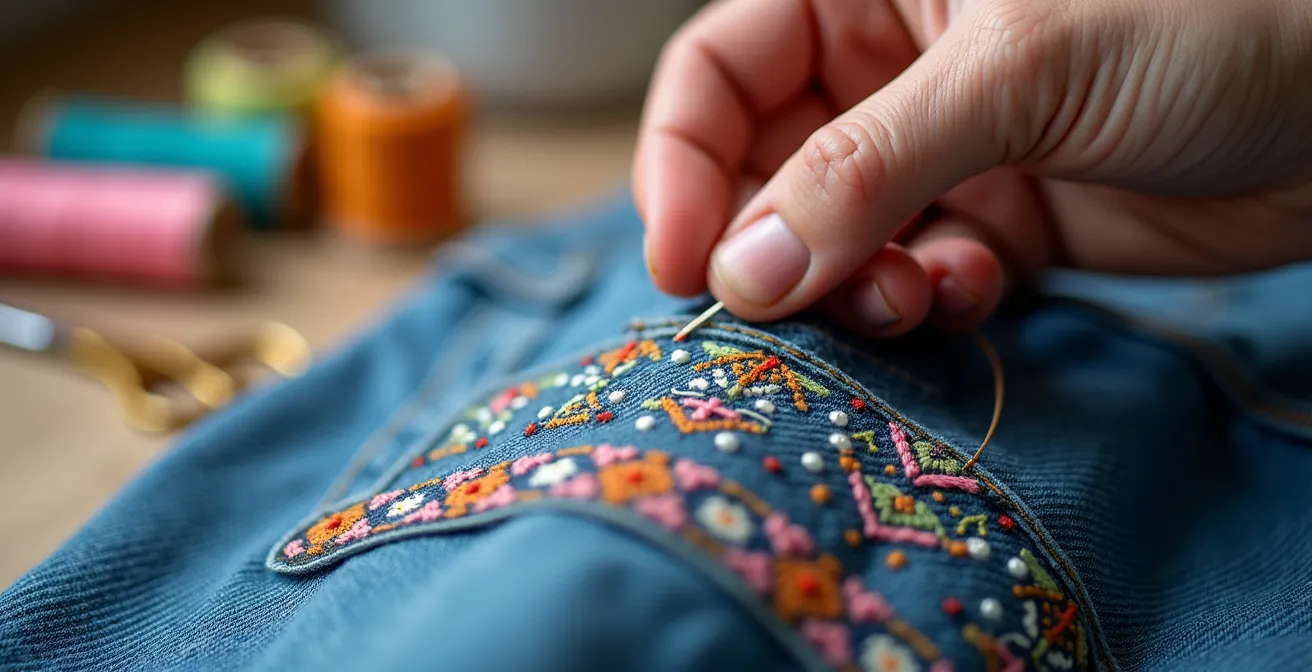
When a new acquisition is truly necessary, the eco-minimalist hierarchy is clear: secondhand first. Buying a used fast-fashion item is almost always better than buying a new “ethical” one because it utilizes a product that already exists, demands no new resources for its production, and diverts it from the landfill. While supporting ethical brands is a noble goal, it still feeds a cycle of production and consumption. The most powerful statement you can make is to reduce your demand for new production altogether.
The “I Might Need It” Trap That Turns Recyclers Into Hoarders
One of the biggest obstacles to a minimalist lifestyle is a simple, four-word phrase: “I might need it.” This thought is the guardian of clutter. It keeps a surplus of mismatched Tupperware, a tangle of old electronic cables, and clothes that haven’t fit in a decade. This “just in case” mentality stems from a place of fear—fear of future lack, fear of having to re-buy something, and fear of regret. For the eco-conscious person, this is compounded by the fear of being wasteful. Letting go of a “perfectly good” item feels like sending it to the landfill, so we hold onto it, turning our homes into personal storage units.
To escape this trap, you need a practical rule, not just willpower. The Minimalists, Joshua Fields Millburn and Ryan Nicodemus, popularized the 20/20 Rule for this exact purpose. The rule is simple: if you have an item you’re holding onto “just in case,” ask yourself two questions. Can I replace it for less than $20? And can I replace it in less than 20 minutes? If the answer to both is yes, you have permission to let it go. This rule provides a safety net that dismantles the fear. It helps you realize that the cost of storing, cleaning, and managing the mental overhead of that item is often far greater than the small, hypothetical cost of replacing it in the unlikely event you need it again.
A real-world example from one family who applied the rule showed they successfully decluttered over 80 Barbie dolls, duplicate kitchen tools, and unused appliances. Over the course of a year, they only needed to repurchase a single item—a second spatula—for less than $20. The gain in mental clarity and the reduction in home maintenance stress far outweighed the minor cost. As The Minimalists report, their 20/20 rule has an incredibly high success rate, as most “just-in-case” scenarios we imagine never actually materialize.
How to Stack Eco-Habits to Make Sustainable Living Automatic?
Willpower is a finite resource. Relying on it to remember your reusable bags, refuse straws, and compost scraps every day is a recipe for failure and burnout. The key to long-term sustainable living is not discipline, but design. It’s about transforming desired actions into automatic habits that require little to no conscious thought. This is where the concept of “habit stacking,” popularized by James Clear, becomes a powerful tool for the eco-minimalist. The goal is to make sustainability the path of least resistance.
The secret is to integrate new eco-habits into your existing routines by following four simple laws of behavior change. By making a habit obvious, attractive, easy, and satisfying, you engineer your environment and your routines to support your goals automatically. Instead of trying harder, you are making it harder to fail. This systematic approach frees up your mental energy, and as studies on minimalism’s benefits show, participants experienced a significant increase in their ability to focus on tasks and a rise in productivity levels. By automating the small stuff, you create more cognitive space for the things that truly matter.
Applying this framework doesn’t have to be complicated. Start with one or two habits and build from there. The consistency you gain from making good choices easy is far more impactful than occasional, heroic efforts.
Action Plan: The Four Laws of Eco-Habit Formation
- Make it Obvious: Don’t rely on memory. Place your reusable shopping bags on the front doorknob or in the car’s passenger seat. Create a “go-bag” station by the entrance with your reusable cup, container, and cutlery, so you can grab it without thinking.
- Make it Attractive: Habit formation is linked to dopamine. Invest in one beautiful, high-quality thermos or water bottle that you genuinely enjoy using every day. The pleasure you get from using it will reinforce the habit.
- Make it Easy: Reduce the friction. If composting feels like a chore, set up a small, one-touch-open bin directly on your kitchen counter. Pre-cut vegetables for the week on Sunday to make cooking with fresh ingredients easier than ordering takeout.
- Make it Satisfying: Your brain needs a reward. Track the money you save each month by avoiding disposable products and coffee cups. Celebrate milestones, no matter how small, to reinforce the positive feedback loop.
How to Achieve a Zero-Waste Kitchen Without Spending a Fortune on fancy Jars?
The “zero-waste” aesthetic popularized on social media often features pantries lined with perfectly matching, expensive glass jars and minimalist bamboo brushes. This image, while beautiful, is intimidating and counterproductive. It suggests that achieving a low-waste kitchen requires a significant upfront investment, creating a barrier to entry for many. It’s another version of the “buy green” trap, where the solution to over-consumption is… more consumption.
Eco-minimalism offers a scrappier, more realistic, and ultimately more effective approach. A zero-waste kitchen is not about aesthetics; it’s about flow and resourcefulness. The goal is to prevent waste, not to own the prettiest containers. This means looking at your kitchen with fresh eyes and seeing the potential in what you already possess. That empty pasta sauce jar? It’s now a perfect container for bulk-bin rice. The plastic takeout container? It’s ideal for storing leftovers. The old t-shirt? It can be cut into cleaning rags.
A case study from environmental advocates at The Minimalist Vegan demonstrated this principle perfectly. They transformed a kitchen into a fully functional zero-waste system using only existing containers: old jars, rescued takeout boxes, and cloth bags made from old sheets. The key to their success wasn’t the containers themselves but the system they implemented. They used simple “First In, First Out” (FIFO) labeling with a grease pencil and created an “Eat Me First” box in the fridge for produce nearing its end. These simple systemic changes, which cost nothing, reduced their food waste by 60% without the purchase of a single new storage item. This proves that you don’t need to buy your way to a zero-waste kitchen; you just need to think your way there.
How to Use Technology to Simplify Your Daily Routine Instead of Complicating It?
Minimalism fosters excellent conditions for introspection, the creation of fresh insights, and learning by freeing up mental space.
– Dopiera et al., Research on Minimalism and Well-being
In our quest for a simpler life, technology often becomes a paradoxical force. The same device that promises to connect and streamline can also become the primary source of distraction, anxiety, and mental clutter. An endless scroll of social media, a barrage of notifications, and a homescreen cluttered with unused apps all contribute to cognitive overload. Digital minimalism, a key component of eco-minimalism, is not about rejecting technology, but about wielding it with fierce intentionality.
The goal is to transform your phone from a tool of passive consumption into a tool for active creation and genuine utility. This requires a conscious audit of your digital habits. It’s not enough to just delete a few apps; you must question the role of each remaining tool in your life. Does this app save you time and energy, or does it create more work and anxiety? Does it help you create something, or just consume what others have made? As research highlights, the mental space freed by minimalism is fertile ground for learning and insight. Culling your digital world is one of the fastest ways to reclaim that space.
To begin this process, conduct a simple but powerful “Tech Intentionality Audit.” This framework helps you move from being a passive user to an active architect of your digital environment. The steps are straightforward and designed to put you back in control:
- Inventory and Purge: List all the apps you’ve used in the past month. Be ruthless in deleting anything that hasn’t been opened in over two weeks.
- Interrogate the Survivors: For each remaining app, ask a simple question: “Does this tool genuinely improve my life, or does it create a sense of obligation and distraction?”
- Schedule and Batch: Instead of letting apps dictate your time with notifications, schedule specific blocks for “active tech” use. Check emails twice a day. Scroll social media for 15 minutes after lunch. Use the tools on your terms.
- Create over Consume: Challenge yourself to replace three consumption-based apps (like news feeds or shopping apps) with one creation-based app (like a note-taking, photo-editing, or language-learning app).
- Optimize for Utility: Set up one-touch shortcuts or widgets for the functions you truly use every day—like checking the weather, setting a timer, or accessing your calendar—to make them more efficient than opening a distracting social app.
Key Takeaways
- The core of eco-minimalism is shifting from buying “green products” to designing “intentional systems.”
- True sustainability comes from resourcefulness and extending the life of what you already own.
- Automating eco-habits by making them obvious, easy, and satisfying is more effective than relying on willpower.
How to Integrate Smart Storage Solutions That Hide Clutter Permanently?
When faced with clutter, our first instinct is often to find a better way to store it. We buy bins, baskets, and elaborate shelving units, believing that if we can just organize our excess possessions, the problem will be solved. This is a temporary fix that mistakes the symptom for the cause. Smart storage isn’t about finding bigger or better containers; it’s about creating intentional systems that prevent clutter from accumulating in the first place. The most effective storage solution is owning less.
The presence of clutter is not a neutral state; it has a measurable impact on our well-being. Research indicates that a high percentage of people feel overwhelmed by clutter, with many noticing heightened stress levels in chaotic spaces. Hiding that clutter in a box doesn’t eliminate the stress; it just conceals it. The mental overhead of owning, managing, and knowing you have to deal with that hidden clutter “someday” continues to drain your cognitive resources.
Case Study: Intentional Systems Over Storage Furniture
Professional organizers consistently report a fascinating trend among their clients. Those who purchase new storage furniture to hide their clutter often find themselves in the same cluttered state within a year. However, clients who implement intentional systems maintain clutter-free spaces for significantly longer. The most successful systems include establishing clear boundaries, such as “One-In, One-Out” zones for categories like clothing or books, and assigning a permanent, logical “home” for every single item they decide to keep. The key wasn’t better hiding places, but a radical reduction in what needed to be stored and a clear plan for everything that remained.
This highlights the ultimate principle of eco-minimalist storage: a home for everything, and everything in its home. This starts with a ruthless decluttering process. Once you are left with only the items that you truly use and love, assigning them a permanent, designated spot becomes simple. The goal is a system so clear that tidying up takes minutes, not hours, because every object has a logical place to return to. This is how you hide clutter permanently—by designing a system where it has no place to form.
The journey of eco-minimalism is a continuous practice, not a destination. By focusing on designing better systems rather than acquiring more products, you create a sustainable lifestyle that not only benefits the planet but also brings a profound sense of peace and clarity to your daily life. Start today by choosing one area and asking not “What can I buy to fix this?” but “What system can I create to simplify this?”