In summary:
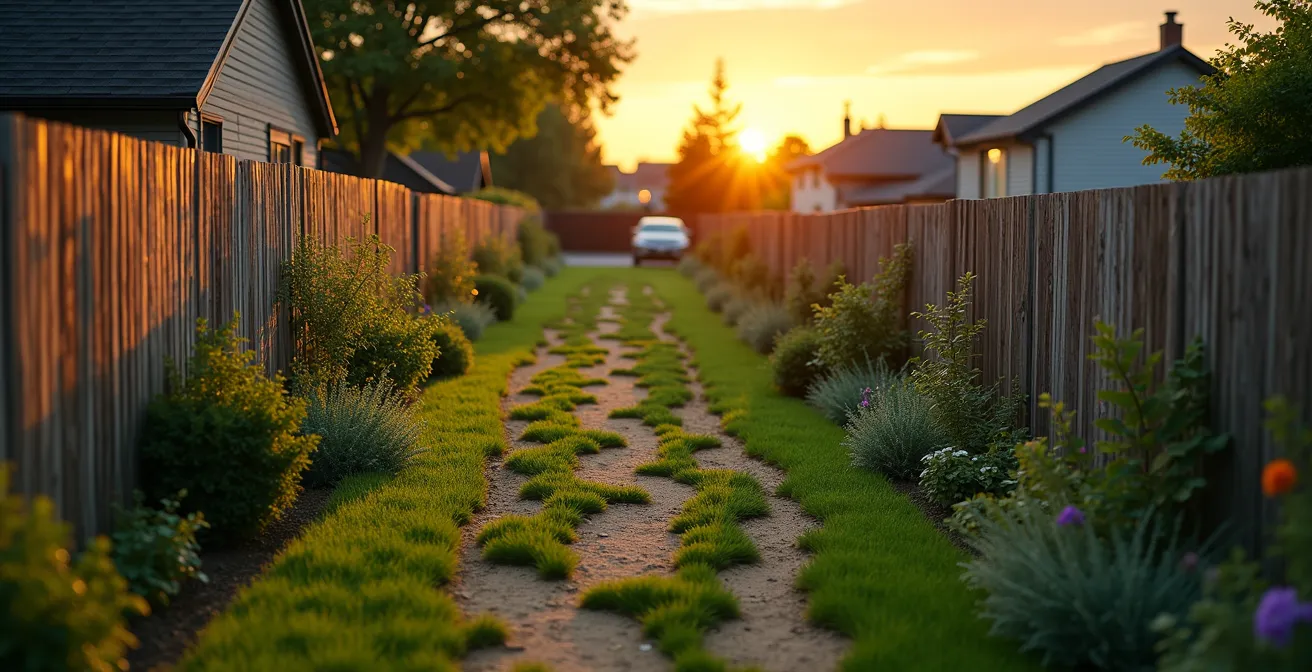
- Transforming your yard into a wildlife corridor means shifting from a decorative space to a functional, interconnected ecosystem.
- Prioritize native plants that offer food, shelter, and nesting sites for the entire life cycle of local species, not just adult animals.
- Reduce or eliminate lawns, which are “food deserts,” and replace them with layered plantings of grasses, perennials, and shrubs.
- Embrace “intentional messiness” by leaving stems and leaves over winter to provide crucial habitat for hibernating insects.
- Minimize light pollution with wildlife-friendly lighting to protect nocturnal pollinators and preserve natural cycles.
Every gardener feels a thrill at the sight of a goldfinch on a sunflower or a monarch butterfly dancing among the flowers. We put out feeders, plant bright annuals, and diligently water our lawns, hoping to attract more of this vibrant life. But what if these well-intentioned efforts are only telling part of the story? What if the key to a truly lively garden isn’t just about attracting visitors, but about creating a home?
The conventional approach often treats a garden as a collection of individual features—a bird bath here, a butterfly bush there. This can inadvertently create what ecologists call an “ecological trap,” attracting wildlife without providing the resources needed for them to complete their life cycles. A pristine, weed-free lawn is a desert for native bees, and a popular ornamental may offer nectar but no food for the next generation of caterpillars.
This guide proposes a fundamental shift in perspective. Instead of viewing your backyard as a static display, we will explore how to manage it as a dynamic, functional ecosystem. The true secret to a garden teeming with life is not to add more attractions, but to weave a web of connections—a wildlife corridor that provides food, shelter, and breeding grounds year-round. It’s about thinking less like a decorator and more like a conservation ecologist, making conscious choices that support the intricate dance of nature right outside your door.
For those who prefer a visual journey, the following video offers a beautiful immersion into the principles of creating a vibrant backyard habitat, complementing the practical advice in this guide.
In the sections that follow, we will deconstruct common gardening myths and provide a clear roadmap for transforming your space. We’ll explore why your lawn is a problem, how to choose plants that truly support ecosystems, and why a little messiness in the fall is one of the most generous acts a gardener can perform.
Summary: A Guide to Creating Your Backyard Wildlife Corridor
- Why Your Perfect Green Lawn Is a Starvation Zone for Bees?
- How to Harvest and Store Native Wildflower Seeds for Next Season?
- Bird Feeder or Berry Bushes: Which Provides Better Winter Nutrition?
- The “Butterfly Bush” Mistake That Actually Harms Local Ecosystems
- When to Cut Back Perennials to Protect Hibernating Insects?
- How to Create a Biodiverse Garden That Is Both Beautiful and Ecologically Functional?
- How to Maintain a Lush Landscape All Year With Minimal Weekly Effort?
- How to Design a Solar Landscape Lighting Scheme That Stays Bright All Night?
Why Your Perfect Green Lawn Is a Starvation Zone for Bees?
The classic image of a perfect yard—a lush, uniform, green carpet—is deeply ingrained in our culture. Yet, from an ecological perspective, this monoculture is less of a paradise and more of a desert. For countless pollinators, especially native bees, a turfgrass lawn is a vast starvation zone, devoid of the food and shelter necessary for their survival. While honeybees get a lot of attention, they are just one of thousands of bee species, and many have very different needs that your lawn actively denies.
The core of the problem is a lack of floral resources and nesting sites. Manicured lawns are kept free of “weeds” like clover and dandelions, which are actually critical early-season food sources for many foraging bees. Furthermore, the dense mat of turf and roots, often compacted by foot traffic and mowers, creates an impenetrable barrier for a huge portion of native pollinators. In fact, startling research shows that 70% of native bee species are ground-nesting, requiring access to bare or sparsely vegetated soil to dig their nests and raise their young.
Creating a wildlife corridor begins with the radical act of shrinking the lawn. By converting even a small portion of turfgrass into a layered garden bed with native plants, you are rolling out a welcome mat for these essential insects. This isn’t about letting your entire yard go wild; it’s about a conscious redesign that replaces empty space with a functional habitat. Every square foot of lawn replaced with a patch of wildflowers or a native shrub is a new fueling station and a potential home, re-stitching your yard back into the local ecosystem.
How to Harvest and Store Native Wildflower Seeds for Next Season?
One of the most rewarding aspects of cultivating a native garden is participating in its cycle of renewal. Harvesting your own seeds not only saves money but also ensures you have plants perfectly adapted to your specific location. It’s a simple practice that connects you deeply to the rhythm of the seasons and the life cycle of your plants. The key is observing your garden and learning to recognize the signs of seed maturity.
The right time to harvest is when the plant has completed its flowering and is ready to disperse its seeds naturally. For many species like coneflowers or black-eyed Susans, this is when the seed heads are dry, brown, and rattle when gently shaken. Collect the seed heads on a dry day by snipping them into a paper bag or envelope. Avoid plastic bags, which can trap moisture and cause mold. Once collected, spread the seeds or seed heads on a screen or tray in a well-ventilated area, away from direct sunlight, for one to two weeks to ensure they are completely dry.
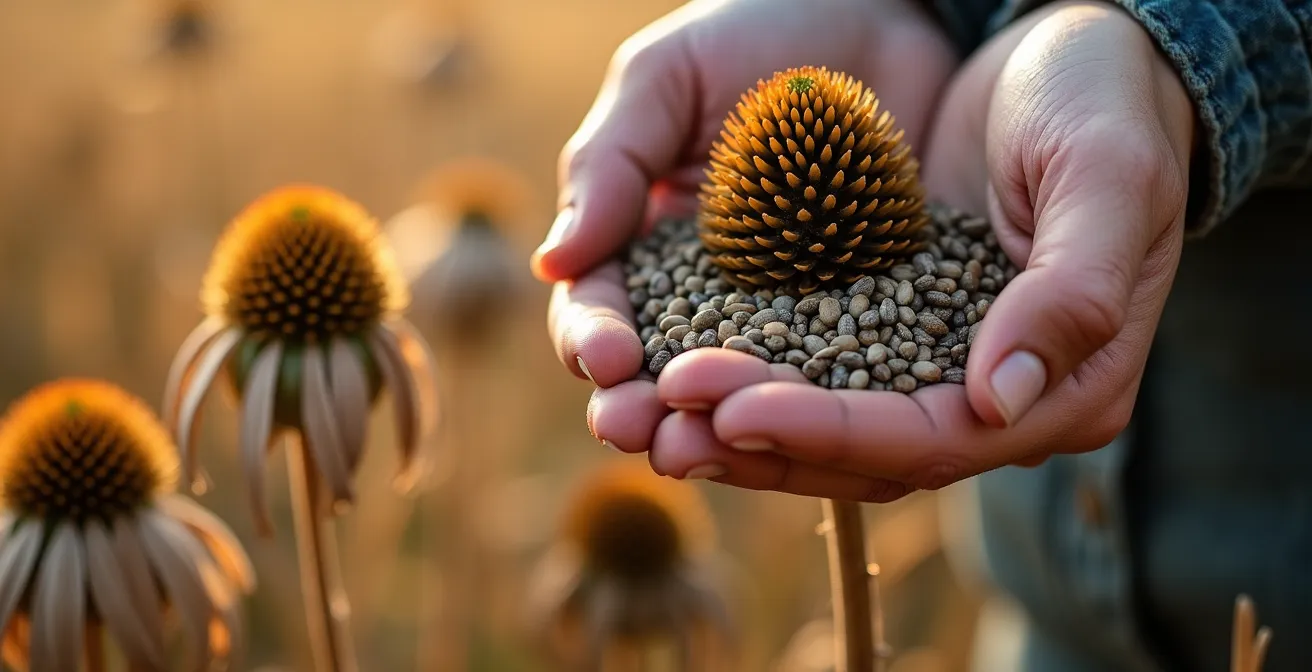
Many native perennial seeds have a built-in dormancy mechanism that prevents them from germinating until they have experienced a period of cold, moist conditions—a process called cold stratification. You can mimic this at home by mixing the clean, dry seeds with slightly damp sand or vermiculite, placing the mixture in a labeled plastic bag, and storing it in your refrigerator for 30 to 120 days, depending on the species’ requirements. This simple act of harvesting and storing ensures your wildlife corridor can expand and flourish season after season, powered by the very plants that thrive in it.
Bird Feeder or Berry Bushes: Which Provides Better Winter Nutrition?
In the heart of winter, a bird feeder buzzing with activity can feel like a vital lifeline for local birds. While feeders offer a supplemental food source, relying on them exclusively can be like offering a child a diet of only candy. It provides calories, but it lacks the complete, balanced nutrition that birds need to thrive. For superior winter support, nothing beats a well-chosen selection of native, berry-producing shrubs and trees.
The difference lies in nutritional integrity. A bag of black oil sunflower seeds provides fat and protein, but native berries from plants like winterberry, serviceberry, or chokecherry offer a complex package of antioxidants, vitamins, and essential fats tailored to a bird’s needs. Furthermore, berries provide hydration, which can be critical when water sources are frozen. As the renowned ecologist Douglas Tallamy points out, our focus on feeders is often too narrow. In his book, Bringing Nature Home, he states:
Only about 10 to 15 percent of all bird species visit feeders. To attract more, plant native trees and shrubs that provide insect food and sheltered nesting sites.
– Douglas Tallamy, Bringing Nature Home: How You Can Sustain Wildlife with Native Plants
Beyond nutrition, native shrubs create a safer and healthier environment. Feeders can become concentration points for predators and facilitate the spread of diseases like avian conjunctivitis. In contrast, berry bushes provide both food and natural cover, allowing birds to forage while being protected from hawks and harsh weather. They are a self-sustaining, low-maintenance food source that supports a far greater diversity of species.
| Aspect | Bird Feeders | Native Berry Bushes |
|---|---|---|
| Nutritional Value | Single food type, potential imbalances | Complete nutrition with antioxidants, vitamins, hydration |
| Disease Risk | High – concentration point for disease spread | Low – natural spacing reduces transmission |
| Predation Risk | Creates predictable feeding locations for predators | Natural cover provides escape routes |
| Window Strike Risk | Elevated risk near buildings | Minimal when planted away from windows |
| Supporting Ecosystem | Birds only | Birds, insects, shelter, nesting sites |
| Maintenance | Regular cleaning and refilling required | Self-sustaining once established |
| Year-round Value | Requires constant human intervention | Provides food, shelter, nesting material naturally |
The “Butterfly Bush” Mistake That Actually Harms Local Ecosystems
The Butterfly Bush (Buddleia davidii) is a staple in gardens everywhere, and for a good reason: it’s beautiful and swarms with adult butterflies. However, this popular ornamental plant is a perfect example of an “ecological trap.” While it provides abundant nectar for adult butterflies, it offers nothing for their young. It’s a restaurant with no nursery, attracting butterflies to lay eggs where their caterpillars will ultimately starve because it is not a native host plant they can eat.
This highlights a critical concept in ecosystem gardening: the importance of host plants. Many insects, particularly butterflies and moths, have co-evolved with specific native plants over millennia. Their caterpillars can often only digest the leaves of these specific plants. The monarch butterfly and its exclusive relationship with milkweed is the most famous example. Adult monarchs will drink nectar from many flowers, but their caterpillars can only survive on milkweed leaves. By planting non-native ornamentals like the Butterfly Bush, we lure adults into a reproductive dead end, undermining the very populations we hope to support.
The solution is not to have a garden devoid of beauty, but to choose native alternatives that are both gorgeous and ecologically functional. Plants like Joe Pye Weed, Blazing Star (Liatris), and New England Aster provide high-quality nectar for adults while also serving as host plants for a variety of local butterfly and moth species, ensuring complete life-cycle support. By replacing invasive or non-functional ornamentals with these hardworking native champions, your garden transitions from a simple feeding station to a true, self-perpetuating sanctuary.
| Invasive Plant | Native Alternative | Benefits for Butterflies | Host Plant For |
|---|---|---|---|
| Butterfly Bush (Buddleia) | Joe Pye Weed | High-quality nectar source | Several moth species |
| Butterfly Bush (Buddleia) | Blazing Star (Liatris) | Long blooming period | Flower moth caterpillars |
| Butterfly Bush (Buddleia) | New England Aster | Late season nectar | Pearl crescent butterfly |
| Butterfly Bush (Buddleia) | Wild Bergamot | Attracts diverse pollinators | Hermit sphinx moth |
When to Cut Back Perennials to Protect Hibernating Insects?
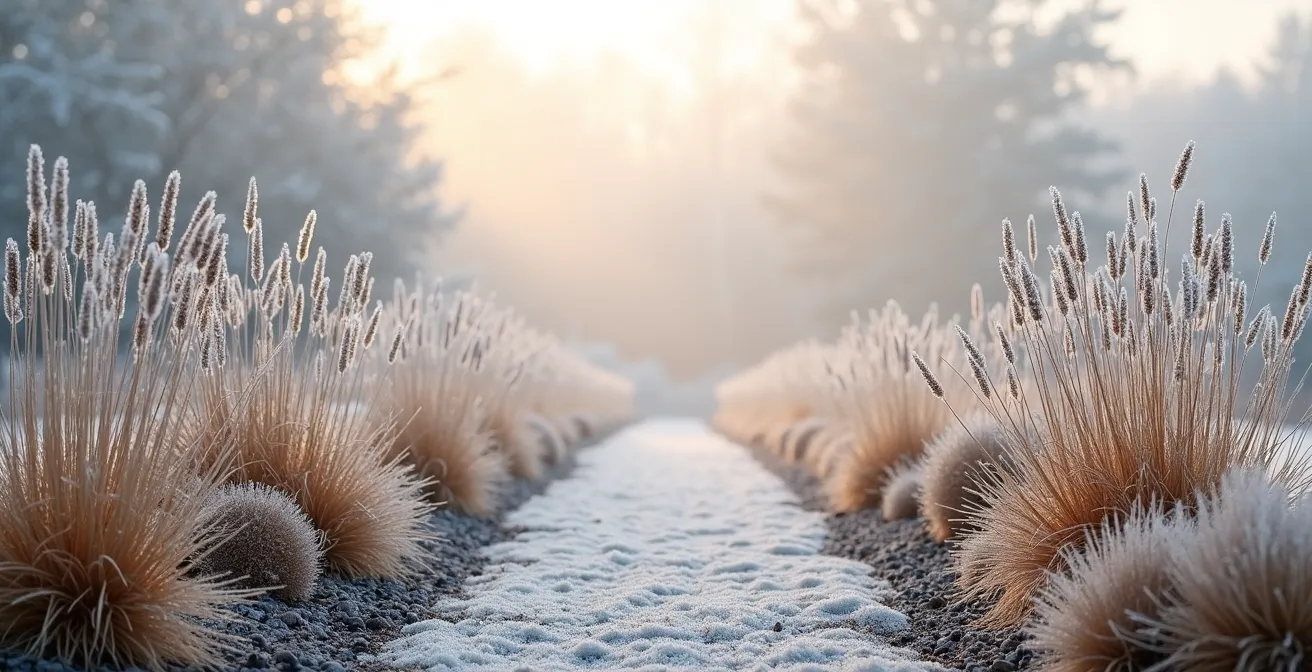
The urge to “clean up” the garden in the fall is strong. We’re taught to cut everything back for a tidy winter appearance. However, this common practice is devastating for countless beneficial insects that rely on dried perennial stems and leaf litter for winter survival. Many native bees, ladybugs, lacewings, and the caterpillars of beautiful moths and butterflies spend the winter tucked away as eggs, larvae, or adults inside the hollow stems of plants like bee balm, coneflowers, and ornamental grasses.
When you cut these stems down in October and bag them for the curb, you are throwing away the next generation of pollinators and pest controllers. The shift to ecosystem gardening requires embracing a new aesthetic: “intentional messiness.” The standing dried stems and seed heads of a winter garden are not a sign of neglect; they are a vital habitat, providing shelter and, for birds, a winter-long buffet of seeds and dormant insects.
So, when is the right time to cut back? The safest approach is to wait until spring, after the overwintering insects have had a chance to emerge. A good rule of thumb is to wait until daytime temperatures consistently reach 50°F (10°C) for at least one week. Even then, how you cut matters. Instead of clearing everything to the ground, you can use the “chop and drop” method to continue providing habitat while making room for new growth. This practice transforms a routine chore into a profound act of conservation.
Your Action Plan: The Chop and Drop Method
- Wait until consistent 50°F (10°C) daytime temperatures for one full week in spring before any cleanup.
- When cutting, leave 8-12 inches of perennial stems standing to provide nesting sites for native bees.
- Chop the removed stems and leaves into 4-6 inch pieces using pruning shears.
- Scatter this chopped material around the base of the plants as a natural, nutrient-rich mulch that also shelters ground insects.
- Designate a small, less visible area of your garden as a permanent refuge where stems are never cut back.
How to Create a Biodiverse Garden That Is Both Beautiful and Ecologically Functional?
A truly functional wildlife corridor is more than just a random assortment of native plants; it’s a designed community that mimics the structure and resilience of a natural landscape. The goal is to create a garden that is not only teeming with life but also largely self-sustaining, weaving beauty and biodiversity into a single, cohesive fabric. This means thinking in layers, from the ground up.
A successful biodiverse garden typically includes four main layers. The groundcover layer of native sedges, wild ginger, or foamflower acts as a living mulch, suppressing weeds and retaining soil moisture. The perennial layer provides a succession of blooms, offering nectar and pollen from spring through fall. The shrub layer, with plants like viburnum or dogwood, offers berries, nesting sites, and critical cover from predators. Finally, the canopy layer of small native trees like serviceberry or redbud provides the overarching structure and high-value food sources.
This layered approach creates a multitude of niches for wildlife to exploit. By planting densely, you create a connected habitat that functions as a single unit. As a study in South Carolina demonstrated, this connectivity is not just a theory; it has measurable results. The research showed that butterflies used connected habitat remnants 2-4 times more often than isolated patches. Your small backyard, when designed as a dense, layered ecosystem, becomes a vital “stepping stone” that connects wildlife to larger green spaces, parks, and other corridors in your neighborhood. It proves that even the smallest spaces, when thoughtfully designed, can have an outsized ecological impact.
How to Maintain a Lush Landscape All Year With Minimal Weekly Effort?
The idea of a lush, beautiful garden often conjures images of constant work: weeding, watering, fertilizing, and spraying. However, a garden designed as a functional ecosystem largely takes care of itself. The key to a low-maintenance landscape is to work with nature’s processes, not against them. By selecting the right plants and letting them form a community, you can create a resilient system that requires observation and occasional editing rather than constant intervention.
The foundation of a self-sustaining garden is choosing plant communities native to your specific region and adapted to your site’s soil, light, and moisture conditions. These plants are already equipped to thrive with minimal input. Planting them densely creates a “living mulch” where the foliage of desirable plants shades the soil, naturally suppressing weeds and reducing the need for watering. This approach fosters a balanced ecosystem where beneficial insects, attracted by the diverse plantings, control pest populations, eliminating the need for chemical sprays.
Embracing a bit of managed wildness is also essential. Allowing some native annuals and biennials to self-seed creates a dynamic, ever-evolving garden that fills its own gaps. Your maintenance role shifts from intensive labor to that of a gentle editor: maintaining clear pathways and edges to signal that the space is cared for, removing the occasional aggressive plant, and perhaps adding new species in the fall when they can establish with minimal watering. Gardeners who adopt these principles often find that, once established, these native plant communities require a 60% reduction in maintenance time compared to traditional ornamental beds. You get more life with less work.
- Select adapted plants: Choose native species perfectly suited for your soil, sun, and moisture levels.
- Plant densely: Create a living mulch that outcompetes weeds and retains soil moisture.
- Attract beneficial insects: A diverse habitat will bring in natural pest control for free.
- Embrace self-seeders: Let plants like violets or black-eyed Susans fill in gaps for a dynamic landscape.
- Edit, don’t dominate: Maintain edges and pathways, but let the plant communities regulate themselves.
Key Takeaways
- Rethink your garden as a functional ecosystem, not just a collection of plants. Every choice should support the full life cycle of local species.
- Prioritize native plants over ornamental ones. Natives provide the specific food and shelter that local insects and birds have evolved to depend on.
- Embrace “intentional messiness” by leaving stems and leaves over winter. This provides crucial hibernating habitat for countless beneficial insects.
How to Design a Solar Landscape Lighting Scheme That Stays Bright All Night?
As we create our wildlife corridors, we must consider the “nightlife.” Artificial light at night is a significant and often overlooked form of pollution that profoundly disrupts nocturnal ecosystems. Bright, cool-white landscape lighting can be a death trap for night-flying insects like moths, which are not only crucial pollinators for certain plants but also a vital food source for birds, bats, and other creatures. This light disorients them, interferes with their navigation, and disrupts mating, turning your garden sanctuary into a hazard after dark.
The goal isn’t to plunge your yard into total darkness, but to light with purpose and precision. A wildlife-friendly lighting scheme prioritizes safety and ambiance while minimizing ecological harm. The first step is to use lights only when and where they are needed. Motion-activated lights are an excellent choice for pathways and entrances, providing illumination for safety without creating a constant, disruptive glare. Secondly, all fixtures should be fully shielded and directed downward to prevent light from spilling up into the sky or horizontally across your property.
Most importantly, the color of the light matters. The blue-white spectrum of typical LEDs is the most harmful to wildlife. Opting for lights with a warm, amber, or red hue (under 3000 Kelvin) significantly reduces their attractiveness to insects and lessens their impact on the circadian rhythms of all animals, including humans. This concept of an “invisible nocturnal corridor” has been proven effective. For instance, a project in Oslo that implemented wildlife-friendly lighting saw a 40% increase in nocturnal pollinator activity within just two years. By making thoughtful choices about our lighting, we extend the function of our wildlife corridor into the night, ensuring it is a safe passage for all its inhabitants, 24 hours a day.
| Aspect | Traditional White LEDs | Wildlife-Friendly Amber/Red |
|---|---|---|
| Impact on Insects | Attracts and kills nocturnal insects | Minimal attraction, preserves populations |
| Effect on Navigation | Disrupts moth and bat navigation | Allows natural navigation patterns |
| Circadian Disruption | High blue light interferes with wildlife rhythms | Minimal impact on natural cycles |
| Coverage Strategy | Constant bright illumination | Motion-activated, downward-focused |
| Energy Use | High constant draw | Low intermittent use |
| Food Web Support | Depletes insect prey base | Maintains nocturnal food chains |
Building a backyard wildlife corridor is a journey of rediscovery. It transforms gardening from a chore into a partnership, where every plant chosen and every action taken contributes to a larger, living story. By moving beyond the sterile green lawn and embracing a more complex, layered, and intentionally managed landscape, you are not just creating a garden; you are restoring a piece of the world.