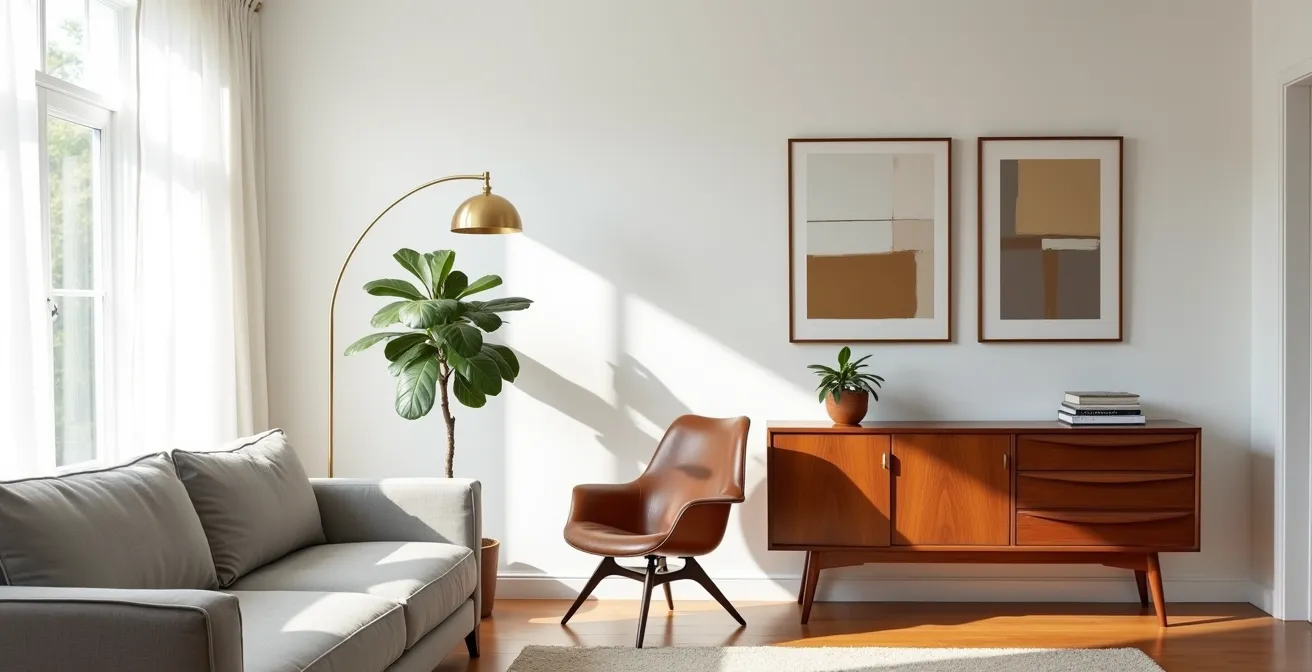
The secret to a timeless home isn’t just mixing old with new; it’s treating vintage pieces as curated assets, not just decorations.
- Authentic vintage, especially mid-century design, often appreciates in value, unlike new furniture which depreciates immediately.
- Success lies in understanding a piece’s intrinsic value (its ‘design DNA’), preserving its history (like patina), and managing risks like woodworm.
Recommendation: Shift your mindset from a decorator to a curator. Focus on sourcing pieces that tell a story and have structural integrity to build a personal, valuable, and trend-proof aesthetic.
There’s a fine line between a home that feels curated and one that feels like a cluttered antique shop. You admire those spaces in magazines—the ones with a striking vintage armchair or a beautifully aged brass lamp—and you want that character for your own home. But the fear is real: how do you bring in those historical pieces without your living room screaming “grandma’s attic”? The common advice is to simply “mix old and new,” a vague platitude that offers little practical guidance and often leads to timid, disconnected results.
The truth is, integrating vintage decor successfully is not about following fleeting trends. It’s a curatorial practice. It’s about understanding that a well-chosen vintage item is an asset, not just an object. It has a story, a specific ‘design DNA,’ and often, an appreciating value that mass-produced modern furniture will never possess. Shifting your mindset from decorator to curator—someone who identifies, preserves, and strategically showcases these assets—is the key to creating a home that is deeply personal, sophisticated, and immune to the ever-churning cycle of trends.
This guide will walk you through the essential principles of this curatorial approach. We will explore how to identify pieces with intrinsic value, preserve their character, manage potential risks, and ultimately, weave them into a coherent narrative that reflects your personal style. By mastering these concepts, you can confidently source and integrate vintage decor to build a space with soul and lasting appeal.
Summary: How to Source and Integrate Vintage Decor Without Your Home Looking Dated?
- Why That “Old” Chair Might Be a Mid-Century Masterpiece Worth $2,000?
- How to Clean Vintage Brass Without Destroying the Patina?
- Statement Piece or Accent: Which Role Should a Vintage Item Play in a Modern Room?
- The Woodworm Risk That Can Spread From Vintage Furniture to Your Floors
- When to Visit Flea Markets to Score the Best Items Before Dealers Do?
- How to Identify and Buy Authentic Artisan Crafts Without Exploiting Locals?
- How to Curate a Personal Home Aesthetic That Transcends Fleeting Trends?
- How to Curate a High-End Wardrobe Exclusively Through Ethical Second-Hand Shopping?
Why That “Old” Chair Might Be a Mid-Century Masterpiece Worth $2,000?
The first step in becoming a curator of your own home is to stop seeing “old” furniture and start seeing potential assets. While traditional antiques have seen a market decline, a recent market analysis reveals that furniture from the 1950s-1970s has experienced a significant surge in value. Unlike new items, which lose their worth the moment they leave the showroom, a quality vintage piece can be a sound investment. In fact, while a new $4,000 sofa set might be worth only 25% of its original price in a few years, a well-maintained mid-century piece often holds or even increases its value.
So, what separates a dusty relic from a valuable collectible? The answer lies in its Design DNA. The primary driver of value is the designer or manufacturer. Pieces associated with iconic names like Herman Miller, Knoll, Eames, or Hans Wegner are the blue-chip stocks of the furniture world. They command a premium because their designs are timeless and their quality is proven. Many original mid-century modern pieces were built with superior craftsmanship and materials, designed in high-end factories to last for generations. A well-made 1960s credenza can still be rock-solid today, and seasoned collectors recognize this enduring quality.
When you’re evaluating a piece, you are not just buying a chair; you are acquiring a piece of design history. Look for maker’s marks, check the quality of the joinery, and consider the materials. Is it solid wood? Is the construction robust? These are the indicators of an object with intrinsic value that will transcend trends and become a cherished part of your home’s story.
How to Clean Vintage Brass Without Destroying the Patina?
Once you’ve acquired a piece with history, your role as a curator shifts to preservation. With metals like brass, the instinct is often to polish them until they gleam like new. This is a mistake. The soft, dark layer that develops over time is called patina, and it is a testament to the object’s age and story. Erasing it is like tearing a page out of a history book; you are destroying a significant part of its character and value. The goal is not to eliminate patina, but to gently clean the object while honoring its aged finish.
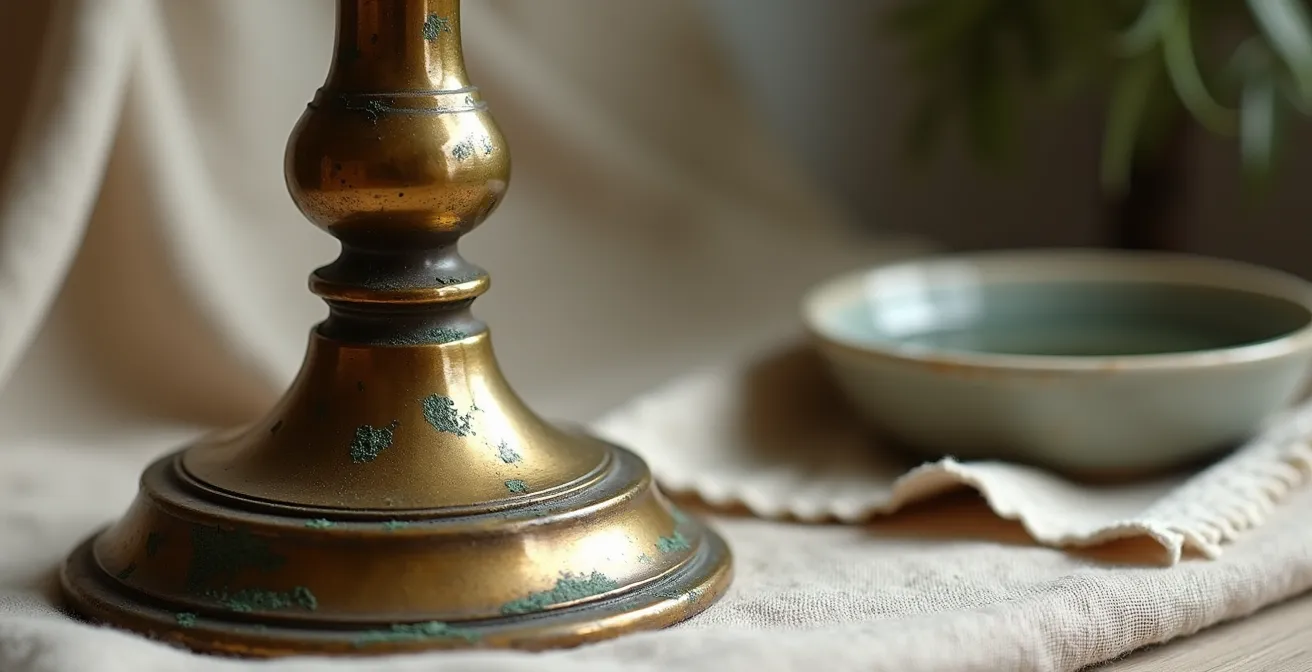
As you can see in the subtle variations of an aged piece, the most beautiful examples have a deep, dark patina in the recessed areas, with a soft, warm glow on the raised surfaces that catch the light. This contrast is what gives vintage brass its unique depth and soul. A phased, conservative cleaning approach is the only way to achieve this look without causing damage. Always start with the gentlest method and only escalate if necessary, stopping as soon as you are happy with the result.
A Conservator’s Guide: The Phased Cleaning Approach
- Phase 1 – Dry Method: Start by removing surface dust with a soft, dry microfiber cloth. This cleans the piece without disturbing the delicate patina layer.
- Phase 2 – Water-Based Method: If more cleaning is needed, use a cloth slightly dampened with distilled water only. Work in small, gentle circular motions.
- Phase 3 – Mild Soap Solution: For tougher grime, mix a single drop of gentle dish soap in warm water. Apply sparingly with a soft cloth and dry the piece immediately and thoroughly.
- Phase 4 – Gentle Acid (Use with Caution): For stubborn tarnish, and only if absolutely necessary, use a solution of lemon juice or white vinegar diluted 1:1 with water. Apply with a cotton swab.
- The Golden Rule: Always test any cleaning method on a small, inconspicuous area first. The goal is to enhance, not erase.
Statement Piece or Accent: Which Role Should a Vintage Item Play in a Modern Room?
Strategic placement is where the art of curation truly comes to life. A vintage piece should never feel like an afterthought; it must have a defined role within the room’s ecosystem. The most common mistake is cluttering a space with too many “interesting” things, turning a home into a museum. As the celebrated designers at Studio McGee advise, the key is to strike a balance and give vintage pieces room to breathe. A single, powerful vintage object can become the narrative anchor for an entire room, the central “star” around which all other elements orbit.
Determine if your piece is a statement or an accent. A statement piece—like a sculptural armchair, a large-scale artwork, or a uniquely patinated dresser—demands to be the focal point. It should be the first thing that draws the eye. To make it shine, the surrounding decor should be more subdued, acting as a supportive cast. Modern, neutral elements, cozy textiles, and natural touches like plants will ground the statement piece and keep the overall feeling fresh and contemporary, not dated.
Smaller vintage items, on the other hand, work best as accents. They can be grouped together to create a powerful vignette on a shelf or console table. The magic here often comes from mixing eras and textures. A collection of vintage pottery, a stack of classic books, or a cluster of aged brass candlesticks can add layers of personality and history without overwhelming the space. The goal is to create intentional moments of discovery that tell a story and reflect your unique journey.
The Woodworm Risk That Can Spread From Vintage Furniture to Your Floors
Part of being a responsible curator is risk management. One of the most significant—and often overlooked—risks when bringing vintage wood furniture into your home is woodworm. These are not actually worms, but the larvae of wood-boring beetles. An active infestation in a new flea-market find can quickly spread to other wooden items in your home, including your floors and structural beams, causing devastating damage. Therefore, learning to identify the threat and implementing a strict quarantine protocol is non-negotiable for any serious collector.
The first step is diagnosis. It’s crucial to distinguish between historic, inactive damage (which is purely cosmetic) and an active infestation that requires immediate action. The tell-tale sign of an active problem is “frass”—a fine, powdery dust found near the exit holes. Fresh holes will also have light-colored, sharp edges, whereas old holes will be darker and more weathered.
This comparative table will help you assess any wooden piece before you bring it into your living space. As this guide to identifying furniture issues shows, a careful eye can prevent a major problem.
| Indicator | Historic (Safe) | Active (Requires Treatment) |
|---|---|---|
| Exit hole edges | Dark, stained edges from age | Fresh, light-colored wood visible |
| Dust presence | No dust or powder | Fine sawdust (frass) near holes |
| Hole appearance | Smooth, weathered edges | Sharp, clean-cut edges |
| Sound test | Solid tap sound | Hollow sound indicating tunneling |
| New holes | No change over time | New holes appear during monitoring |
If you suspect any activity, or simply as a rule of thumb for all new wooden pieces, you must implement a quarantine. This simple process is the best defense for protecting the rest of your home.
When to Visit Flea Markets to Score the Best Items Before Dealers Do?
Sourcing unique pieces at a flea market is a strategic hunt, not a casual stroll. To get the best finds before professional dealers snap them up, you must understand the rhythm of the market. It operates in three distinct waves, each offering a different type of opportunity. As a curator, knowing which wave to ride is key to your success. The most coveted items, those with true designer DNA or unique character, are often gone within the first hour of opening.
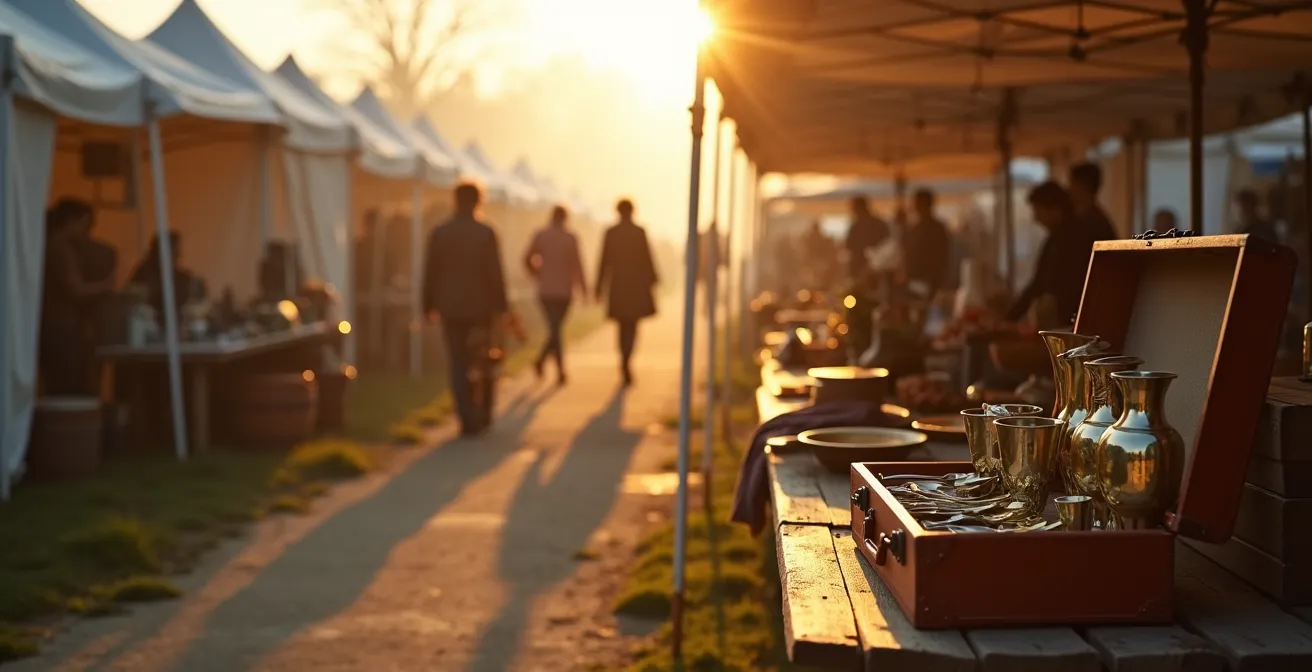
The first wave is the Dealer’s Hour, typically at dawn as vendors are still unloading. This is when you need to be there if you are on the hunt for a specific, high-value item. You’ll be competing with seasoned professionals, so you must be decisive. Know what you’re looking for, have cash ready, and be prepared to make a quick decision. This is where the true treasures are unearthed.
The second wave, from mid-morning to early afternoon, is the Browser’s Paradise. The initial frenzy is over, the crowds are larger, and the atmosphere is more relaxed. This is the perfect time for discovery. You can take your time, inspect items more closely, and find wonderful, characterful pieces that may have been overlooked in the early rush. It’s an excellent time to hunt for accents and smaller items to build your vignettes.
The final wave is the Haggler’s Dream, in the last hour or two before the market closes. Vendors are tired and eager to sell rather than pack everything back up. This is your moment to negotiate. While the “blue-chip” items are long gone, you can often get incredible deals on larger, heavier pieces or items that need a little love. If you spot a quality piece with good bones that has been sitting all day, make a reasonable offer—you might just go home with a bargain.
How to Identify and Buy Authentic Artisan Crafts Without Exploiting Locals?
As your curatorial eye develops, you’ll be drawn not just to branded vintage but also to unique, handmade artisan crafts. These pieces bring a deep sense of soul and global narrative to a home. However, in a world of mass-produced knockoffs, ensuring your purchase is both authentic and ethical is paramount. Buying a genuine artisan piece means you are supporting a person, a tradition, and a culture. A price that seems “too good to be true” often is—and it usually comes at the expense of the maker.
The key to identifying authentic work is to look for the story. An authentic seller, whether at a local market or a specialized shop, will know the narrative behind the piece. They can tell you about the person who made it, the community it came from, and the meaning of the patterns or symbols used. This is what separates a true craft from a souvenir. As one analysis notes, the value is rooted in the process itself. According to an expert at My Vintage Market, when discussing the value of well-made pieces:
The main reason these pieces hold their value is the quality craftsmanship and materials. They were made to last, designed by specialist designers and produced in high end factories.
– My Vintage Market, Analysis of Mid-Century Furniture Value
To ensure you’re making a responsible purchase, use the “Story Test” by asking a few simple questions. Look for the beautiful, slight imperfections that are the hallmark of a handmade object, rather than the sterile perfection of a machine. And if a seller claims their products are “fair trade,” don’t be afraid to ask for verification, such as a certification from a recognized body like the Fair Trade Federation. A true artisan piece has a fair price attached, one that reflects the materials, the hours of skilled labor, and the cultural heritage it represents.
How to Curate a Personal Home Aesthetic That Transcends Fleeting Trends?
The ultimate goal of a curator is to build a collection that is a physical representation of a personal story. A truly timeless home is one that reflects the lives, passions, and memories of the people who live in it—not a catalog of the current year’s trends. To achieve this, you must first understand your own “Design DNA.” This is the unique thread of colors, textures, shapes, and themes that you are consistently drawn to, independent of what’s currently in fashion.
A simple way to start is by creating a mood board, either on Pinterest or with physical clippings. Gather images that resonate with you, from interiors and fashion to nature and art. Over time, you’ll begin to see patterns emerge. Do you gravitate towards warm, earthy tones or cool, crisp neutrals? Are you drawn to organic shapes or clean, geometric lines? This exercise helps you define your core aesthetic, giving you a powerful filter for every purchase you consider. The final check is the “10-Year Test”: will you still connect with this piece in a decade, based on your core DNA?
Once you understand your Design DNA, you can begin to search for vintage objects that act as physical anchors for your personal narrative. This is where a home truly gains its soul.
Case Study: Creating a Personal Narrative Through Objects
Consider the home of a collector who styles her tables not just for dinner, but for meaning. She uses Vermont pottery that brings warmth and earthiness, echoing family trips. Pewter plates connect to a love of colonial history, and heirloom pieces passed down through generations are used daily, not stored away. Even her 1968 VW Fastback is named Shirley, after her mother. Each object is more than just decor; it’s a vessel for memory and a way of honoring the hands and stories that came before. This is the essence of a curated, personal aesthetic.
Your home becomes a living museum of your life’s journey. A piece of pottery from your travels, a chair that reminds you of your grandfather, a painting that captures the mood of your favorite book—these are the things that create a space that is authentically, un-replicably yours.
Key takeaways
- View vintage decor as an asset. Quality mid-century pieces often hold or increase their value, unlike new furniture which depreciates rapidly.
- Act as a preservationist. Gently clean pieces to honor their patina and always quarantine new wooden items to prevent the spread of woodworm.
- Curate a personal story, not a trend. Identify your own “Design DNA” and select pieces that act as physical representations of your life and memories.
How to Curate a High-End Wardrobe Exclusively Through Ethical Second-Hand Shopping?
The principles used to curate a high-end, second-hand wardrobe—focusing on timeless quality, investment pieces, and expert tailoring—apply directly to creating a sophisticated and sustainable home. Just as a fashion expert scours consignment shops for a classic, well-made coat rather than buying a dozen fast-fashion jackets, a home curator should seek out vintage furniture with enduring “good bones.” This approach, which we can call the “Capsule Home” concept, prioritizes quality over quantity and personality over passing fads.
The core of this philosophy is to define your foundational “capsule” pieces. These are the larger, high-use items like sofas, storage, or dining tables. Here, you should invest in high-quality vintage items in classic shapes and relatively neutral tones. Their superior craftsmanship means they will last for decades, and their timeless design ensures they won’t look dated in a few years. To justify the investment in these well-made pieces, think in terms of “cost per year of use”—a solid wood vintage hutch that lasts 30 years is far cheaper than a particleboard version you replace every five.
Once your core capsule is in place, you can use smaller, more accessible vintage finds as rotating “accessories.” Think of decorative objects, textiles, lamps, and art as the seasonal scarves or statement jewelry of your home. They add personality and can be switched out easily to refresh a room without a major overhaul. Finally, don’t be afraid to “tailor” your vintage finds. Reupholstering a chair in a bold, modern fabric or rewiring a vintage lamp can bridge the gap between historic quality and contemporary style, creating a piece that is perfectly and uniquely yours.
Start today by looking at your own home not just as a space to be filled, but as a collection to be built. Evaluate one room and begin to identify its core pieces, assess their long-term value, and think about what story you want it to tell.