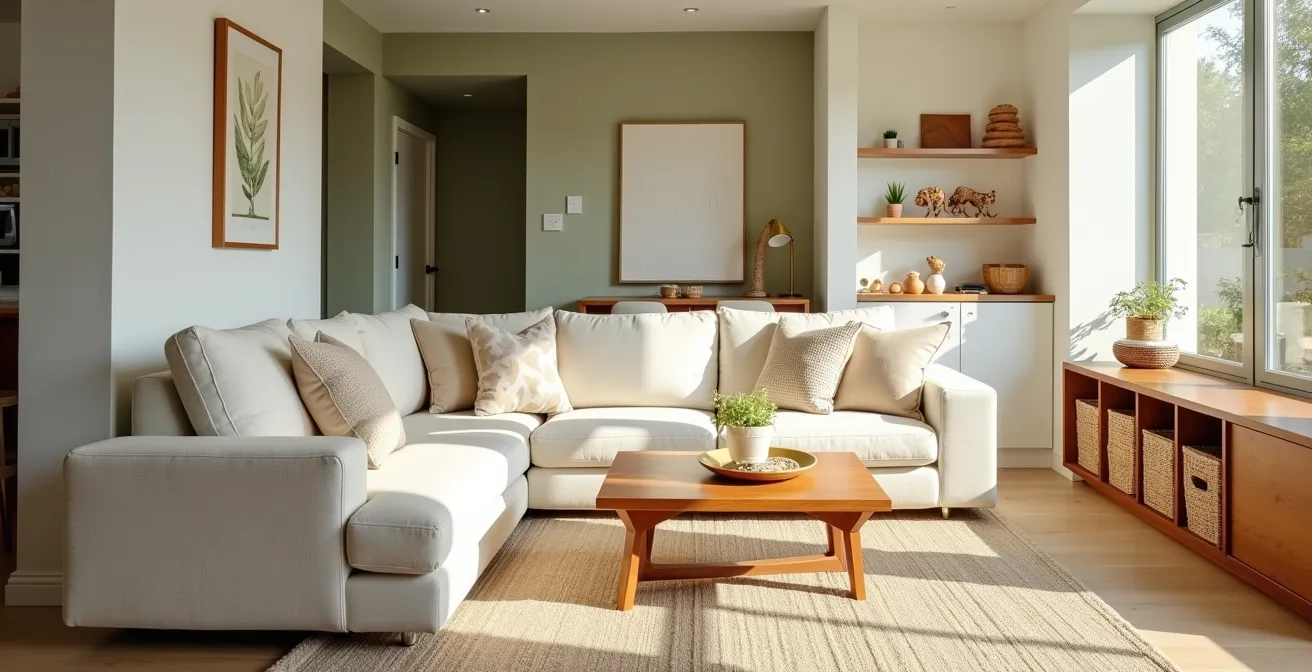
The secret to a beautiful family home isn’t sterile minimalism, but smart, sensory design that embraces the chaos.
- Minimalist perfection often creates stress; a well-designed home should absorb life, not resist it.
- Focus on dynamic zones, resilient materials, and layered lighting to create a space that feels as good as it looks.
Recommendation: Shift your goal from creating a ‘show home’ to building a ‘support system’—a space that actively works for your family’s well-being.
As a parent, you live with a familiar tension. You scroll through Instagram and see pristine, minimalist living rooms bathed in perfect light, and you feel a pang of desire. Then you look up and see a fortress of Lego on the rug, crayon marks on a cushion, and a happy dog shedding on your favorite chair. The conventional wisdom suggests you must choose: the stylish, adult sanctuary or the durable, kid-proof playroom. This is a false choice, a myth that creates unnecessary stress.
Most advice focuses on containment—hiding toys in baskets and covering everything in drab, industrial-grade fabrics. It treats family life as a problem to be managed rather than a reality to be celebrated. The pressure to maintain a flawless aesthetic can be exhausting. What if the goal wasn’t to fight the chaos, but to design a space that could gracefully absorb it? What if true style wasn’t about how a room looks in a static photo, but how it supports the dynamic, messy, beautiful flow of family life?
Our approach is different. We believe the most aspirational family home is not a sterile museum but a resilient, multi-sensory environment. It’s about making smart, intentional choices—from fabric to floor plan—that reduce your workload, lower stress, and actually make your home more beautiful and connected. This guide will walk you through the core principles for creating a space that is both genuinely elegant and deeply welcoming to everyone who lives in it, pets included.
This article explores how to achieve that perfect balance. We’ll deconstruct common design myths and provide a clear roadmap to a home that is both a reflection of your style and a haven for your family.
Summary: A Realistic Guide to a Chic and Resilient Family Home
- Why Minimalist Design Can Sometimes Increase Anxiety in Busy Families?
- How to Define Zones in an Open Concept Room Without Blocking Light?
- Velvet or Microfiber: Which Sofa Fabric Withstands Pet Claws Better?
- The Traffic Flow Error That Makes Your Living Room Feel Crowded
- How to Reduce Echo and Noise in Modern Homes With High Ceilings?
- How to Optimize Small Living Areas for Multi-Purpose Use Without Clutter?
- How to Design an LED Lighting Plan That Enhances Mood and Saves Energy?
- How to Replace Toxic Cleaning Products With Effective Homemade Solutions?
Why Minimalist Design Can Sometimes Increase Anxiety in Busy Families?
The allure of minimalism is powerful: clean surfaces, zero clutter, and a sense of calm. For busy families, it seems like the perfect antidote to chaos. However, the pursuit of this aesthetic can paradoxically become a major source of stress. When every object has a designated, hidden spot, every toy left out or book on the table feels like a failure. The pressure to constantly tidy and maintain a pristine environment can be exhausting, creating a home where relaxation feels impossible.
This isn’t just a feeling; it has a physiological basis. Research has shown a direct link between our home environment and our stress levels. In fact, UCLA research found people in cluttered homes have higher levels of cortisol, the body’s primary stress hormone. But the key insight is that the *pressure* to maintain an unnaturally tidy space in a busy home can trigger the same stress response. The goal isn’t to live in an empty box, but to create a system that feels organized without demanding constant vigilance.
A truly family-friendly approach embraces “organized chaos.” It means having accessible, easy-to-use storage that kids can manage themselves. It means choosing finishes that are forgiving of fingerprints and smudges. Instead of striving for an empty, magazine-ready room, the aim should be to design a psychologically comfortable space that supports daily life, rather than fighting it. This means accepting a certain level of “lived-in” imperfection as a sign of a happy, active home.
The ultimate goal is to design a home that reduces your workload, not adds to it. It’s about finding a balance where the house serves the family, not the other way around.
How to Define Zones in an Open Concept Room Without Blocking Light?
Open-concept living is fantastic for family connection and maximizing natural light, but it can also feel like one giant, undefined hall where activities bleed into one another. The key to making it work is creating “zones” for different activities—like relaxing, dining, or playing—without putting up walls. This technique, known as dynamic zoning, uses subtle visual cues to create psychological boundaries while keeping the space airy and bright.
Forget solid barriers. The most effective tools for zoning are light, texture, and furniture placement. A large area rug, for example, can instantly anchor a living room arrangement, visually separating it from a dining area. The texture and color of the rug create a clear “destination.” Similarly, lighting can work magic. A low-hanging pendant light over a dining table creates a sense of intimacy and purpose, while an arc floor lamp can curve over a chair to define a cozy reading nook.
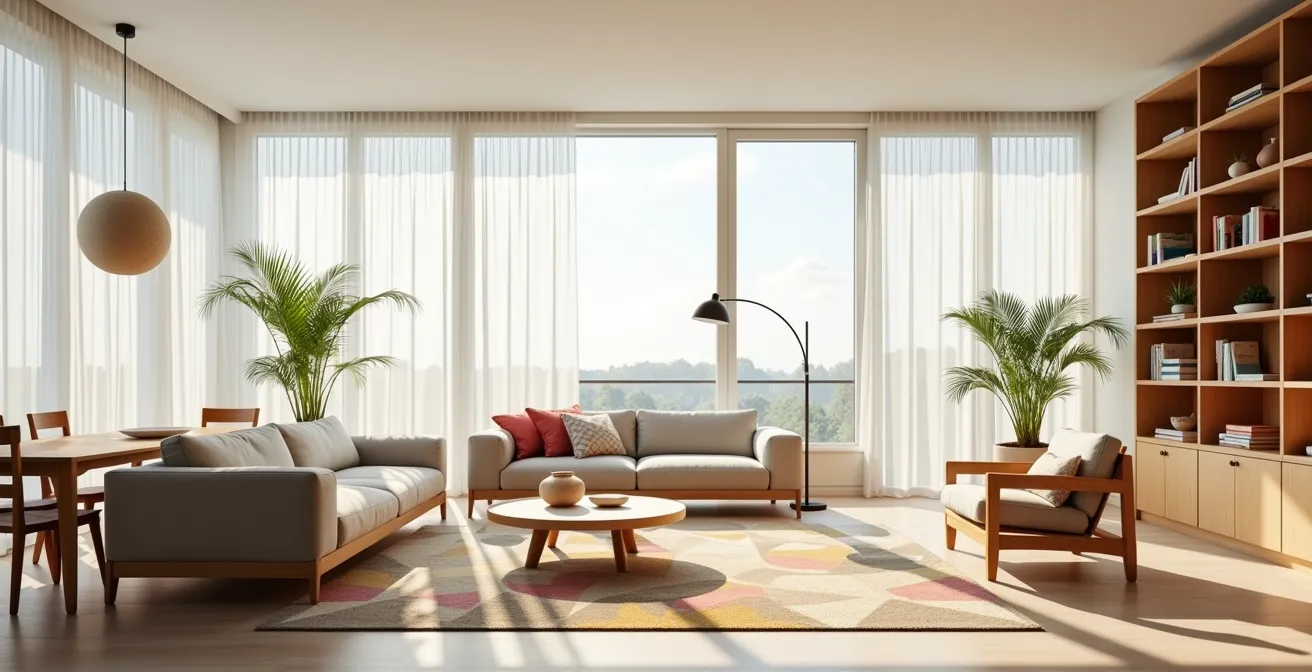
Furniture itself can serve as a permeable divider. An open-backed shelving unit, like an etagere bookcase, can separate a play area from a workspace without blocking a single ray of light. Even a strategically placed group of tall plants can act as a natural, living screen. The goal is to guide the eye and suggest function, creating rooms-within-a-room that feel distinct yet connected.
This approach allows your home to adapt to your family’s needs throughout the day, transforming from an open playground to a series of intimate, functional zones.
Velvet or Microfiber: Which Sofa Fabric Withstands Pet Claws Better?
The sofa is the heart of the family living room, and it takes the most abuse. Between movie nights, snack spills, and pet naps, choosing the right fabric is one of the most critical decisions you’ll make. The good news is you don’t have to sacrifice style for durability. The concept of Resilient Aesthetics is about selecting materials that are inherently tough but also look and feel luxurious. When it comes to pets, the primary enemy is the fabric’s weave.
Materials with loose weaves or visible loops (like tweeds or certain linens) are a cat’s dream and a homeowner’s nightmare, as claws can easily snag and pull the threads. The secret is to choose fabrics with a very tight, flat weave where there’s nothing for claws to catch on. This is where performance velvet and high-quality microfiber shine. Performance velvets have a dense pile that is incredibly difficult for a claw to penetrate, and many are treated for stain resistance. Microfiber, a synthetic, is woven so tightly that pet hair often sits on the surface for easy removal and it resists snagging.
While both are excellent choices, they offer different aesthetics and performance characteristics. To make the best decision for your family, a direct comparison is often the most helpful tool.
The following table, based on insights from design experts like the Laura U Design Collective, breaks down the key differences between these two workhorse fabrics.
| Feature | Performance Velvet | High-Quality Microfiber |
|---|---|---|
| Claw Resistance | Excellent (tight weave) | Very Good (no loops) |
| Pet Hair Release | Good | Excellent |
| Stain Resistance | Very Good (with treatment) | Good |
| Visual Appeal | Luxurious, Instagram-worthy | Casual, practical |
| Durability | Contract-grade available | Highly durable |
| Price Range | $$$ – $$$$ | $$ – $$$ |
Ultimately, performance velvet offers a more high-end, “Instagram-worthy” look with outstanding durability, while microfiber provides a highly practical, budget-friendly, and almost indestructible alternative.
The Traffic Flow Error That Makes Your Living Room Feel Crowded
You can have the most beautiful furniture and a perfectly coordinated color palette, but if your living room is hard to walk through, it will always feel stressful and dysfunctional. The single biggest mistake families make is pushing all their furniture against the walls. It seems intuitive—more open space in the middle, right? Wrong. This creates an awkward, empty “dance floor” and forces people to navigate a confusing obstacle course around the room’s perimeter.
Effective interior design is like choreographing a dance. It’s all about traffic flow—the natural paths people take to move through a space. The goal is to create clear, unobstructed pathways to every door and every seat. A key technique is to “float” your main furniture, like the sofa and armchairs, away from the walls. This allows you to create an intimate conversation area and defines a clear walkway behind it. As a rule of thumb, main pathways should be at least 36 inches wide to allow for comfortable passage.
The spacing between furniture pieces is also critical. The distance between your sofa and coffee table, for example, should be around 18 inches—close enough to reach your drink, but far enough for legroom. Placing a sharp corner of a console table right on a natural walking path is a recipe for bruised hips. It’s about anticipating movement and designing for it, ensuring that no one has to awkwardly squeeze past furniture to get to their seat.
Action Plan: Auditing Your Living Room’s Flow
- Points of contact: List all entryways, doors, and major destinations in the room (e.g., sofa, window, bookshelf).
- Collecte: Observe and map the “desire paths” your family naturally takes between these points. Are there any obstacles?
- Cohérence: Check your key measurements. Is there at least 36″ for main paths and around 18″ between the sofa and coffee table?
- Mémorabilité/émotion: Does the layout feel inviting and easy, or is it a frustrating maze? Identify any “pinch points” that feel tight.
- Plan d’intégration: Prioritize moving one or two key pieces of furniture to open up the most critical pathway.
Correcting these layout mistakes often costs nothing but can completely transform how your living room feels, turning a crowded, awkward space into one that is welcoming and effortless to live in.
How to Reduce Echo and Noise in Modern Homes With High Ceilings?
Modern architecture, with its high ceilings, large windows, and open floor plans, is visually stunning. But these same features can create an acoustic nightmare. Hard surfaces like glass, concrete, and hardwood floors reflect sound waves, turning a room into an echo chamber where every conversation, footstep, and dropped toy is amplified. This constant background noise contributes to sensory overload and can make a home feel chaotic and stressful. The solution lies in sensory design, specifically by adding soft, sound-absorbing materials.
Your goal is to strategically introduce textiles and varied textures to break up and absorb sound waves. Think beyond just a rug. Large-scale textile art, such as a macrame wall hanging or a beautiful quilt, can act as a decorative sound sponge on a large, empty wall. A gallery wall with framed art of varying sizes and depths is also surprisingly effective at scattering sound, preventing it from bouncing around freely.
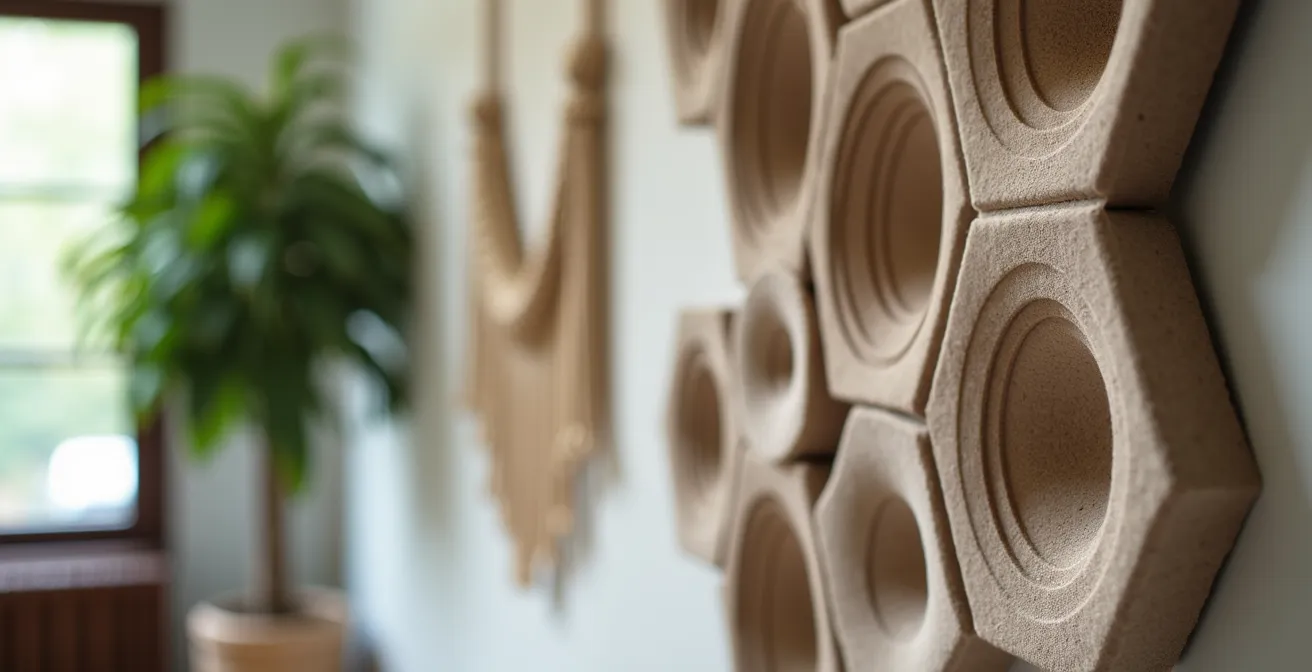
Don’t underestimate the power of plants and furniture. Tall, leafy plants like fiddle-leaf figs are natural sound diffusers. Upholstered furniture, especially pieces with high backs, works to absorb sound rather than reflect it. For a more direct approach, modern acoustic panels are no longer the ugly foam squares of the past. They now come designed as beautiful art pieces, such as hexagonal felt tiles or grooved wood panels, that add to your decor while creating a more peaceful environment.
By consciously designing for sound, you can tame the echo and transform a loud, cavernous space into a serene and inviting family sanctuary.
How to Optimize Small Living Areas for Multi-Purpose Use Without Clutter?
In many family homes, especially smaller ones, the living room must be a jack-of-all-trades: a playroom by day, a cinema by night, and a quiet retreat after the kids are in bed. The challenge is making it serve all these functions without succumbing to clutter. The answer isn’t just more storage bins; it’s investing in smart, multi-purpose furniture and embracing the idea of “time-based zoning.” This means your room’s layout and function can change depending on the time of day or the season.
Start by rethinking your core furniture. Instead of a standard coffee table, consider a hydraulic one that lifts and expands to become a dining or craft table. Choose ottomans with hidden storage that can swallow up toys at a moment’s notice. Wall-mounted, fold-down desks can provide a dedicated workspace that completely disappears when the workday is over. By choosing pieces that serve at least two functions, you drastically reduce the amount of furniture you need, freeing up precious floor space.
Maximizing vertical space is also essential. Ceiling-height shelving draws the eye upward, making the room feel taller, and provides a home for books, decor, and storage baskets. A floating media console keeps the floor clear, creating an illusion of more space. This approach is about making every square inch work harder. Here are some of the most effective solutions:
- Hydraulic Coffee Tables: These transform from a low coffee table to a dining-height surface.
- Storage Ottomans: The ultimate secret weapon for hiding toys, blankets, and remote controls.
- Modular Sofas: Can be reconfigured from a large sectional for movie night into separate chairs for a party.
- Wall-Mounted Desks: Offer a functional workspace that folds away to reclaim the room for leisure.
- Ceiling-Height Shelving: Uses under-utilized vertical space for storage and display.
This strategy allows a single room to effortlessly adapt to the rhythm of your family’s life, proving that you don’t need a bigger house, just a smarter one.
How to Design an LED Lighting Plan That Enhances Mood and Saves Energy?
Lighting is one of the most powerful and often overlooked tools in interior design. It does more than just illuminate a room; it sets the mood, defines zones, and can dramatically impact your family’s well-being. A great lighting plan isn’t about having a single, bright overhead fixture. It’s a layered approach that combines three types of light to create a space that is both functional and atmospheric, all while being energy-efficient thanks to modern LED technology.
The first layer is Ambient Light. This is the general, overall illumination for the room, typically from recessed ceiling lights or a central fixture. The key here is to have them on a dimmer switch, allowing you to go from bright and energetic for daytime play to soft and relaxed in the evening. The second layer is Task Light, which provides focused light for specific activities. This includes adjustable floor lamps for reading nooks or under-cabinet lighting in a built-in workspace. Modern “tunable white” LEDs are fantastic for this, as you can adjust the color temperature from a cool, focus-enhancing light to a warm, cozy glow.
The final, magical layer is Accent Light. This is what gives a room depth and personality. It’s the art of highlighting what you love, like a picture light over a favorite painting or an uplight behind a large plant. A popular technique is placing LED strips behind a TV or media console. This “bias lighting” not only looks great but also reduces eye strain during movie nights. Furthermore, maximizing natural light is crucial, as research demonstrates that natural daylight significantly impacts both mood and productivity.
Using smart controls, you can even pre-program “scenes”—like “Homework Time,” “Family Movie,” or “Quiet Evening”—that adjust all three layers with a single touch, effortlessly transforming the feel of your room.
Key Takeaways
- True family-friendly design is about reducing stress and supporting life, not achieving sterile perfection.
- Use dynamic zoning with light and furniture to define spaces without sacrificing an open feel.
- Prioritize “Resilient Aesthetics” by choosing durable, tightly-woven fabrics like performance velvet or microfiber that are both beautiful and tough.
How to Replace Toxic Cleaning Products With Effective Homemade Solutions?
Creating a healthy home goes beyond aesthetics; it extends to the very air you breathe. Many common household cleaners contain harsh chemicals that can be harmful to children and pets. A core part of a family-friendly design philosophy is minimizing this exposure. This can be achieved in two ways: first, by making design choices that inherently require less cleaning, and second, by swapping commercial products for simple, effective, and non-toxic homemade solutions.
The most effective cleaning is the cleaning you don’t have to do. By selecting materials like the performance fabrics discussed earlier, which are inherently stain-resistant, you are designing a lower-maintenance home from the start. Choosing finishes that don’t show fingerprints easily and having designated, easy-to-access storage for toys also dramatically cuts down on daily cleaning chores. It’s a proactive approach to keeping your home looking and feeling fresh.
For the cleaning you do need to do, your pantry holds everything you need. White vinegar is a natural disinfectant, baking soda is a powerful deodorizer and gentle abrasive, and essential oils can add a beautiful, natural fragrance without synthetic chemicals. These simple ingredients can be combined to create powerful cleaners for almost any surface in your home.
- All-Purpose Spray: In a spray bottle, mix equal parts white vinegar and water. Add 10-15 drops of an essential oil like grapefruit for scent. Perfect for countertops and surfaces.
- Glass Cleaner: For streak-free windows and mirrors, mix 2 cups of water, 1/2 cup of white vinegar, and 1/4 cup of 70% rubbing alcohol.
- Carpet Deodorizer: Mix a cup of baking soda with 10 drops of lavender essential oil. Sprinkle it over your carpet, let it sit for 15 minutes, then vacuum thoroughly.
- Wood Polish: Combine 1/4 cup of olive oil with 1/4 cup of white vinegar and a few drops of orange or cedarwood essential oil for a nourishing polish.
By making these small changes, you create a safer environment for your family and reduce your reliance on expensive, toxic products, proving that a clean, beautiful home can also be a truly healthy one.