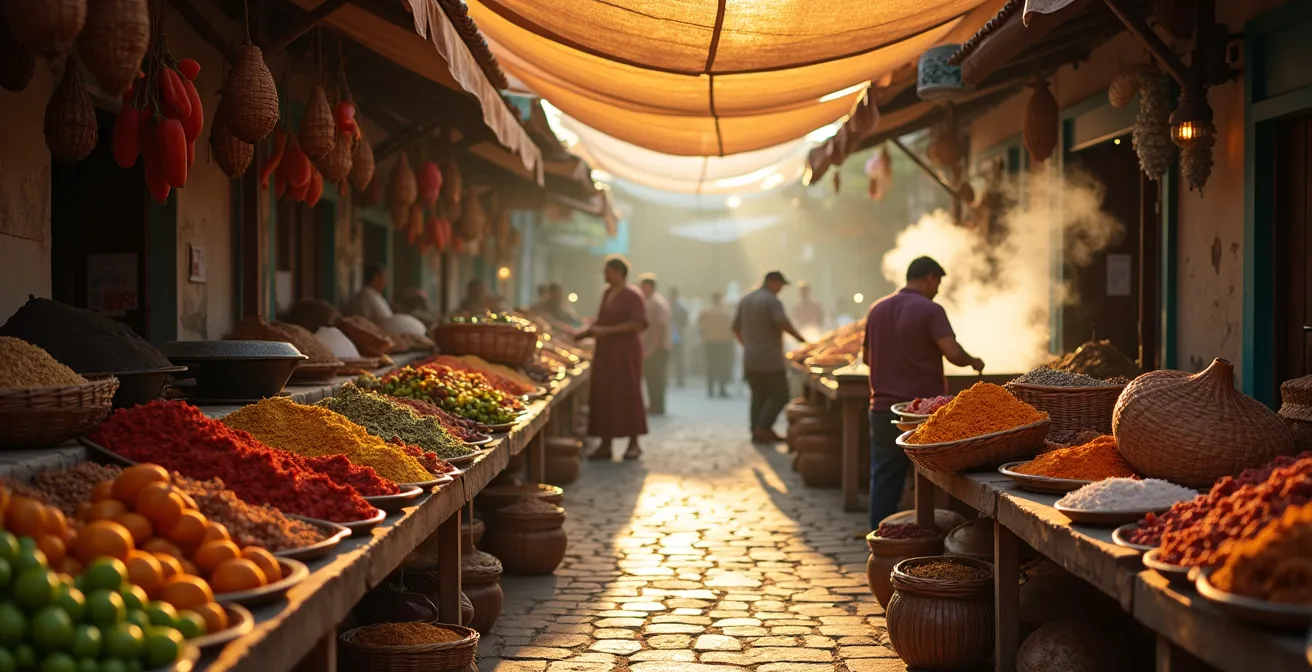
In summary:
- Decode a city’s “culinary rhythm” by observing when locals eat, not just generic peak hours, to spot authentic, busy eateries.
- Frame your questions to locals by asking where *they personally* eat, not for a generic “recommendation,” to get honest answers.
- Recognize that modern tourist traps have evolved from physical photo menus to slick, multi-language QR code menus.
- Trust vendors with long lines of locals; high turnover is a key indicator of both freshness and food safety.
- Turn your meal into a cultural exchange by asking about the story behind a dish, not just its ingredients.
For any food-obsessed traveler, the mission is simple: find the food that tells the real story of a place. Yet, in a world saturated with tourist-facing restaurants and algorithm-driven apps, this quest often ends in disappointment—a generic meal in a soulless dining room. We’re told to “get off the beaten path” or “look for places without photo menus,” but these tips have become common knowledge, and savvy tourist traps have learned to mimic the look and feel of authenticity.
The real challenge isn’t just avoiding the obvious traps; it’s recognizing the sophisticated ones that have adapted to the modern traveler. The solution isn’t about wandering aimlessly or trusting a new app. It’s about learning to read the city’s hidden culinary language. This language is spoken not in words, but in subtle signals: the specific timing of a lunch rush, the psychology of a menu’s design, and the social dynamics of asking for a recommendation.
But what if the true key to unlocking a city’s flavor wasn’t about where you look, but *how* you look? What if you could develop an insider’s intuition, allowing you to decode these signals and distinguish a genuine local gem from a cleverly disguised facsimile? This guide is built on that premise. It’s a field manual for developing your culinary sixth sense, moving beyond superficial advice to understand the underlying principles of what makes a dining experience truly authentic.
This article provides a new framework for your culinary explorations. We will dissect the subtle signs that reveal a restaurant’s true character, master the art of getting honest recommendations, and understand the cultural context that defines authentic flavor. Prepare to transform how you eat when you travel.
Summary: How to Discover Hidden Culinary Gems in a Tourist City Without Apps?
- Why Empty Restaurants at Peak Hour Are a Warning Sign for Your Stomach?
- How to Phrase “Where Do You Eat?” to Get an Honest Answer From Locals?
- Street Food or Sit-Down: Which Offers a More Authentic Flavor Profile?
- The Photo Menu Trap That Signals Low Quality and High Prices
- When to Book Tables in Culinary Capitals to Avoid Disappointment?
- How to Reset Your Gut Microbiome to Boost Immunity and Energy?
- How to Experience Local Culture Without Being an Intrusive Tourist?
- How to Maintain High Sanitary Standards While Traveling in Developing Regions?
Why Empty Restaurants at Peak Hour Are a Warning Sign for Your Stomach?
The old advice to “eat where the locals eat” is sound, but it misses a crucial element: *when* do the locals eat? An empty restaurant is not always a red flag, but one that’s deserted during the city’s true “culinary rhythm” is a screaming siren. Tourist peak hours—typically a late 8 PM dinner—often don’t align with local schedules. In Spain, the real dinner rush might not start until 10 PM. In other regions, office workers might create a massive lunch surge between 12:15 and 12:45 PM, leaving restaurants quiet just an hour later. Understanding this rhythm is your first step in decoding a neighborhood’s food scene.
The success of a local restaurant is deeply tied to these patterns. In fact, research shows that peak hour patterns significantly impact restaurant success, with 34% of annual restaurant revenues being produced during just 10 weekly peak hours. A restaurant that can’t attract a crowd during these vital windows is likely failing to meet local standards for quality, price, or both. Your task is to become an observer of these local flows. Before committing to a meal, spend 15 minutes watching the street.
To identify a city’s true dining schedule, look for these signals:
- Office Exits: Note when nearby office buildings empty out for lunch. This is the real, non-tourist lunch rush.
- Family Timings: In many cultures, families with young children dine earlier. Their arrival marks the beginning of the local dinner service.
- Shoulder Hours: Locals often dine at unconventional times like 4:00 PM or after 10:00 PM specifically to avoid crowds. A restaurant with a steady trickle of patrons during these “shoulder hours” is often a cherished neighborhood spot.
- Staff Behavior: Look through the window. Is the staff actively prepping for an imminent rush, or are they idly checking their phones? Engaged work signals anticipated service; idleness indicates true emptiness.
By learning to spot a city’s unique culinary rhythm, you can differentiate between a restaurant that’s merely in a lull and one that’s genuinely unpopular with the people who know it best.
How to Phrase “Where Do You Eat?” to Get an Honest Answer From Locals?
You’ve found a local—a shopkeeper, a taxi driver, a barber—and you’re ready to ask the golden question. But how you phrase it will determine whether you get a rehearsed tourist recommendation or a genuinely personal secret. Asking, “Where is a good place to eat around here?” often triggers a mental filter. The person will try to guess what a tourist wants: something “safe,” with English menus, and centrally located. The key is to bypass this filter with precise, personal questioning.
Instead of asking for a recommendation, ask about their personal habits. This small shift in language changes the entire dynamic from a public service announcement to a personal conversation. This is where you can connect with someone and get a glimpse into their real life and tastes. The image below captures the essence of this authentic interaction—a moment of genuine connection over local culture, far from the tourist trail.
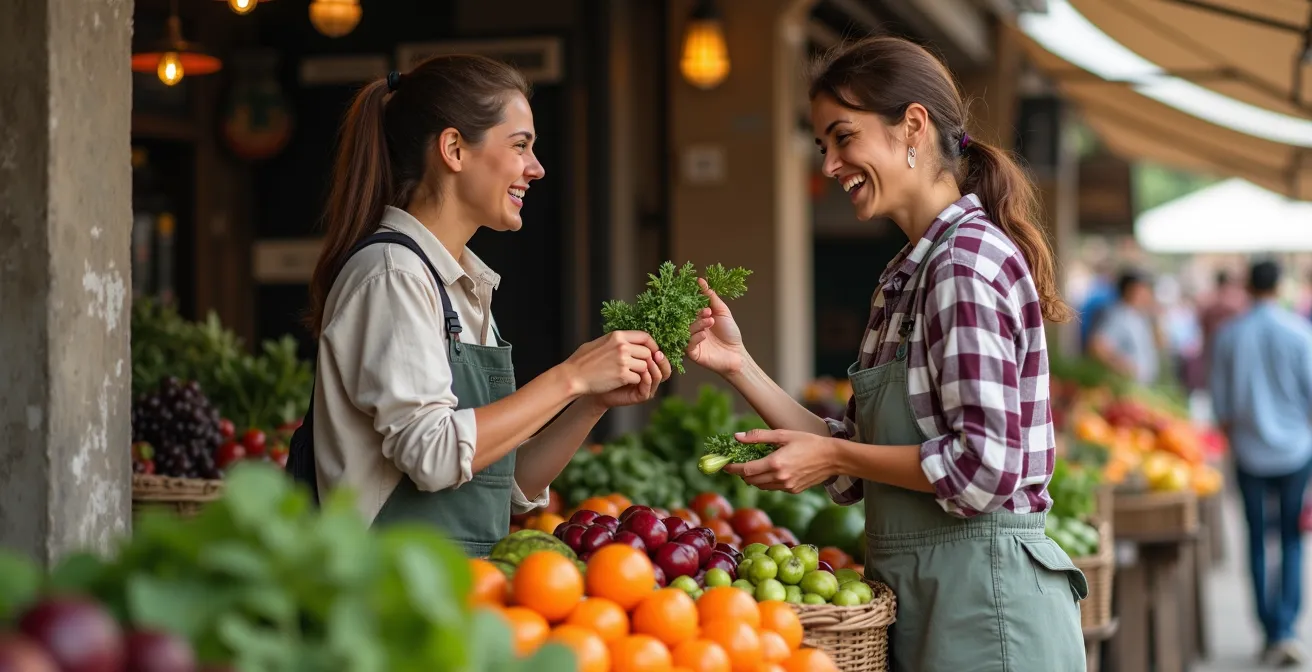
This approach isn’t just theory; it’s a proven method for unlocking a city’s best-kept secrets. It transforms a simple question into an invitation for them to share a piece of their world with you.
Case Study: The Power of Personal Phrasing
Travel expert Matt Berna from Intrepid Travel tested this exact theory. He found that asking “Where do *you* eat?” instead of “Where do you *recommend* eating?” yielded dramatically different results. This subtle change led to invitations to join locals for meals and directions to small, family-run establishments that were completely off the tourist radar. The approach works because it taps into personal experience rather than a generic, pre-packaged suggestion for outsiders.
To get the most authentic answers, try these strategic questions:
- The Occasion-Based Question: “Where would you take your parents for a special Sunday lunch?” This frames the request around quality and tradition.
- The Ingredient-First Approach: At a local market, point to an interesting ingredient and ask, “Where can I find the best dish made with this?”
- The “Second Question” Technique: After they give you an initial suggestion, follow up with, “And where do *you personally* love to go when you just want a great, simple meal?” This often reveals the true favorite.
Street Food or Sit-Down: Which Offers a More Authentic Flavor Profile?
The debate between street food and sit-down restaurants is a classic one for culinary travelers. Many assume street food is inherently more “authentic,” and there’s truth to that perception. In fact, academic research confirms that street food is perceived by tourists as an authentic consumption experience of local culture compared to restaurants. Street food often represents the “life in motion” of a city—the quick, flavorful meals of workers, students, and shoppers. It’s food without pretense.
However, to declare it universally more authentic is to miss half the story. Sit-down restaurants, particularly mid-range family-run establishments, represent the “community” aspect of a culture’s cuisine. They are the settings for family gatherings, celebrations, and leisurely weekend meals. Authenticity isn’t a single destination; it exists in different forms depending on the context and the dish. A complex, slow-cooked stew might find its most authentic expression in a sit-down bistro, while a flash-fried noodle dish is best experienced fresh from a street vendor’s wok.
To make an informed choice, it’s helpful to understand the distinct strengths each format offers in the quest for authenticity. The following table breaks down the key differences.
| Factor | Street Food | Sit-Down Restaurant |
|---|---|---|
| Specialization | Usually masters 1-3 dishes | Can range from specialized to extensive menus |
| Cultural Context | Represents ‘life in motion’ – food of workers and students | Represents ‘community’ – family gatherings and celebrations |
| Ingredient Sourcing | Often visible – fresh produce from nearby markets | May name local suppliers on menu |
| Time-Based Authenticity | Best for breakfast and quick lunches | Optimal for leisurely dinners and special occasions |
| Price-Authenticity Correlation | Lower prices often indicate local patronage | Mid-range pricing suggests local favorite |
Ultimately, a truly authentic culinary journey embraces both. Start your day with street food for breakfast to feel the city’s morning pulse, and book a table at a beloved neighborhood restaurant for dinner to experience its communal heart.
The Photo Menu Trap That Signals Low Quality and High Prices
The laminated photo menu has long been the classic symbol of a tourist trap—a visual shortcut for “we cater to people who don’t know our food.” It communicates a lack of confidence in the cuisine, suggesting the dishes can’t sell themselves on description or reputation alone. An establishment that relies on glossy, often faded, pictures is prioritizing accessibility for tourists over credibility with locals. For a local, a menu is a text to be read and understood; for a tourist in a photo-menu restaurant, it’s a catalog to be pointed at.
This “visual semiotics” of a menu speaks volumes. A simple, text-only menu, perhaps handwritten with daily specials, signals that the restaurant trusts its food and its clientele. It assumes a level of culinary literacy and an interest in what’s fresh and seasonal. It’s a sign that the kitchen is dynamic, not churning out the same tired dishes year after year. Conversely, a large, static photo menu suggests a kitchen that values consistency over creativity and serves a transient audience that won’t be back to notice.
However, the classic photo menu is evolving. In the digital age, sophisticated tourist traps have upgraded their methods, making them harder to spot for the unsuspecting foodie.
Case Study: The Evolution of the Photo Menu in Delhi
A 2024 study on culinary tourism in Delhi’s vibrant Chandni Chowk area revealed a fascinating evolution. Researchers found that classic tourist-trap indicators, like photo menus, have been replaced by QR codes linking to multi-language digital menus filled with professional food photography. The study highlighted that authentic, long-standing establishments in the same area deliberately avoided these visual menus to maintain their credibility with local patrons. The results were clear: restaurants that stuck to traditional, text-based menus saw 40% more repeat local customers compared to their high-tech, photo-heavy neighbors.
The lesson is that the principle remains the same, even if the technology changes. Be wary of any menu, physical or digital, that feels more like a glossy advertisement than a simple list of what the chef is proud to cook today. Authenticity whispers, it doesn’t shout with professionally lit photos.
When to Book Tables in Culinary Capitals to Avoid Disappointment?
Knowing *when* to eat is as important as knowing *where*. In many culinary capitals, the best neighborhood restaurants are small, intimate affairs with limited seating. Walking in during peak local dining hours often leads to disappointment. This is where understanding the city’s “culinary rhythm” pays off again, not just for spotting authenticity but for strategic planning. Booking a table is often essential, but the timing of your reservation can define your experience.
Dining trends also shift over time and vary by culture. For instance, recent dining trend analysis reveals that Americans are dining earlier than ever, with 5 PM reservations becoming increasingly popular. This trend might not apply in a city like Madrid or Buenos Aires, highlighting the need for location-specific observation. Aiming for the “shoulder hours”—the quiet periods just before or after the main rush—can be a brilliant strategy. A 7 PM booking in a city where locals eat at 9 PM might grant you a peaceful, unhurried meal and the full attention of the staff.
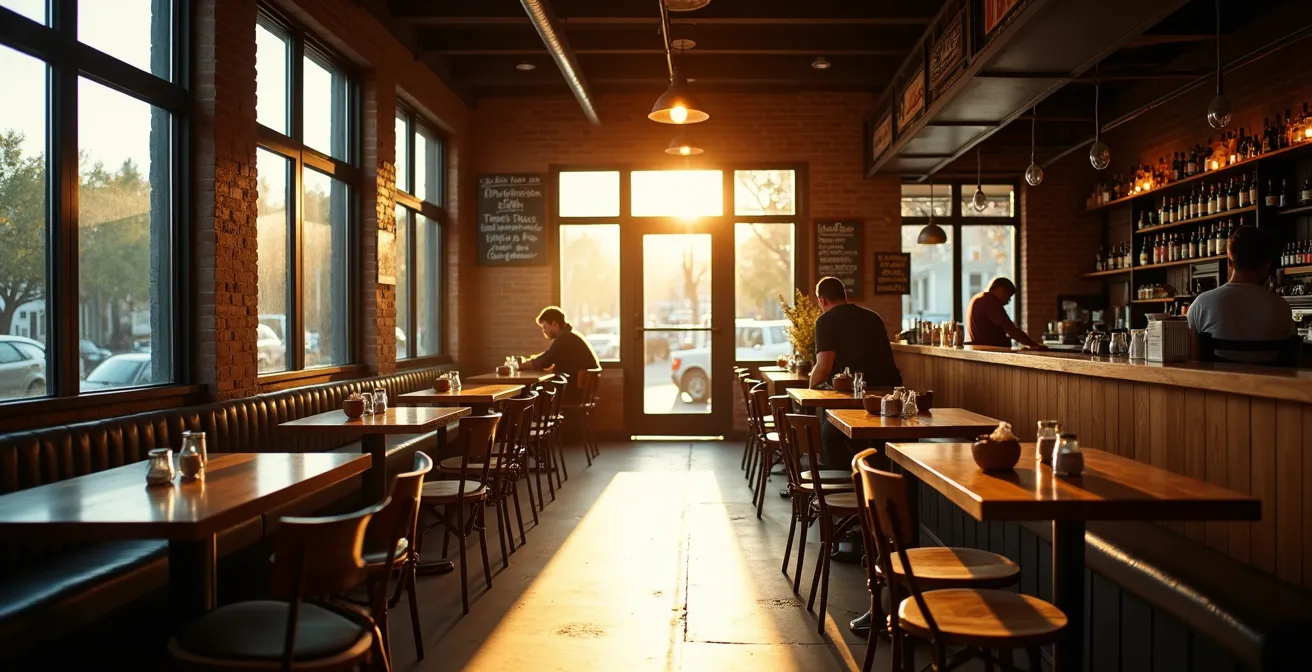
The image above captures the serene atmosphere of dining during these off-peak moments. The restaurant is alive but not chaotic, allowing for a more intimate connection with the food and the environment. This is often when you can chat with the owner or chef and get the real story behind the establishment.
Here’s a simple booking strategy:
- For high-demand, famous restaurants: Book weeks or even months in advance. There is no shortcut.
- For beloved local bistros: Call a day or two ahead for a dinner reservation. For lunch, you can often call the same morning.
- To experience the “shoulder hour” calm: Try booking for an early dinner (e.g., 6:30 PM in Europe) or a very late lunch (e.g., 3:00 PM). You’ll trade the bustling atmosphere for a more relaxed experience.
Don’t leave your most anticipated meals to chance. A little foresight ensures you’re not left out in the cold, staring wistfully through the window of the place you traveled thousands of miles to try.
How to Reset Your Gut Microbiome to Boost Immunity and Energy?
Culinary travel is a feast for the senses, but it can be a shock to the system—specifically, to your gut microbiome. The trillions of bacteria living in your digestive tract are accustomed to your home diet. Introducing new foods, spices, and microorganisms can throw this delicate ecosystem off balance, leading to digestive discomfort, low energy, and even a weakened immune response. This isn’t just about “traveler’s stomach”; it’s a fundamental biological response to a new environment.
The impact of travel on our internal ecosystem is scientifically documented. A 2024 study published in *Biomedicines* found that travel significantly increases gut microbiota fluctuations. However, the same study revealed that travelers whose guts were enriched with specific probiotic bacteria showed more stability and resilience. This suggests that you can proactively prepare your gut for the journey, turning a potential vulnerability into a source of strength.
Resetting and supporting your gut microbiome while traveling doesn’t require a strict regimen. It’s about making smart, gentle choices to help your system adapt. Think of it as onboarding new, friendly bacteria while supporting your existing ones. The goal is to build a more diverse and robust internal ecosystem that can handle the delicious challenges you throw at it. A happy gut is the foundation of an energetic and healthy trip, allowing you to sample and savor with confidence.
Before and during your trip, focus on these simple strategies:
- Pre-travel Probiotics: Start incorporating probiotic-rich foods like yogurt, kefir, kimchi, or sauerkraut into your diet a week or two before you leave.
- Embrace Fermented Foods: Once at your destination, seek out local fermented foods and drinks. From kombucha to regional yogurts or pickled vegetables, these are natural sources of beneficial bacteria.
- Hydrate Intelligently: Drink plenty of bottled or filtered water. Proper hydration is essential for maintaining a healthy mucosal lining in the gut, which acts as a critical barrier.
- Listen to Your Body: If you feel overwhelmed, take a break from heavy or spicy foods for one meal. Opt for simple, cooked dishes like rice or soup to give your system a chance to rest and recalibrate.
How to Experience Local Culture Without Being an Intrusive Tourist?
The ultimate goal of food travel isn’t just to eat, but to connect. A meal can be a transaction, or it can be a bridge to understanding a culture. The difference often lies in your approach. Being a respectful and engaged traveler, rather than a passive consumer, opens doors to experiences that go far beyond the plate. It’s about showing genuine curiosity and acknowledging that you are a guest in someone else’s community.
This begins with observation and adaptation. Pay attention to local dining etiquette. How do people summon a waiter? Do they share dishes? How do they hold their utensils? Adopting these small customs shows respect and a willingness to participate, not just observe. Furthermore, investing your money in family-run eateries instead of international chains ensures your travel dollars directly support the preservation of local culinary heritage. It’s a conscious choice to become a patron of the culture, not just a customer.
The most powerful tool for connection, however, is curiosity. Asking about the food with genuine interest can transform a simple meal into a memorable exchange. Instead of a generic compliment, try to be specific. “The broth in this soup has such a deep flavor, it reminds me of my grandmother’s cooking,” creates a far more meaningful connection than a simple “delicious.”
Case Study: The Story of a Tapa in Seville
A travel study in Seville, Spain, observed that tourists who asked about the *story* of a dish, not just its price or ingredients, forged powerful connections. One tapas tour guide noted that guests who asked, “What is the history of this dish?” learned about Andalusian family traditions, Moorish influences, and the ritual significance of sharing food. These interactions often led to personal recommendations for other hidden gems and even invitations to family establishments, creating relationships that lasted long after the trip was over.
By shifting your mindset from consumption to curiosity, you cease to be an intrusive outsider. You become a welcome guest, invited to share in the story that every dish has to tell.
Key takeaways
- Authenticity is a language of subtle signals—learn to read dining rhythms, menu psychology, and hygiene cues instead of relying on apps.
- Shift your questions from “What do you recommend?” to “Where do you personally eat?” to get honest, heartfelt answers from locals.
- Food safety is not random; follow the crowds and prioritize high-turnover vendors, as busy stalls are a reliable sign of fresh, safe ingredients.
How to Maintain High Sanitary Standards While Traveling in Developing Regions?
The fear of getting sick is a major barrier that prevents many travelers from diving into a region’s most authentic food scenes, particularly street food. While caution is wise, paranoia can cause you to miss out on unforgettable culinary experiences. The key is not to avoid local food, but to learn how to assess hygiene like a local. It’s about developing a quick, effective risk-assessment system based on observable cues, allowing you to eat adventurously but safely.
One of the most reliable indicators of food safety is popularity. A long line of locals at a street food stall is your best friend. It signals not only that the food is delicious but, more importantly, that it’s trusted by the community. This “high turnover” rule is backed by logic and data. Busy vendors sell their food quickly, meaning ingredients don’t sit around for long and are constantly being replenished. In fact, market research indicates that while 55% of global consumers visit street food stalls multiple times monthly, high-turnover vendors show significantly lower rates of contamination. Following the crowd is a proven public health strategy.
Beyond crowd-watching, you can train your eyes to spot other critical signs of good hygiene. These are the small details that separate a conscientious vendor from a careless one. By turning these observations into a mental checklist, you can make an informed decision in seconds.
Your 5-Point Food Safety Checklist
- Observe the Turnover: Is there a long, steady line of locals? High turnover is the number one indicator of freshness and safety. Avoid empty stalls, especially during peak hours.
- Prioritize High Heat: Choose foods that are cooked to order at high temperatures right in front of you. The “boiling point” principle means that soups, deep-fried items, or grilled meats are generally safer than pre-made dishes sitting at room temperature.
- Check Money Handling: Does the vendor have one person handling the food and a separate person handling the cash? This separation is a strong sign of good hygiene practices and a conscious effort to prevent cross-contamination.
- Inspect the Ice: Look at the shape of the ice cubes. Uniform, machine-made ice (often with a hole in the middle) typically comes from filtered water. Irregular, chunky ice may have been made from local tap water and is best avoided in drinks.
- Watch the Workflow: Does the vendor have a designated hand-washing station? Do you see them using it? Observe their general cleanliness—are cutting boards and utensils cleaned between uses? A clean workflow signals a commitment to safety.
By internalizing this checklist, you can confidently navigate any market or street food alley. You are no longer guessing; you are making an educated choice, empowering you to enjoy the full spectrum of a country’s cuisine without sacrificing your well-being.
Your next trip is an opportunity to put this new framework into practice. Start by observing the culinary rhythms of your destination, practice the art of asking personal questions, and use your new safety checklist to explore with confidence. Transform your travels from a series of meals into a journey of true culinary discovery.