In summary:
- Prioritize textiles with GOTS (Global Organic Textile Standard) certification, and always verify the license number in their public database.
- Avoid fabrics marketed as “wrinkle-free” or “easy-care,” as they are often treated with formaldehyde-releasing chemical finishers.
- Choose robust natural fibers like hemp and linen for heavy-use items and wash all-natural textiles in cold water to extend their life.
- Recognize that synthetic fleece sheds plastic microfibers and choose tightly woven natural alternatives to protect health and waterways.
- Look beyond the fiber to the manufacturing process, favoring brands that use waterless dyeing and have transparent supply chains.
As a health-conscious parent, ensuring a safe home environment is your top priority. You choose organic foods and non-toxic cleaners, but a significant source of chemical exposure often hides in plain sight: the textiles that touch your family’s skin every day. From bedding and towels to the sofa your children play on, many fabrics harbor a cocktail of industrial chemicals used during processing. You’ve likely been told to “choose natural fibers,” but this advice barely scratches the surface of a complex issue.
The common wisdom often fails to account for the harsh pesticides used on conventional cotton or the toxic chemical finishers applied to even “natural” products to give them properties like wrinkle resistance. The real danger lies not just in the material itself, but in the invisible treatments and manufacturing shortcuts. But what if the key wasn’t just avoiding certain fabrics, but understanding the science behind them? This guide moves beyond the labels to give you a material toxicologist’s perspective. It’s about recognizing the red flags at a molecular level and empowering you with the knowledge to assess fiber integrity, verify claims, and create a truly healthy sanctuary for your family.
This article will provide you with the essential framework for making informed decisions. We will explore the specific chemicals to watch out for, teach you how to verify certifications, compare the most durable natural fibers, and offer practical care instructions to protect both your textiles and your family’s well-being.
Summary: How to Choose Genuinely Safe and Sustainable Fabrics
- Why “Wrinkle-Free” Sheets Often Contain Formaldehyde?
- How to Verify GOTS Certification to Ensure Your Cotton Is Truly Organic?
- Linen or Hemp: Which Fabric Is More Durable for Heavy-Use Upholstery?
- The Microfiber Fleece Mistake That Pollutes Oceans With Every Wash
- How to Wash Natural Fibers to Prevent Shrinkage and Extend Life?
- How to Identify Truly Sustainable Manufacturing Processes Behind Everyday Products?
- How to Repair a Damaged Skin Barrier to Stop Breakouts and Redness?
- How to Replace Toxic Cleaning Products With Effective Homemade Solutions?
Why “Wrinkle-Free” Sheets Often Contain Formaldehyde?
The promise of “wrinkle-free” or “permanent press” bedding seems like a convenient luxury, but from a toxicologist’s view, it’s a major red flag. This feature is not inherent to the fabric; it is achieved by treating textiles, often cotton, with chemical finishers that release formaldehyde. This chemical works by cross-linking the fabric’s cellulose fibers, essentially locking them in place to prevent creasing. While effective, this process embeds a known carcinogen directly into the material your family sleeps on for hours each night.
Dermal exposure to these chemicals can lead to skin irritation, allergic contact dermatitis, and other sensitivities. The off-gassing of formaldehyde can also contribute to poor indoor air quality. According to textile processing experts, formaldehyde is commonly used in these applications, making it critical for consumers to learn to identify its presence. Instead of relying on marketing claims, use your senses to detect potential threats. A strong, sharp chemical odor from new textiles is a tell-tale sign of residual finishing agents. Similarly, fabric that feels unnaturally slick or stiff may be coated in these chemicals.
Ultimately, a few wrinkles are a sign of a natural, untreated fabric. To avoid these hidden chemicals, it’s best to steer clear of any textile marketed with terms that promise unnatural performance. Instead, you can look for fabrics with weaves that are naturally less prone to wrinkling. For a crisp feel, choose a percale weave; for a smoother drape, opt for sateen. Both provide excellent texture without the need for dangerous chemical treatments. Your safest approach is to always question convenience that seems too good to be true.
How to Verify GOTS Certification to Ensure Your Cotton Is Truly Organic?
In a marketplace filled with vague terms like “eco-friendly” and “natural,” the Global Organic Textile Standard (GOTS) is the gold standard for verifying the integrity of organic fibers. It is the most comprehensive certification, ensuring that a product meets strict environmental and social criteria throughout the entire supply chain—from the farm to the final product. Simply seeing “organic cotton” on a label is not enough; GOTS certification is your only guarantee that the product is free from harmful pesticides, toxic heavy metals, and formaldehyde.
However, the GOTS logo alone can be misused. True due diligence requires a simple verification step. Every legitimate GOTS-certified product must display not only the logo but also a license number. Your role as a protective parent is to take that number and check it against the official source. This small step transforms you from a passive consumer into an active auditor of your home’s safety. The process is straightforward and provides definitive proof of a product’s authenticity, ensuring the textile’s journey from seed to sheet was managed responsibly.

As you can see, the texture and quality of a truly organic fabric are palpable. The table below illustrates how GOTS compares to other common labels, highlighting its superior, all-encompassing scope. While other certifications have merit, none provide the same level of assurance across environmental, social, and chemical safety criteria.
| Certification | What It Covers | Limitations |
|---|---|---|
| GOTS | Entire supply chain, environmental & social criteria, 70-95% organic content | Doesn’t guarantee durability metrics |
| OEKO-TEX Standard 100 | Tests for harmful substances in final product | Doesn’t verify organic farming |
| Organic Content Standard (OCS) | Tracks organic content through supply chain | No environmental/social requirements for processing |
| Fair Trade | Economic empowerment, community development for farmers | Less focus on environmental aspects |
Your GOTS Verification Checklist
- Find the GOTS logo AND license number on the product label or online description.
- Note the certification level: ‘Organic’ requires at least 95% organic fibers, while ‘Made with Organic’ requires 70-94%.
- Navigate to the official GOTS Public Database online. A quick search for “GOTS certified suppliers database” will lead you there.
- Enter the license number into the search field to verify the company’s certification is active and valid.
- Confirm that the specific product category (e.g., “Bed linen,” “Apparel”) is listed under the company’s certified scope.
Linen or Hemp: Which Fabric Is More Durable for Heavy-Use Upholstery?
When selecting fabrics for high-traffic areas like a family room sofa or dining chairs, durability is as important as non-toxicity. Both linen and hemp are fantastic, sustainable choices derived from bast fibers, making them inherently strong and long-lasting. They require far less water and pesticides to grow than conventional cotton. However, when it comes to pure resilience for heavy-use upholstery that needs to withstand spills, pets, and daily wear, one of these fibers has a distinct advantage.
Hemp fibers are naturally longer and stronger than flax fibers (which are used to make linen). This translates to a fabric with superior tensile strength and abrasion resistance. Case studies on commercial furniture confirm that hemp fabric demonstrates exceptional durability and resistance to wear compared to other materials. Its natural properties also make it more resistant to pilling and stains. While linen is an excellent, beautiful fabric that softens wonderfully over time, hemp is the workhorse of the two.
The table below breaks down the performance of each fabric across key durability metrics. The Martindale rub test, a standard measure of fabric abrasion resistance, clearly shows hemp’s superior performance, often enduring thousands more rubs before showing wear. For a busy household, choosing hemp for upholstery is an investment in both sustainability and longevity.
| Performance Factor | Linen | Hemp | Winner |
|---|---|---|---|
| Martindale Rub Test (rubs) | 15,000-25,000 | 25,000-35,000 | Hemp |
| Pilling Resistance | Good | Excellent | Hemp |
| Colorfastness | Excellent | Good | Linen |
| Natural Stain Repellency | Moderate | Good | Hemp |
| Softness Over Time | Excellent | Good | Linen |
| Environmental Impact | Low | Very Low | Hemp |
The Microfiber Fleece Mistake That Pollutes Oceans With Every Wash
While awareness of chemical finishers is growing, another insidious threat comes from synthetic fabrics like polyester, acrylic, and nylon—especially popular, high-pile fleece. These materials are essentially plastics. With every wash, they shed thousands of microscopic plastic fibers, known as microplastics. These fibers are too small to be caught by wastewater treatment plants and flow directly into our rivers and oceans, where they cause devastating harm to aquatic life.
These microplastics act like sponges for other environmental toxins, concentrating pollutants like PCBs and pesticides. When ingested by marine animals, these toxins bioaccumulate up the food chain. The problem is immense; some environmental research shows that Americans discard an estimated 11.3 million tons of textile waste annually, and a significant portion is synthetic fabric that will continue to shed plastics for centuries. As a parent, the concern extends beyond the environment to potential human health impacts, as microplastics are now being found in everything from drinking water to table salt.
The “soft and cozy” feel of a fleece blanket or jacket comes at a hidden environmental and health cost. The most protective action is to avoid purchasing new synthetic fleece and instead opt for tightly woven natural fibers like organic cotton flannel or wool. For existing synthetic items in your home, you can take steps to mitigate the damage:
- Use a specialized washing bag (like a Guppyfriend) designed to capture microfibers before they enter the drain.
- Install an external filter on your washing machine’s discharge hose.
- Wash synthetic items less frequently, in cold water, and in shorter cycles to reduce fiber shedding.
- Choose front-loading washing machines, as their tumbling action is gentler on fabrics than the agitator in most top-loaders.
How to Wash Natural Fibers to Prevent Shrinkage and Extend Life?
Choosing high-quality, non-toxic textiles is the first step. The second is caring for them properly to protect your investment and maintain their integrity for years to come. Natural fibers like organic cotton, linen, and wool have different needs than their synthetic counterparts. Harsh detergents, high heat, and chemical-laden fabric softeners can damage their delicate structure, leading to shrinkage, reduced breathability, and a shortened lifespan.
The cardinal rule for natural fibers is to be gentle. Cold water is your best ally. It effectively cleans the fabric without causing the “fiber shock” that leads to shrinkage and color fading. Manufacturer data from organic textile leaders like Coyuchi shows that proper care can double or even triple a fabric’s lifespan. Their research indicates that organic cotton sheets washed in cold water and line-dried can maintain their integrity for over a decade, compared to just 3-5 years for conventionally cared-for sheets. Fabric softeners should be avoided entirely, as they coat fibers with a waxy film that inhibits their natural absorbency and breathability.
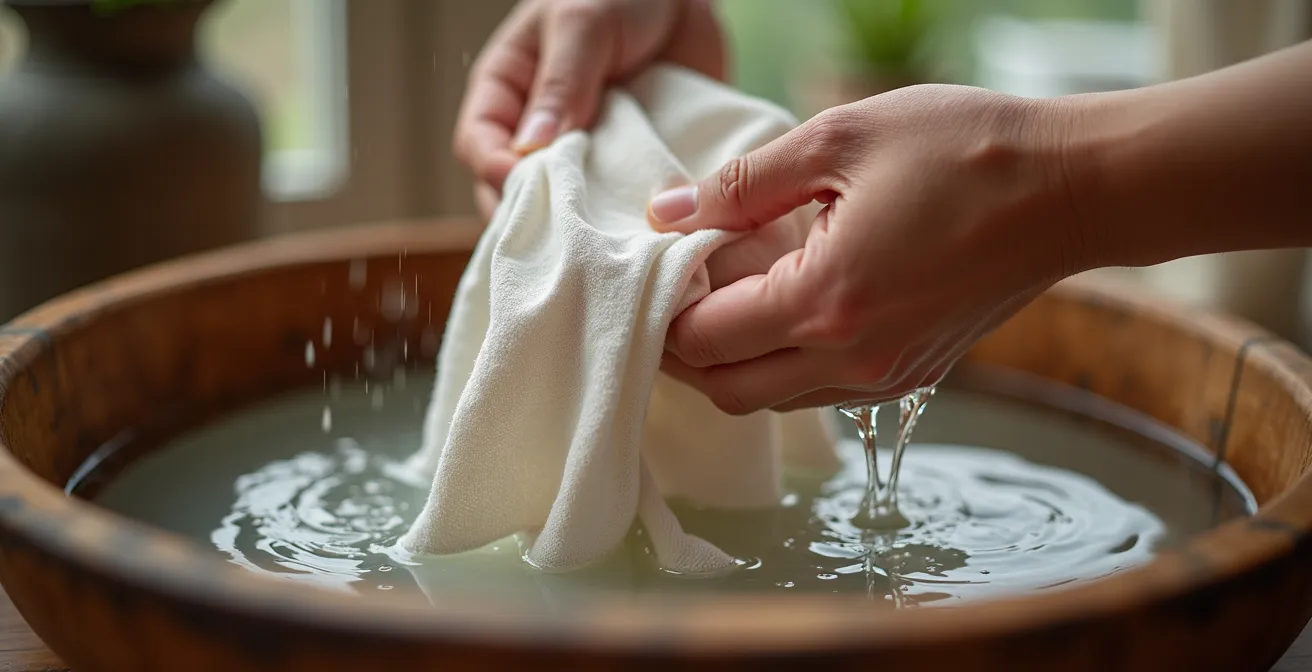
Embracing mindful care techniques not only preserves your textiles but also reinforces a sustainable lifestyle. Here are some key care instructions for common natural fibers:
- Organic Cotton: Always wash new sheets in cold water with a mild, fragrance-free detergent to set the fibers. Line-dry until slightly damp, then tumble dry on low heat to achieve softness without heat damage.
- Linen: Wash in lukewarm or cold water. Linen becomes softer and more absorbent with every wash. Air-drying is ideal, as it preserves the fiber’s strength.
- Wool: Use cold water and a wool-specific pH-neutral detergent. Avoid agitation. Reshape the garment while it’s damp and lay it flat to dry away from direct sunlight.
- Storage: Store all-natural fibers in breathable cotton bags. Avoid plastic containers, which can trap moisture and lead to mildew.
How to Identify Truly Sustainable Manufacturing Processes Behind Everyday Products?
A textile’s journey from raw material to finished product involves numerous stages, and each one presents an opportunity for environmental harm or sustainable innovation. A truly non-toxic product goes beyond the fiber itself; it encompasses the entire manufacturing process, especially dyeing and finishing. Traditional textile dyeing is one of the most polluting industries globally, consuming vast quantities of water and discharging a cocktail of toxic chemicals into local waterways.
As a conscious consumer, your lens must widen to include supply chain transparency and processing technology. A brand that is truly committed to sustainability will be able to trace its products back to the source and will be open about its manufacturing partners and their practices. Look for companies that invest in closed-loop systems, where water and chemicals are recycled and reused rather than discharged. Also, be wary of “greenwashed” materials like bamboo rayon or viscose; while bamboo is a sustainable plant, the process to turn its tough fibers into soft fabric often relies on highly toxic chemicals like carbon disulfide.
A shining example of progress is the development of waterless dyeing. Technologies like NTX Cooltrans use pressurized carbon dioxide in a supercritical state to dye fabrics, completely eliminating water from the process. According to a report from innovators at NTX, this method significantly reduces energy consumption and chemical use, proving that large-scale, sustainable manufacturing is possible. To assess a brand’s commitment, don’t hesitate to ask probing questions:
- Can you trace your supply chain to the farm or fiber source?
- Where does your dyeing and finishing occur, and what water treatment practices are used?
- Do you utilize any closed-loop or water-saving technologies in your production?
- What certifications do you hold beyond the raw material (e.g., Fair Trade, bluesign® for processes)?
How to Repair a Damaged Skin Barrier to Stop Breakouts and Redness?
The connection between textiles and skin health is profound and direct. Your skin, the body’s largest organ, has a protective outer layer known as the skin barrier. When this barrier is compromised, it becomes more permeable to allergens, irritants, and bacteria, leading to issues like eczema, redness, breakouts, and general sensitivity. For children, whose skin is naturally more delicate, this is a critical concern. One of the most common culprits in damaging the skin barrier is constant contact with textiles laden with chemical irritants.
Conventional textiles are often treated with pesticides, chlorine bleach, harsh dyes, and formaldehyde-based finishers. These residues can cause low-grade, chronic irritation that weakens the skin barrier over time. Switching to GOTS-certified organic textiles is a foundational step in skin barrier repair. By eliminating the source of chemical irritation, you give the skin a chance to heal and rebuild. Studies on the impact of textile choice have shown that switching to GOTS-certified organic cotton bedding, which is guaranteed to be free from these toxic chemicals, can significantly reduce skin sensitivity issues.
The benefits extend beyond just removing irritants. The inherent breathability of natural, untreated fibers like organic cotton and linen allows for proper air circulation. This prevents the trapping of moisture and sweat against the skin, which can create a breeding ground for bacteria and exacerbate conditions like acne and heat rash. A healthy skin barrier relies on a balanced environment, and the textiles you choose play a huge role in creating it. By prioritizing clean, breathable fabrics, you are not just choosing a product; you are implementing a health strategy for your family’s skin.
Key Takeaways
- “Wrinkle-free” is a code for formaldehyde. Always prioritize natural, untreated fabrics and embrace their inherent texture.
- GOTS certification is the only way to guarantee a textile is truly organic and toxin-free from farm to finish. Always verify the license number.
- Synthetic fleece sheds microplastics. For the health of your family and the planet, choose natural alternatives and wash existing synthetics with care.
How to Replace Toxic Cleaning Products With Effective Homemade Solutions?
Creating a non-toxic home environment extends to how you care for your textiles. Commercial laundry detergents, fabric softeners, and stain removers are often loaded with synthetic fragrances, phthalates, and optical brighteners that leave a chemical residue on your fabrics. These chemicals can irritate sensitive skin and negate the benefits of choosing organic textiles in the first place. Studies have shown that the waxy film from fabric softeners can reduce a towel’s absorbency by up to 40% and clog the weave of breathable sheets.
Fortunately, replacing these products with simple, effective, and inexpensive homemade solutions is easy. The key ingredients for natural textile care are likely already in your pantry. White vinegar is a powerhouse; it acts as a natural fabric softener by dissolving mineral buildup, and it helps to brighten colors. Baking soda is a gentle abrasive and an excellent deodorizer. Hydrogen peroxide serves as a safe, chlorine-free bleach alternative for whitening and stain removal.
Making the switch not only protects your family from dermal exposure to harsh chemicals but also extends the life of your natural fibers by preserving their integrity. Ditching disposable dryer sheets for reusable wool dryer balls is another excellent step; they naturally soften clothes, reduce static, and can cut drying time by up to 25%. By adopting these simple recipes, you complete the final step in creating a truly holistic, non-toxic textile ecosystem in your home.
- Natural Stain Remover: Create a paste with one part hydrogen peroxide and two parts baking soda. Apply to the stain, let it sit, and then launder as usual.
- Fabric Softening Rinse: Add 1/2 cup of distilled white vinegar to your washing machine’s rinse cycle. The smell will dissipate completely as it dries.
- Anti-Static Spray: In a spray bottle, combine 2 cups of water with 2 tablespoons of white vinegar. Lightly mist clothes before drying to reduce static.
- Sustainable Lint Removal: Invest in a high-quality natural bristle brush to remove pet hair and lint, eliminating the waste from disposable rollers.
Now that you are equipped with the knowledge to identify, select, and care for non-toxic textiles, the next logical step is to systematically evaluate the fabrics already in your home and create a plan for healthier replacements over time.