In summary:
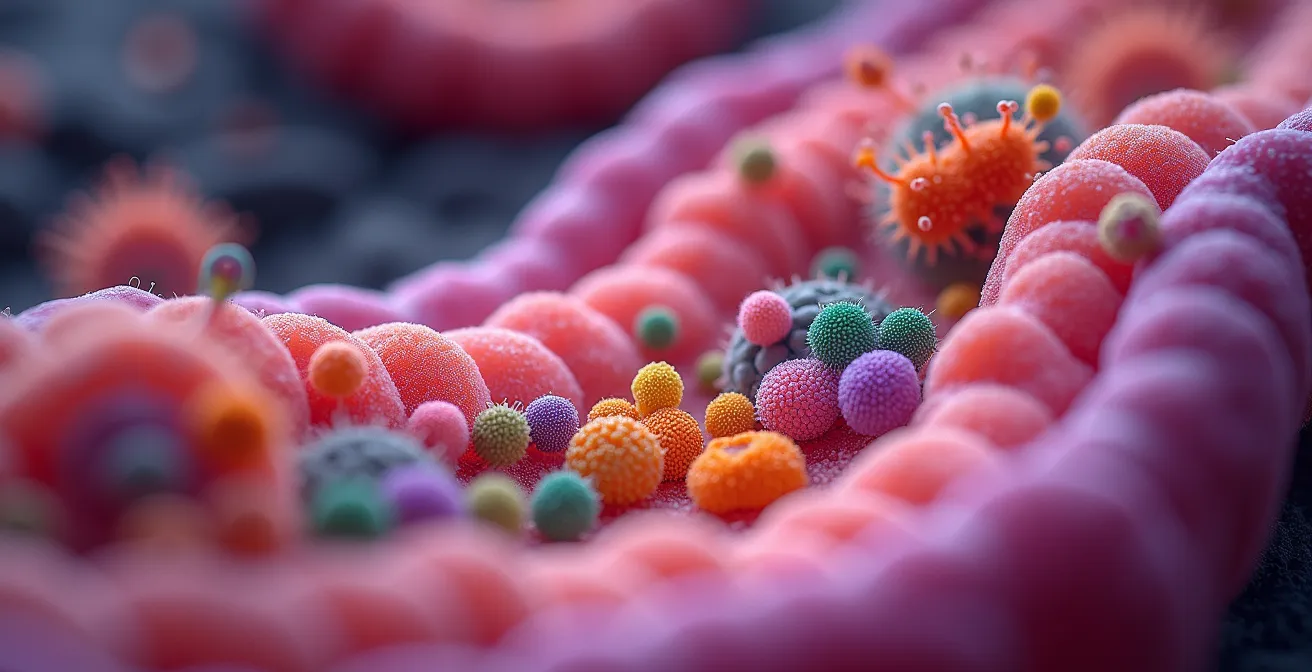
- A gut reset is not a quick fix but a systematic recalibration of your entire digestive ecosystem, from diet to environment.
- Focus on restoring microbial balance after disruptions like antibiotics by using targeted probiotics and fiber-rich foods.
- Optimize digestion by respecting your body’s natural cleaning cycles, such as the Migrating Motor Complex (MMC), through meal timing.
- Proactively manage gut health with regular self-audits and by minimizing exposure to environmental disruptors like certain household chemicals.
- Continuously diversify your microbiome by seeking out new and fermented foods, turning travel into a health-boosting mission.
If you’re constantly battling bloating, unpredictable energy slumps, or a general feeling of being unwell, you’ve likely considered a “gut reset.” The common advice is to pop a probiotic, load up on fiber, and hope for the best. You might even try a restrictive 3-day cleanse promising miraculous results. While well-intentioned, these approaches often miss the mark because they treat the gut as a simple machine rather than the complex, living ecosystem it is.
The truth, from a gastroenterologist’s perspective, is that your gut health is influenced by a vast network of factors. It’s not just what you eat, but *when* you eat. It’s not just the supplements you take, but the hidden chemicals you’re exposed to in your own home. A genuine reset requires a more profound and systematic approach—one that goes beyond surface-level fixes and addresses the root causes of imbalance, a condition known as dysbiosis.
But what if the key wasn’t simply adding “good” things, but also understanding and eliminating the “bad” and, most importantly, respecting the very systems your body has in place for self-cleaning and maintenance? This guide provides a holistic framework for a true microbial recalibration. We will explore how to recover from major disruptions, cultivate your own probiotic powerhouses, master the art of strategic eating, and even turn your travels into a mission for microbial diversity. It’s time to move beyond the fads and build a resilient, thriving internal ecosystem.
This article provides a comprehensive roadmap, structured to guide you from understanding major gut disruptors to implementing a long-term, preventative health strategy. Below is a summary of the key areas we will cover to help you systematically recalibrate your digestive health.
Summary: A Systematic Plan for Gut Recalibration
- Why One Course of Antibiotics Can Disrupt Your Gut for Months?
- How to Make Sauerkraut Safely to Ensure High Probiotic Count?
- Probiotics or Prebiotics: Which Is Missing From Your Diet?
- The Elimination Diet Mistake That Starves Your Good Bacteria
- When to Stop Eating Before Bed to Allow the Migrating Motor Complex to Work?
- How to Build a Preventative Health Plan That Goes Beyond Annual Checkups?
- How to Replace Toxic Cleaning Products With Effective Homemade Solutions?
- How to Discover Hidden Culinary Gems in a Tourist City Without Apps?
Why One Course of Antibiotics Can Disrupt Your Gut for Months?
Antibiotics are life-saving drugs, but their action is often compared to a broad-spectrum bomb in the delicate ecosystem of your gut. They don’t just target the harmful bacteria causing your infection; they wipe out vast populations of beneficial microbes that are essential for digestion, immune function, and mood regulation. This collateral damage can throw your entire system into a state of severe dysbiosis, creating an opportunity for opportunistic pathogens or yeast to overgrow. The feeling of fatigue, digestive distress, or brain fog that lingers after a course of antibiotics is a direct symptom of this microbial devastation.
The recovery is not as swift as many believe. While some bacterial populations may bounce back within weeks, the most fragile and important ones can be lost for much longer. In fact, sobering research from Nature Microbiology shows that 9 common bacterial species remained undetectable in most subjects a full 180 days after a single course of antibiotic treatment. This long-term disruption underscores why a proactive recovery plan is not just helpful, but critical for restoring a resilient gut environment and preventing future health issues.
To mitigate this damage and accelerate recovery, a targeted approach is necessary. This protocol focuses on protecting the ecosystem during treatment and actively rebuilding it afterward:
- Take Saccharomyces boulardii: This beneficial yeast is not affected by antibiotics and can help protect the gut ecosystem by crowding out pathogens.
- Follow with a multi-strain probiotic: After finishing your antibiotics, introduce a high-quality probiotic with at least 10 billion CFUs and diverse strains like Lactobacillus and Bifidobacterium.
- Gradually increase dietary fiber: Aim for over 30 grams of fiber daily from a wide variety of plants to provide food for your recovering beneficial bacteria.
- Consume polyphenol-rich foods: Berries, dark chocolate, green tea, and olive oil contain compounds that help restore microbial diversity.
This systematic approach transforms the post-antibiotic period from a passive waiting game into an active phase of microbial reconstruction, laying the groundwork for long-term health. Rebuilding this foundation is a non-negotiable step in any serious gut reset plan.
How to Make Sauerkraut Safely to Ensure High Probiotic Count?
While probiotic supplements have their place, fermented foods like sauerkraut are a superior way to introduce beneficial bacteria to your gut. They provide not just a high concentration of live microbes, but also a variety of strains and valuable prebiotics (the food for the microbes) in one package. Making your own sauerkraut is a cost-effective and powerful way to ensure a fresh, potent supply of these microbial allies. When made correctly, it becomes a veritable probiotic factory on your kitchen counter.
The key to successful and safe fermentation lies in creating an anaerobic (oxygen-free) environment where beneficial Lactobacillus bacteria can thrive while harmful molds and yeasts are suppressed. This is achieved through two simple components: salt and submersion. Salt draws water out of the cabbage to create its own brine, which inhibits spoilage microbes. Keeping the cabbage fully submerged under this brine prevents contact with oxygen, which is essential for a safe ferment. Forget fancy equipment; a simple glass jar, cabbage, and salt are all you need.
This process of lacto-fermentation transforms plain cabbage into a superfood. Studies confirm the potency of homemade ferments, with a 1-cup serving of homemade sauerkraut containing approximately 1.2×10^7 CFU, a dosage that meets the therapeutic range recommended by the FDA. This makes it a highly effective tool for repopulating the gut.
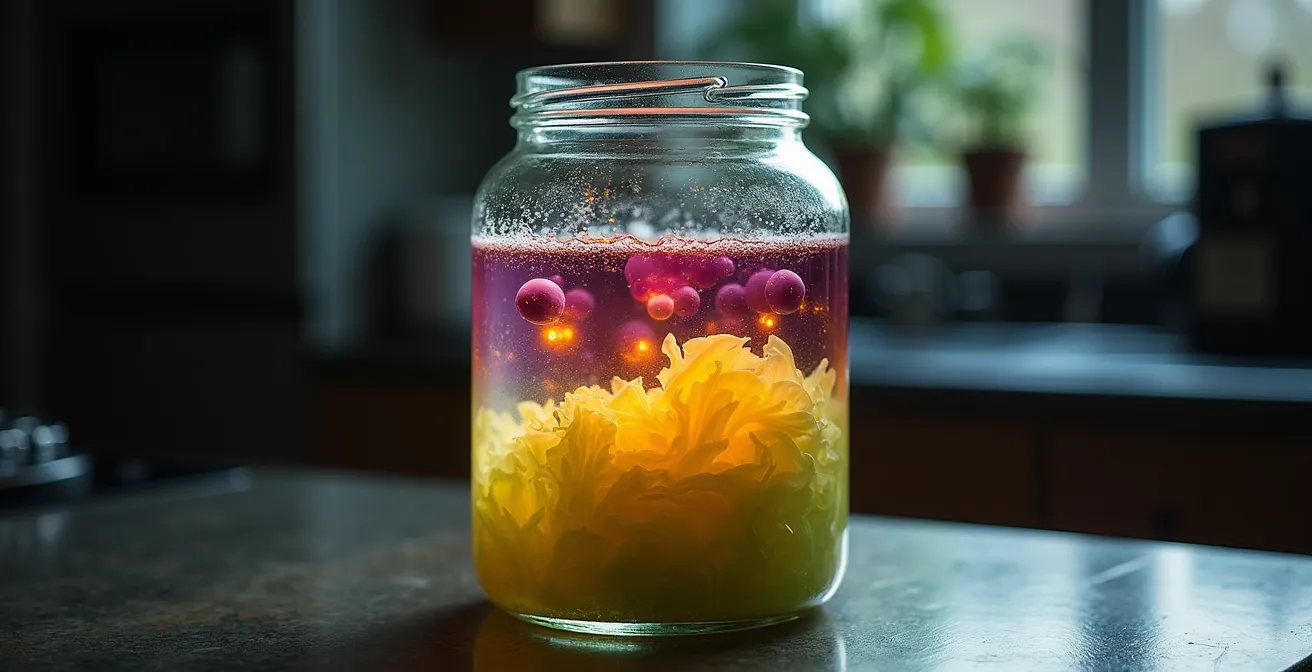
To get started safely, follow these fundamental steps. First, shred cabbage and mix it thoroughly with about 2% salt by weight (a tablespoon of salt per medium head of cabbage is a good start). Massage and squeeze the salted cabbage until it releases a significant amount of liquid brine. Pack the cabbage tightly into a clean glass jar, pressing down firmly to remove air pockets. Ensure the brine rises to cover the cabbage completely. Weigh it down with a smaller jar or a clean rock to keep it submerged. Cover the jar with a cloth and let it ferment at room temperature for 1-4 weeks, tasting it along the way until it reaches your desired level of sourness.
Probiotics or Prebiotics: Which Is Missing From Your Diet?
The terms “probiotics” and “prebiotics” are often used interchangeably, but they play distinct and complementary roles in your digestive ecosystem. Understanding the difference is crucial for a successful gut recalibration. Probiotics are the live beneficial bacteria themselves, the “seeds” you plant in your gut garden. You find them in fermented foods like yogurt, kefir, and sauerkraut. Prebiotics, on the other hand, are the specialized types of fiber that act as fertilizer for these beneficial microbes. They are found in foods like garlic, onions, bananas, Jerusalem artichokes, and whole grains.
The most common mistake is focusing solely on probiotics without providing the necessary fuel for them to survive and thrive. It’s like planting seeds in barren soil. Without prebiotics, even the most expensive probiotic supplements will have a transient effect, passing through your system without establishing a permanent colony. A truly effective strategy must be synbiotic—meaning it combines both probiotics and prebiotics to create a powerful, synergistic effect. For example, pairing yogurt (probiotic) with a sliced banana (prebiotic) for breakfast is a simple yet effective synbiotic combination.
For individuals with significant gut imbalance or dysbiosis, the order of operations can be even more critical. This is where a more advanced, systematic approach comes into play.
Case Study: The “Weed, Seed, Feed” Protocol
Functional medicine practitioners often use a three-step protocol for severe dysbiosis. First, they “weed” out harmful bacteria or yeast using targeted herbal antimicrobials. Second, they “seed” the gut with high-dose, specific strains of probiotics to repopulate the cleared space. Only then, in the final step, do they “feed” the new colonies with a rich diversity of prebiotic fibers. This sequential approach has shown superior outcomes, especially in conditions like Small Intestinal Bacterial Overgrowth (SIBO), where introducing prebiotics too early can worsen symptoms like bloating and gas by feeding the wrong bacteria.
For most people, a “feed and seed” approach is sufficient. Here are some powerful synbiotic food pairings to incorporate into your diet:
- Yogurt with banana and chia seeds (Lactobacillus + resistant starch + soluble fiber)
- Kefir smoothie with Jerusalem artichokes (diverse probiotics + inulin fiber)
- Sauerkraut on a slice of whole-grain sourdough bread (Lactobacillus + resistant starch)
- Miso soup with asparagus (diverse probiotics + FOS fiber)
The Elimination Diet Mistake That Starves Your Good Bacteria
Elimination diets, such as the low-FODMAP diet, can be invaluable diagnostic tools for identifying food sensitivities that cause symptoms like bloating, gas, and pain. They work by temporarily removing a broad range of fermentable carbohydrates and then systematically reintroducing them to pinpoint triggers. However, there is a common and dangerous mistake people make: staying in the highly restrictive elimination phase for too long. This is not only unsustainable but can actively harm your gut microbiome in the long run.
The very fibers you eliminate—found in healthy foods like onions, garlic, beans, and apples—are the primary food source for your beneficial gut bacteria. When these microbes are deprived of their fuel, their populations decline. They are unable to produce Short-Chain Fatty Acids (SCFAs) like butyrate, which is the main energy source for the cells lining your colon and plays a critical role in reducing inflammation and maintaining a strong gut barrier. In essence, by trying to solve one problem, you can inadvertently create another by starving your most important microbial allies. In fact, restricting plant fiber variety can reduce Short-Chain Fatty Acid production by up to 40% within just a few days.
The goal of an elimination diet is not long-term avoidance but short-term investigation. The reintroduction phase is the most important part of the process. A systematic protocol is essential to gather clear data without causing unnecessary harm to your microbiome. Here is a safe and structured approach:
- Establish a Baseline (Weeks 1-2): Follow the strict elimination phase for a limited time (2-4 weeks is typical) while keeping a detailed journal of your symptoms. The goal is to achieve a significant reduction in symptoms.
- Systematic Reintroduction (Starting Week 3): Reintroduce one food group (or single food) every three days. Start with foods you believe are least likely to cause a reaction.
- Document Diligently: For 72 hours after reintroducing a food, meticulously record any symptoms—digestive or otherwise (e.g., headache, skin rash, fatigue).
- Test in Isolation: Test single-ingredient foods before combinations. For example, test avocado on its own before trying guacamole.
- Pause if a Reaction Occurs: If you react to a food, remove it again and wait until your symptoms have completely cleared before testing the next food on your list.
After completing this process, you will have a clear, personalized map of your trigger foods. The final step is to work on healing your gut so that you may be able to tolerate small amounts of these foods again in the future.
When to Stop Eating Before Bed to Allow the Migrating Motor Complex to Work?
One of the most powerful and overlooked aspects of gut health has nothing to do with what you eat, but *when* you stop eating. Your digestive system has a built-in “housekeeping” service called the Migrating Motor Complex (MMC). This is a series of powerful, sweeping muscle contractions that move through your stomach and small intestine during periods of fasting. Its job is to sweep residual food, debris, and bacteria out of the small intestine and down into the colon, effectively cleaning the pipes and preventing bacterial overgrowth.
Crucially, the MMC only works in a fasted state. The moment you eat—even a small snack—this cleaning cycle is interrupted, and your gut switches back to digestion mode. This is why late-night eating can be so detrimental to gut health. If you are constantly grazing until bedtime, you rob your body of the critical overnight fasting window needed to run these essential cleaning cycles. Over time, this can lead to an accumulation of bacteria in the small intestine, a condition known as Small Intestinal Bacterial Overgrowth (SIBO), which is a major cause of bloating, gas, and malabsorption.
As a gastroenterologist, I often see patients whose severe bloating is directly linked to impaired MMC function from their evening eating habits. Allowing a sufficient fasting window before sleep is a non-negotiable for resetting the gut. The MMC runs in cycles of approximately 90-120 minutes.

To optimize this natural process, the clinical recommendation is to create a fasting window of at least 3 to 4 hours between your last meal and bedtime. For example, if you go to sleep at 10:30 PM, you should aim to finish dinner by 7:30 PM at the latest. This gives your body enough time to complete at least one or two full MMC cleaning cycles, significantly reducing the microbial load in your small intestine and setting the stage for a healthier digestive system. This simple change in timing can be more powerful than any supplement for reducing bloating and improving digestive function.
How to Build a Preventative Health Plan That Goes Beyond Annual Checkups?
A true gut reset is not a one-time event; it’s the beginning of a new, proactive approach to your health. Once you’ve worked to restore balance, the focus must shift to maintenance and prevention. Annual checkups with your doctor are important for catching major diseases, but they provide only a single snapshot in time and often overlook the subtle, day-to-day fluctuations in your gut health that are the precursors to chronic illness. Building a preventative plan means becoming the primary observer and caretaker of your own digestive ecosystem.
This involves moving beyond passive reliance on a yearly blood test and adopting a practice of regular self-monitoring. You can track key biomarkers of gut health yourself, at home, without any fancy equipment. These data points, when observed over time, provide a much richer and more accurate picture of your internal environment than any single lab test. This practice empowers you to notice small shifts and make corrective dietary or lifestyle changes before they escalate into significant problems. For those seeking deeper insights, advanced functional tests can provide an even more detailed view.
Functional medicine practitioners are increasingly using tools like comprehensive stool DNA testing and Organic Acids Tests (OAT) to get a precise blueprint of a patient’s microbiome. These tests can identify imbalances, inflammatory markers, and nutrient deficiencies long before they would show up on a standard physical. Studies show that individuals who undergo this level of proactive testing and make targeted adjustments can significantly improve their metabolic and inflammatory health. While not necessary for everyone, it demonstrates the power of a preventative mindset. The foundation of this mindset is regular self-auditing.
Your Gut Health Audit Checklist: A Quarterly Review
- Stool Consistency: Track your stool form daily for one week using the Bristol Stool Chart. Your goal is a consistent Type 3 or 4, which indicates healthy digestion and transit time.
- Plant Diversity Score: For one week, list every unique type of plant you eat (fruits, vegetables, grains, nuts, seeds, herbs). Your target should be 30 or more to ensure a well-fed microbiome.
- Transit Time: Perform a “transit time test” by eating a tablespoon of corn kernels or a large serving of beets. Note the time and then watch for their appearance in your stool. A healthy transit time is typically between 18 and 24 hours.
- Energy & Skin Assessment: On a scale of 1-10, rate your average daily energy levels for the week. Also, take note of any changes in your skin, such as acne, eczema, or overall radiance.
- Fermented Food Intake: Tally how many servings of fermented foods (e.g., yogurt, kefir, sauerkraut, kimchi) you consumed during the week. Aim for at least 3-5 servings.
By performing this simple audit every quarter, you create a feedback loop that makes you an active participant in your own wellness journey, transforming your health from a reactive concern into a proactive practice.
How to Replace Toxic Cleaning Products With Effective Homemade Solutions?
The concept of a gut reset usually revolves around diet, but the “environmental saboteurs” in your home can be just as disruptive to your microbiome as a poor diet or a course of antibiotics. Many common household cleaning products contain harsh antimicrobial chemicals designed to sterilize surfaces. While this might sound good, these chemicals don’t distinguish between pathogenic microbes and the beneficial ones that contribute to a healthy home ecosystem and, by extension, a healthy gut.
When you use these products, you inhale their fumes and absorb them through your skin. These chemicals can enter your bloodstream and directly impact your gut flora. The most notorious of these is triclosan, an antibacterial agent formerly found in everything from hand soaps to toothpaste. Shockingly, research published in The ISME Journal reveals that common household cleaners containing triclosan can alter gut bacteria composition in a manner similar to a high-fat diet, with effects lasting for weeks after exposure. Eradicating these hidden toxins is a crucial, often-missed step in a comprehensive gut reset.
Fortunately, replacing these toxic products is simple and inexpensive. For centuries, people kept their homes clean and safe using simple, natural ingredients that are not only effective but also supportive of a healthy microbial environment. A return to these basics can significantly reduce the chemical load on your body and your gut. Your goal is not to create a sterile environment, but a clean and balanced one.
Here are some simple, pro-microbiome swaps you can make today:
- All-Purpose Cleaner: Instead of bleach-based sprays, use a solution of equal parts white vinegar and water with a few drops of essential oil like tea tree or lemon for its natural antimicrobial properties.
- Hand Soap: Replace antibacterial soaps with plain castile soap. The mechanical action of washing with soap and water is sufficient to remove germs.
- Air Fresheners: Ditch synthetic air fresheners and plugins, which release volatile organic compounds (VOCs). Instead, open your windows daily for natural air exchange and use an essential oil diffuser.
- Cookware: Switch from non-stick cookware, which can release PFAS chemicals, to more stable materials like cast iron, stainless steel, or glass.
- Water Filtration: Install a quality water filter for both drinking and bathing water to remove chlorine, a potent antimicrobial agent.
Key takeaways
- A true gut reset is a long-term strategy, not a short-term cleanse. It requires systematically addressing diet, meal timing, and environmental exposures.
- Your gut is an ecosystem. Its health depends on microbial diversity, which is fueled by a wide variety of plant fibers and fermented foods.
- Respecting your body’s natural “digestive housekeeping” cycles by fasting for 3-4 hours before bed is one of the most powerful, no-cost actions you can take for gut health.
How to Discover Hidden Culinary Gems in a Tourist City Without Apps?
After you’ve cleaned up your diet and home environment, the final and most enjoyable phase of a gut reset is actively seeking out microbial diversity. The modern Western diet, even a “healthy” one, can be monotonous, exposing our gut to a limited range of bacteria. Travel presents a perfect opportunity to break out of this rut and embark on a “microbial diversity mission.” By intentionally seeking out traditional, locally prepared foods, you can introduce a vast array of new and beneficial microbes to your gut ecosystem, significantly boosting its resilience and diversity.
Forget the tourist-trap restaurants recommended by apps. The real culinary gems—and the most microbially rich foods—are found where the locals eat. This means venturing into neighborhood markets, seeking out humble street-food stalls with high turnover, and finding eateries packed with local workers at lunchtime. These places are treasure troves of regional ferments, ancient sourdough starters, and unique plant fibers that your gut has never encountered before. This adventurous eating is not just a cultural experience; it’s a targeted strategy for enhancing your health.
Case Study: The Gut Adventurer’s Protocol
Travel health researchers have documented that tourists who actively seek out local fermented foods and traditional dishes exhibit a marked increase in microbiome diversity that can last for up to three months after their trip. One notable study followed travelers in Korea. Those who made a point to consume local staples like kimchi (fermented cabbage), doenjang (fermented soybean paste), and makgeolli (fermented rice wine) showed a 15% increase in beneficial Lactobacillus strains compared to their counterparts who stuck to Western-style foods available at hotels and international chains.
To become a gut adventurer on your next trip, turn your explorations into a mission. Here’s your plan:
- Visit a Morning Market: Go to the local fresh market first thing in the morning. Buy the most unfamiliar fruit or vegetable you can find and try it.
- Follow the Workers: Look for a simple eatery that’s bustling with local workers during their lunch break. A high turnover rate means the food is fresh and authentic.
- Order the Regional Ferment: Ask what pickles, cultured dairy, or fermented grain dishes are regional specialties and order them.
- Find an Artisan Baker: Seek out small, family-run bakeries that may be using sourdough starters that are decades or even centuries old.
- Keep a Microbiome Journal: Document the new foods you try. This not only creates a great travel memory but also helps you correlate new foods with how you feel.
By transforming your perspective on travel, every trip becomes a powerful opportunity to enrich and strengthen your internal ecosystem for the long term.
Now that you have a comprehensive, systematic plan, the next step is to put it into action. Begin today by choosing one area—whether it’s adjusting your meal timing, making your first batch of sauerkraut, or auditing your cleaning supplies—and take the first step toward building a truly resilient digestive ecosystem.