Ethical purchasing is not about finding a bargain; it’s about practicing cultural literacy to honor the artist and their heritage.
- Authenticity is determined by an object’s cultural context and the story of its creation, not just a “handmade” label.
- Respectful negotiation focuses on understanding the value of time and materials rather than simply lowering the price.
Recommendation: Shift your mindset from consumer to patron. Prioritize learning the story behind the craft, as this is where its true value lies.
The desire for a meaningful memento is a universal part of travel. We seek more than just a souvenir; we want a tangible piece of the culture we’ve experienced, an object with a story. This search often leads us to bustling local markets, filled with vibrant textiles, intricate carvings, and beautiful pottery. Yet, this well-intentioned quest is fraught with hidden pitfalls. The market is saturated with mass-produced fakes, and the line between a fair price and exploitation can feel uncomfortably thin. Many guides will advise you to “buy from cooperatives” or “look for handmade signs,” but these tips only scratch the surface.
The common approach focuses on the transaction itself, often overlooking the most crucial element: the context. What if the key to ethical purchasing wasn’t just about what you buy or how much you pay, but about your ability to understand the world from which the object originates? This guide is built on a different premise: that true ethical shopping is an act of cultural literacy. It requires you to look beyond the object as a product and see it as a vessel of heritage, skill, and human endeavor. It’s about learning to “read” the invisible labor and symbolic value embedded within each piece.
Throughout this article, we will move beyond superficial tips to provide a framework for respectful inquiry and genuine support. We’ll explore how to distinguish true craft from imitation, how to discuss price in a way that honors the artisan’s work, and how to avoid the common but critical mistakes that devalue cultural heritage. By the end, you will have the tools not just to be a buyer, but to be a conscientious patron of global artistry.
To help you navigate this complex but rewarding landscape, this article is structured to address the most pressing questions a conscientious traveler faces. The following sections will provide clear, actionable insights for every step of your journey.
Summary: The Ethical Shopper’s Guide: How to Buy Authentic Artisan Crafts
- Why Buying Sacred Objects as Decor Is Offensive to Local Communities?
- How to Negotiate Prices Without Devaluing the Artisan’s Work?
- Hand-Woven or Machine-Made: How to Spot the Difference in Textiles?
- The Souvenir Mistake That Will Get Your Items Seized at Customs
- How to Ship Fragile Ceramics Home Without Breakage or Excessive Fees?
- How to Curate a High-End Wardrobe Exclusively Through Ethical Second-Hand Shopping?
- How to Source and Integrate Vintage Decor Without Your Home Looking Dated?
- How to Transform Your Vacation Into a Skill-Building Learning Experience?
Why Buying Sacred Objects as Decor Is Offensive to Local Communities?
In the pursuit of unique home decor, it can be tempting to acquire objects that possess a striking, exotic aesthetic. However, many of these items—masks, statues, or ceremonial textiles—are not created as decorative products. They are sacred tools, imbued with specific spiritual significance and intended for ritual use within a community. To remove them from this context and display them as mere ornaments is a profound act of cultural insensitivity. It strips the object of its symbolic value, reducing a piece of living heritage to a superficial interior design choice. This act disregards the beliefs, traditions, and identity of the people who created it.
The issue goes beyond personal disrespect; it has systemic consequences. When a global market creates demand for sacred objects as decor, it incentivizes their production outside of their intended cultural framework, often leading to inauthentic replicas or, worse, the theft of genuine artifacts. As the Lifestyle Sustainability Directory notes, ethical considerations must encompass cultural sensitivity. They state, “As artisan crafts enter global markets, there is a risk of cultural appropriation or the dilution of traditional designs.” This dilution erodes the very authenticity that buyers seek.
Governments are increasingly taking action to protect their cultural property from misuse. A prominent example involves the Mexican government, which pursued legal action against major fashion brands for incorporating designs from indigenous communities without permission or acknowledgment. The Minister of Culture emphasized this as a critical ethical issue, highlighting the need to protect the rights of historically marginalized indigenous peoples. This case, detailed in an analysis of fast fashion’s exploitation of cultural heritage, serves as a stark reminder that cultural elements are not free-for-all commodities. Before purchasing an item, a conscientious buyer must practice cultural literacy and ask: “Was this made for me, or am I taking it from a context I don’t understand?”
How to Negotiate Prices Without Devaluing the Artisan’s Work?
The practice of haggling is a cultural norm in many markets around the world, but for an ethical shopper, it presents a delicate challenge: how to participate in this tradition without disrespecting the artisan’s labor? The key is to shift your mindset from a price-focused negotiation to a value-focused conversation. Devaluing work happens when the discussion is solely about getting the lowest number. Honoring work happens when the price reflects a genuine appreciation for the skill, time, and materials involved.
Instead of making an immediate low-ball offer, begin with respectful inquiry. Ask the artisan about their craft. Questions like “How long did this take to make?” or “Where do the materials come from?” open a dialogue that acknowledges the invisible labor embedded in the piece. This approach transforms the interaction from a simple transaction into an economic partnership, where both parties are engaged in a fair exchange. Learning the story behind the object not only enriches your experience but also provides the context needed to understand its true worth.
The following table illustrates the fundamental differences between buying through a certified channel and engaging directly with an artisan, where your negotiation skills become paramount.
| Aspect | Fair Trade Certified | Direct from Artisan |
|---|---|---|
| Price Premium | 15-30% markup for certification | Negotiable, often lower |
| Transparency | Guaranteed fair wages | Direct relationship building |
| Cultural Connection | Limited interaction | Personal story exchange |
| Economic Impact | Organizational support | 100% to artisan |
When the time comes to discuss price, do so with the knowledge you’ve gained. In some cultures, a small negotiation is expected and can even be part of the social fabric of the transaction. A good rule of thumb is to let the artisan lead. If they lower the price after you show hesitation, it’s an invitation to engage. A fair approach is to offer a price that is slightly lower than asking but clearly demonstrates that you value their work. Offering to buy multiple items is another way to negotiate a better overall price while still ensuring the artisan is fairly compensated.
Hand-Woven or Machine-Made: How to Spot the Difference in Textiles?
Textiles are among the most common and beautiful artisan crafts, but they are also one of the easiest to fake. Distinguishing a genuinely hand-woven piece from a machine-made imitation is a fundamental skill for any ethical shopper. The difference lies not in perfection, but in the subtle, human imperfections that are the hallmark of true craftsmanship. Machine-made textiles are defined by their uniformity. The weave is perfectly even, the patterns are flawlessly repeated, and the edges are rigidly straight.
In contrast, a hand-woven item tells a story of its creation. Look closely at the weave. You will notice slight variations in the tension of the threads, tiny, almost imperceptible irregularities that signal the work of human hands. The pattern may have minor inconsistencies, and the edges, or selvedge, will often be softer and less rigid than a machine-finished edge. These “flaws” are not defects; they are the signature of authenticity and the evidence of the invisible labor involved. This visual distinction is critical for the discerning buyer.
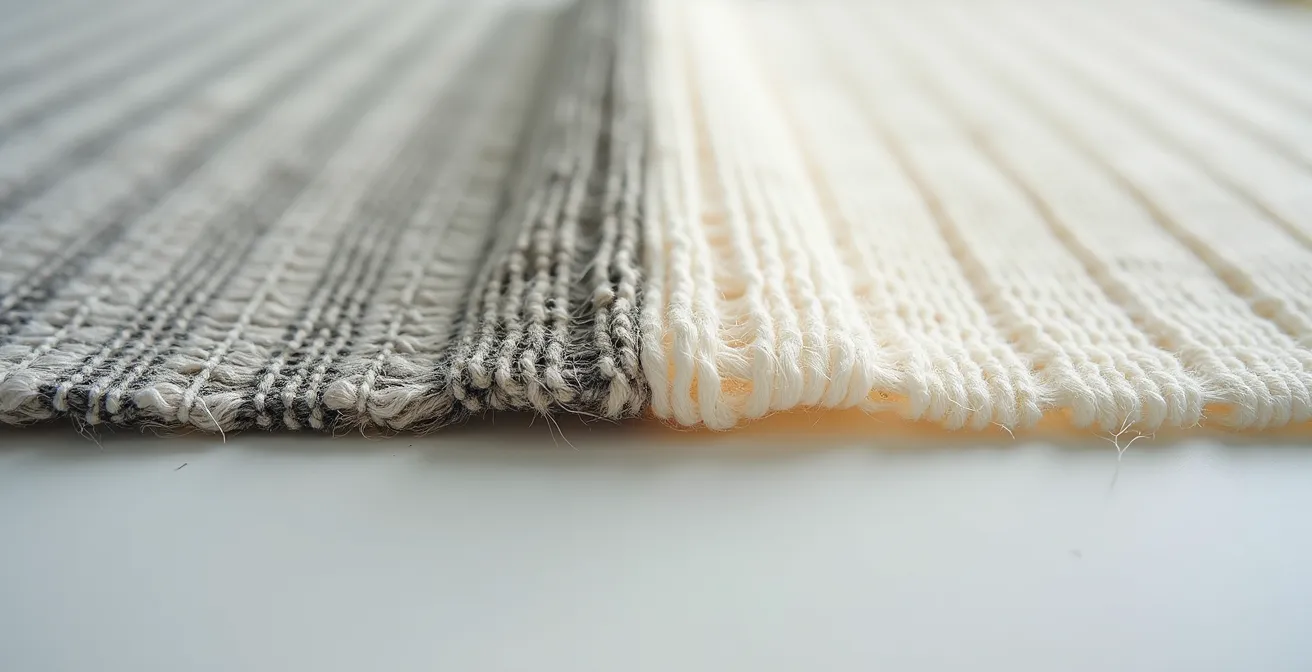
As the image above illustrates, the texture of a handmade textile is organic and rich with character, while a machine-made equivalent appears flat and lifeless by comparison. Another key indicator is the back of the fabric. In hand-woven pieces, especially those with intricate patterns like embroidery or brocade, the back will often show loose threads or a slightly messy “negative” of the design. A machine can create a much cleaner, double-sided finish that is a tell-tale sign of mass production. Feel the fabric: natural fibers like wool, cotton, or silk have a distinct texture that synthetic materials cannot replicate.
The Souvenir Mistake That Will Get Your Items Seized at Customs
One of the most disappointing outcomes for a traveler is having a cherished souvenir confiscated at the border. While many travelers worry about agricultural products or wildlife materials, a significant and often overlooked risk involves counterfeit cultural goods. Many countries have laws protecting their indigenous art and craft, and passing off fake items as authentic is not just unethical—it can be illegal. This is not about accidentally buying a poorly made item; it’s about purchasing something that fraudulently claims a protected cultural identity.
The United States, for example, strictly enforces the Indian Arts and Crafts Act (IACA), which makes it a federal crime to falsely market or sell products as “Native American” or “Indian-made” if they are not. This law exists to protect the economic livelihoods of Native artists from the flood of cheap, mass-produced imitations that saturate the market. A tourist buying a “Native-style” necklace from a seller who is not a member of a state or federally recognized tribe is participating in this illicit trade, and both the seller and the product are subject to legal action.
A stark case of IACA enforcement involved two artists charged for faking tribal affiliations to sell counterfeit pieces in Seattle galleries. The investigation, prompted by complaints, highlighted the severe economic harm that such fraud inflicts on genuine Native artisans. For the traveler, this means that customs officials, particularly in the U.S., are trained to look for these fakes. If you cannot provide some proof of authenticity—such as a certificate from the artist or information about the cooperative where you bought it—your item could be seized. Practicing cultural literacy means understanding that authenticity is a legally protected attribute, not just a desirable quality.
How to Ship Fragile Ceramics Home Without Breakage or Excessive Fees?
You’ve found the perfect, one-of-a-kind ceramic vase, a testament to a local potter’s skill. Now comes the logistical challenge: getting it home in one piece. Shipping fragile items internationally can seem daunting, with the dual risks of catastrophic breakage and exorbitant fees. However, with the right packing technique, you can dramatically increase your chances of success. The gold standard used by professionals is the “double-boxing” or “box-in-a-box” method. This technique creates a shock-absorbing buffer zone that protects the item from the inevitable bumps and drops of transit.
The principle is simple: your ceramic piece should never directly touch the sides of the outer shipping box. The first step is to wrap the item itself. Use multiple layers of bubble wrap, soft fabric, or even your own clothes to create a thick, soft cocoon. This primary layer is your first line of defense. Once wrapped, place the item in a smaller, snug-fitting box. It is crucial to fill any empty space within this inner box with cushioning material—crumpled newspaper, fabric scraps, or biodegradable packing peanuts—to prevent the item from shifting at all.
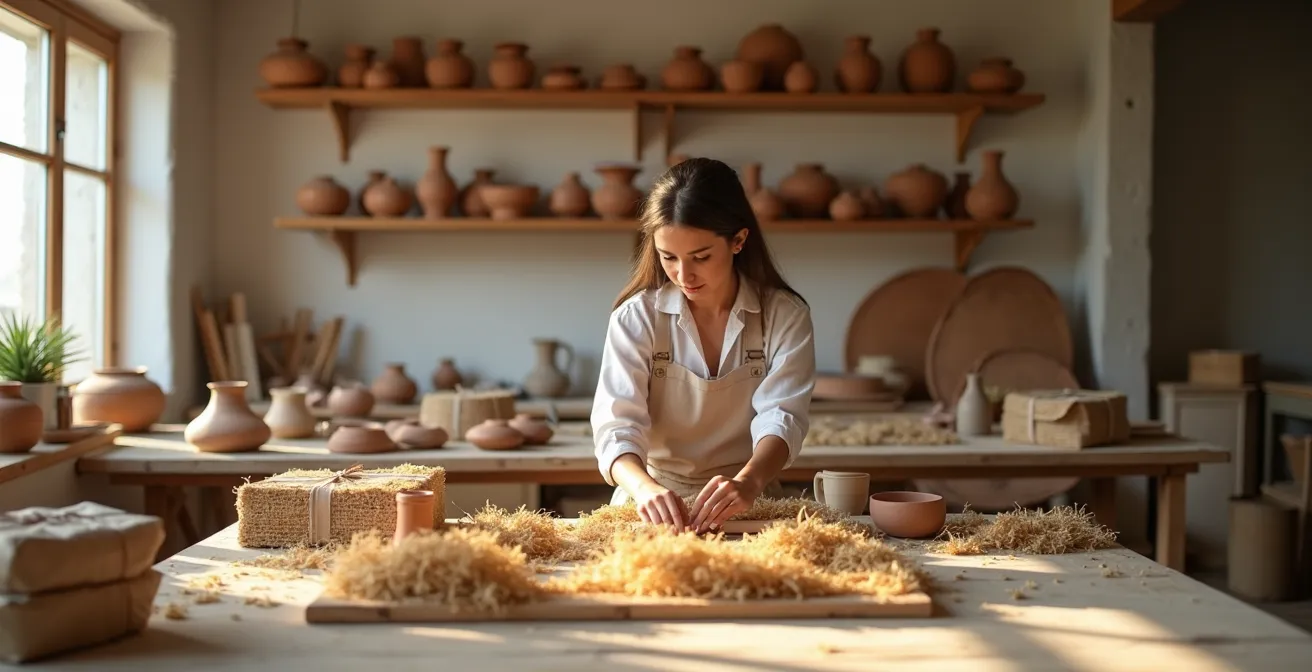
Once the inner box is securely sealed, place it inside a larger, sturdier shipping box, ensuring there is at least two to three inches of clearance on all six sides. Fill this surrounding gap completely with more packing material. This outer layer absorbs the major impacts, while the inner box provides stable, cushioned housing for your precious craft. This meticulous process is a form of respect for the invisible labor of the artisan—taking the time to protect their creation demonstrates how much you value it.
Action Plan: The Double-Boxing Method for Fragile Items
- Wrap the ceramic piece in multiple layers of bubble wrap or soft fabric until it is thoroughly cushioned.
- Place the wrapped item snugly inside a smaller box, ensuring there is a 2-inch clearance on all sides from the item to the box walls.
- Fill all empty space in the smaller box with newspaper, fabric scraps, or biodegradable packing peanuts to ensure the item cannot move.
- Seal the smaller box and place it inside a larger, more durable shipping box, leaving at least a 3-inch clearance on all sides.
- Fill all the gaps between the inner and outer box with additional cushioning materials, then seal the outer box securely for shipping.
How to Curate a High-End Wardrobe Exclusively Through Ethical Second-Hand Shopping?
The principles of ethical sourcing extend far beyond the tourist market and apply directly to curating a sophisticated and sustainable wardrobe. The second-hand market is a treasure trove for high-quality, unique garments, including authentic artisan-made pieces that have been discarded. By shopping pre-owned, you not only give a garment a second life but also opt out of the resource-intensive cycle of fast fashion. Curating a high-end wardrobe this way is an exercise in patience and discernment, transforming shopping from a consumptive act into a form of treasure hunting.
The first step is to develop an eye for quality. Learn to identify natural fibers like silk, cashmere, linen, and high-grade wool. Examine the construction of the garment: look for fine, even stitching, finished seams, and quality hardware. These are the hallmarks of well-made clothing designed to last. Often, you can find incredible artisan textiles—like hand-embroidered blouses or block-printed scarves—mixed in with mass-market goods in consignment or thrift stores. Recognizing these pieces requires the same cultural literacy needed in a foreign market; you must learn to spot the signature of human hands.
This movement towards meaningful apparel is not a niche trend. As a Vocal Media fashion analysis on the thriving artisanal industry points out, “Consumers are increasingly drawn to unique, high-quality garments that tell a story, reflect cultural heritage, and prioritize ethical practices.” By seeking out these pieces in the second-hand market, you are participating in this movement in the most sustainable way possible. Your wardrobe becomes a collection of stories, a curated testament to enduring craftsmanship rather than fleeting trends.
How to Source and Integrate Vintage Decor Without Your Home Looking Dated?
Integrating vintage and artisan-made decor into a modern home is an art of balance. The goal is to create a space that feels curated and soulful, not like a cluttered antique shop or a dated time capsule. The secret lies in a strategic framework that allows vintage pieces to shine without overwhelming the contemporary aesthetic. A highly effective approach is the 80/20 Curation Framework: your home’s foundation should be 80% modern, and 20% should be reserved for high-impact vintage or artisan pieces.
The “80%” consists of the larger elements of your space: wall color, primary furniture like sofas and tables, and overall layout. By keeping this foundation neutral, with clean lines and a contemporary feel, you create a perfect canvas. The “20%” is where the magic happens. These are your statement pieces: a hand-carved wooden chest, a vintage Kilim rug, a series of artisan-made ceramic vessels, or a unique piece of folk art. These items should be chosen with intention. Research their provenance, understand the design movement they belong to (e.g., Arts and Crafts, Mid-Century Modern), and let them be the focal points that tell a story.
This intentional juxtaposition creates a dynamic tension between old and new. A hyper-modern, minimalist console table, for example, becomes the perfect stage for an ancient, rustic pot. The clean lines of the new highlight the texture and history of the old. This is not just about aesthetics; it is about applying cultural literacy within your own home, creating a dialogue between different eras and origins. By following this framework, you ensure each vintage piece is given the space to be appreciated as a work of art, infusing your home with personality and a deep sense of history.
- Establish an 80% Modern Foundation: Use neutral colors and furniture with clean, simple lines as the base of your room.
- Select 20% High-Impact Vintage Pieces: Choose a few items with character and a known history or origin to serve as focal points.
- Research the Design History: Understand the context of your vintage pieces—the era, the style, the artisan—to appreciate their story.
- Create Intentional Juxtaposition: Deliberately place old items next to or on top of hyper-modern elements to create visual interest and highlight the unique qualities of each.
Key takeaways
- True ethical purchasing is an act of cultural literacy, not just a transaction. It requires understanding the context behind an object.
- Begin negotiations by asking about the story, time, and materials involved. This frames the discussion around value, not just price.
- Authenticity has legal weight. Falsely representing an item’s cultural origin can lead to confiscation and legal trouble for the seller.
How to Transform Your Vacation Into a Skill-Building Learning Experience?
The ultimate expression of ethical engagement with a culture is to move beyond being a consumer and become a student. Transforming your vacation into a learning experience, where you actively participate in acquiring a new skill, is the deepest way to honor a local tradition. Instead of simply buying a finished product, you invest your time and resources into understanding the process, guided by the artisan themselves. This could be a multi-day pottery workshop, a lesson in traditional weaving, or a cooking class focused on regional cuisine.
This approach fundamentally changes the dynamic. You are no longer just an outsider looking in; you are a participant. This fosters a level of mutual respect and understanding that a simple purchase can never achieve. It provides direct, sustainable income to the artisan for their knowledge and time, a model that is far more empowering than relying on product sales alone. This is the pinnacle of the economic partnership mindset—an exchange based on shared knowledge and experience.
This collaborative model is also being recognized as the most ethical way for larger brands to engage with cultural heritage. As the Craft Industry Alliance explains, designers should work collaboratively with communities, leading to mutual recognition and economic benefit. They cite the example of the sportswear brand Osklen, which worked directly with the Asháninka tribe in the Amazon. This partnership resulted in a collection where the tribe received royalties and was clearly acknowledged. This demonstrates a powerful principle: authentic, mutually beneficial cultural exchange derails appropriation and builds genuine connections. For a traveler, participating in a workshop is a micro-version of this ideal, creating a memory and a set of skills that are infinitely more valuable than any physical souvenir.
By approaching artisan communities with curiosity, respect, and a desire to learn, you transform your travels. You cease to be a mere consumer of culture and become a valued patron of heritage, ensuring these vital traditions and the talented individuals who sustain them can continue to thrive for generations to come. Your next journey can be more than a vacation; it can be a meaningful exchange that enriches both you and the communities you visit.
Frequently Asked Questions about How to Identify and Buy Authentic Artisan Crafts Without Exploiting Locals?
What defines authentic artisan textiles?
To be artisanal fashion, the techniques and materials must have strong roots in the local culture. Artisan clothing is so much more than crafts. It’s a local, cultural movement.
How can I identify hand-finished edges?
Hand-finished edges have a softer, slightly uneven finish with natural variations in tension, while machine-stitching appears rigid and perfectly uniform throughout.
Are hybrid crafts (mixing traditional and modern techniques) still authentic?
Yes, artisans increasingly use modern tools like sewing machines for assembly while maintaining traditional hand-weaving for main fabrics, representing craft evolution rather than diminishment.